
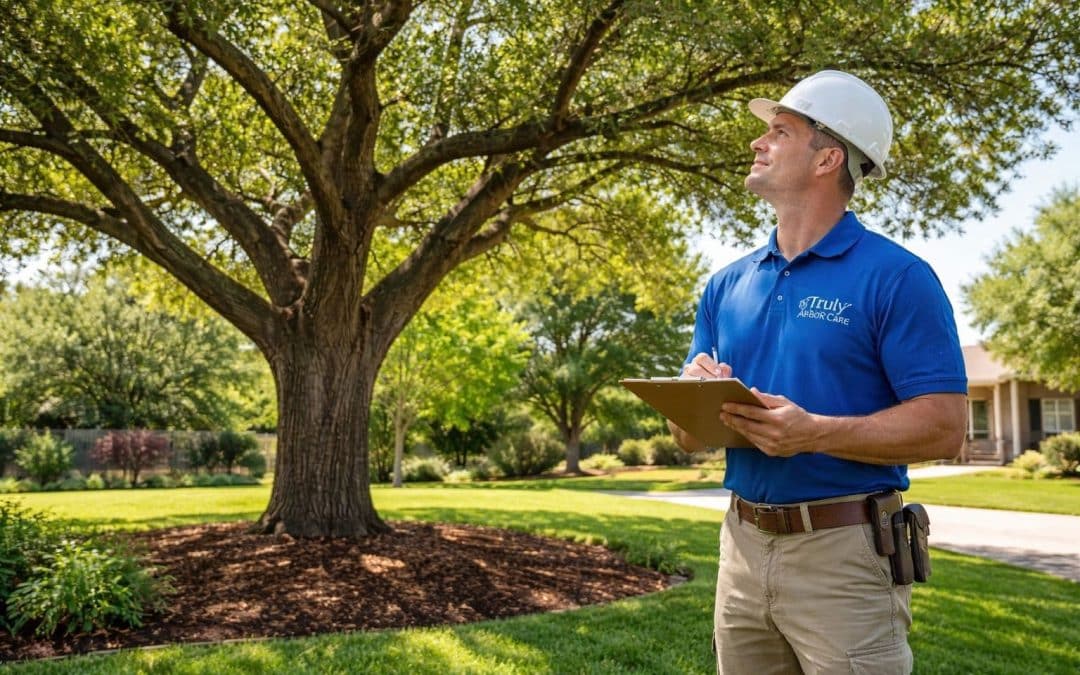
Year-round plant health care tips from an ISA-certified arborist. The trees in Hood County face unique challenges due to clay soils, limestone influence, heat stress, drought cycles, and disease pressure common in North Texas. Maintaining healthy trees requires more than trimming—it requires year-round plant health care guided by arboricultural science. The following recommendations are based on ISA and TCIA best practices to help property owners protect and extend the life of their trees.
Soil Conditions and Root Health
Healthy trees depend on functional root systems and biologically active soil. In Hood County, compacted clay soils often restrict oxygen and water movement. ISA guidelines emphasize the importance of maintaining proper soil structure, drainage, and organic matter to support root growth and nutrient uptake.
Best practices:
- Avoid soil compaction over the root zone
- Maintain a natural mulch layer (2–4 inches, not
against the trunk) - Correct drainage issues before decline begins
Proper Mulching and Irrigation Matter and Watering for Root Development, Not Surface Growth
Improper watering is one of the most common causes of tree decline. ISA standards recommend deep, infrequent watering to encourage deep root development, especially during prolonged dry periods common in Hood County
summers.
Best practices:
- Water slowly and deeply within the dripline
- Avoid daily shallow watering
- Adjust irrigation during seasonal changes
Pruning Should Support Tree Biology and Why Timing and Technique Matter
According to ANSI A300 pruning standards, pruning should enhance tree structure, reduce risk, and support long-term health—not simply remove branches. Excessive or poorly timed pruning increases stress and disease susceptibility.
Best practices:
- Prune based on structure and risk, not appearance
- Avoid heavy pruning during heat stress
- Use professional standards for cut placement
Watch for Early Signs of Disease and Stress
Early Detection Saves Trees
Many tree diseases and disorders progress internally long before visible symptoms appear. ISA guidance stresses
early evaluation when changes in leaf color, canopy density, or growth patterns occur.
Common warning signs:
- Thinning or uneven canopy
- Leaf chlorosis or scorch
- Dieback in upper branches
- Fungal growth near the base
Early diagnosis allows for plant health treatments rather than reactive removal
Plant Health Care Is Preventative, Not Reactive
Why Year-Round Monitoring Matters
TCIA and ISA both emphasize preventative plant health care as the most effective way to manage stress, pests, and disease. Trees monitored year-round are more resilient to drought, storms, and pathogen pressure.
Preventative strategies include:
- Soil testing and nutrient correction
- Growth regulators when appropriate
- Integrated pest management (IPM)
- Periodic arborist evaluations
Tree Risk and Safety Should Be Evaluated Professionally
Risk Assessment Protects Trees and Property
Declining health often increases structural risk. ISA Tree Risk Assessment Qualification (TRAQ) methodology provides a standardized process for evaluating failure potential and determining whether mitigation or preservation is appropriate. Professional evaluations help homeowners make informed decisions rather than reacting to fear or
guesswork.
Local Expertise Matters in Hood County
Why Regional Knowledge Makes a Difference
Trees in Hood County respond differently than trees in other parts of Texas. Soil composition, weather extremes,and local disease pressure require region-specific knowledge. Working with an ISA Certified Arborist familiar with North Texas conditions ensures recommendations are appropriate and effective
CONCLUSION
Healthy trees don’t happen by accident. They are the result of informed care, proper timing, and professional
evaluation. By following ISA and TCIA best practices and addressing issues early, property owners in Hood County
can protect their landscapes, reduce long-term costs, and preserve valuable trees for years to come. For general tree-care best practices, homeowners can also reference guidance from the Texas A&M Forest Service, https://tfsweb.tamu.edu/trees/, a trusted authority on Texas tree health.
If you’d like to speak to an arborist, please call us at 817-697-2884 or visit our website https://www.trulyarborcare.com/contact-us/ to schedule a consultation