
Tree Mulching by an ISA Certified Arborist in Southlake, TX
Few simple practices have as much impact on tree health as proper mulching. Done correctly, mulch moderates soil temperature, retains moisture, suppresses competing turfgrass, returns organic matter to the soil, and supports the microbial community that healthy trees depend on. Done incorrectly, it suffocates roots, encourages decay, and shortens the life of the tree.
At Truly Arbor Care, mulching is approached as part of a science-based plant health care program — guided by ISA Certified Arborist standards, ANSI A300 Part 5 soil management practices, and Texas A&M AgriLife Extension research on North Texas soils.
Throughout Southlake and the Dallas–Fort Worth Metroplex, proper mulching is one of the most cost-effective interventions for improving tree vigor in clay-soil landscapes.
What Proper Mulching Does
Properly applied mulch produces measurable improvements in tree health:
- Moderates soil temperature in summer heat and winter freeze
- Retains soil moisture during drought cycles
- Reduces surface evaporation
- Suppresses competing turfgrass and weeds
- Decomposes into organic matter that improves soil structure
- Supports mycorrhizal fungi and beneficial microbes
- Protects surface roots from mower and trimmer damage
- Reduces soil compaction over time
According to Texas A&M AgriLife Extension, mulched trees consistently outperform unmulched trees in growth rate, drought tolerance, and overall vigor.
The Right Way to Mulch
Proper mulching follows specific ISA-recommended practices that protect both the tree and the long-term soil environment.
Best practices include:
- Mulch depth of 2 to 4 inches over the root zone
- Mulch ring extending to the drip line where possible
- Keeping mulch pulled back 2 to 4 inches from the trunk — never piled against the bark
- Maintaining a visible root flare at the base of the tree
- Replenishing as needed to maintain target depth as material decomposes
- Using shredded hardwood, composted wood chips, or arborist-grade wood chips
The Mulch Volcano Problem
One of the most common — and most damaging — mulching mistakes is the “mulch volcano”: mulch piled high against the trunk in a cone shape.
Mulch piled against the bark causes:
- Constant moisture against the trunk, promoting bark rot
- Bark cracking and disease entry
- Encouragement of stem-girdling roots growing into the mulch layer
- Suffocation of the root flare
- Habitat for bark-boring insects and rodents
- Premature decline of the tree
A properly mulched tree should always show a clearly visible root flare with mulch tapered down away from the trunk.
Mulch Materials
Not all mulch is equally beneficial. Material choice affects decomposition rate, nutrient cycling, and pH stability.
Best Choices
- Shredded hardwood mulch
- Aged arborist wood chips
- Composted bark mulch
- Leaf mold and shredded fall leaves
Use With Caution
- Fresh wood chips (can tie up surface nitrogen during initial decomposition)
- Cypress mulch (sustainability concerns and slow nutrient cycling)
- Dyed mulches (cosmetic, with no biological benefit)
Generally Avoid
- Rubber mulch (no biological benefit, no soil improvement)
- Rock or gravel over root zones (heat retention, compaction)
- Plastic landscape fabric beneath mulch (blocks gas exchange and traps stem-girdling roots)
Mulching New Plantings
Newly planted trees benefit dramatically from proper mulching during the establishment period. A 3-foot-diameter mulch ring at the time of planting reduces transplant stress, retains moisture, and protects the trunk from string trimmer damage.
For new plantings:
- Confirm root flare is at or slightly above grade before mulching
- Apply 2–3 inches of mulch over the planting area
- Keep mulch off the trunk and away from the root collar
- Expand the mulch ring as the tree grows
Maintaining the Mulch Layer Over Time
Mulch is not a one-time application. As organic mulch decomposes — which is part of its benefit — depth decreases. Periodic replenishment maintains the target depth and continues feeding the soil.
Maintenance considerations include:
- Top up to target depth (2–4 inches) every 12–24 months
- Avoid simply adding new mulch on top of old, undecomposed material
- Periodically rake or aerate compacted mulch surfaces
- Inspect for stem-girdling roots growing into the mulch layer
Serving Southlake and the Greater DFW Metroplex
Truly Arbor Care proudly serves Southlake and surrounding communities throughout the Dallas–Fort Worth Metroplex, including:
- Colleyville
- Grapevine
- Keller
- Westlake
- Flower Mound
- Bedford
- Euless
- North Richland Hills
- Arlington
- Fort Worth
Schedule a Mulching Evaluation
If your trees are surrounded by turfgrass, have mulch piled against the trunk, or show signs of root zone stress, a proper mulching plan is one of the simplest improvements you can make for long-term tree health.
Truly Arbor Care provides ISA Certified Arborist mulching consultation, root flare excavation, and integrated soil management services across Southlake and the greater DFW Metroplex.
How To Properly Mulch
This example was for all you do it yourself people. We know and understand budget so in that case, we are providing you the right information to correctly mulch your own trees. Furthermore, these simple steps have been provided by the ISA like previously established:
- Pick the right mulch for your environment and tree type if in need of help of selection please contact us.
- Removing all weeds and debris that may not go well for the tree.
- Grabbing and putting the right amount of mulch around the trees premises.
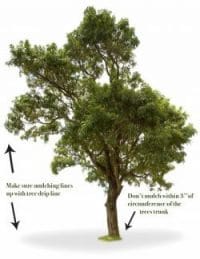
- Remember to keep out within 3″ of the circumference of trees trunk to let it breathe but after that point directly lay mulch past that 3″ circumference to the point where the trees drip line.
- Once the mulch is layered around the tree remember not to overkill tree with mulch.
- Make sure to match diagram to make sure you did correctly.
Properly mulching is important to be informed about and be educated about to mulch your trees and to know how to correctly to mulch your trees the right way. The ISA (International Society of Arboriculture) formed these protocols and standards to keep our trees healthy and alive.
Best Types of Tree Mulch
Coarse Mulching is more than likely one of the most used methods for mulching out there. It is the between of fine mulch and large chip mulching. This method is best used in large areas or ground beds with large trees in general. This is used to protect the barrier of your trees or shrubbery. Also to protect the vascular system in other words protecting the root system that is highly important.
It is known to keep the health of the tree up and running in the summer or cold nights in the winter. Its easy and gives trees or shrubbery the right amount of protection to keep the health of the tree healthy. There are many varieties of color and etc of this mulch so give us a call today to give you the right mulch you necessarily need and want.
Fine Mulching is mostly used for smaller areas like flower beds or planting areas. This mulch works best in areas of planting and harvesting areas as such. Fine mulching mixes very well along with fertilizers and other additives that you might want to add. It’s very compatible with the root system and enhances growth and nourishment with whatever plants you may prefer.
Since preference is the case now there are many colors that are offered but black is normally the industries standard. Local hardware shops usually sell a 100-pound bag for $26 typically the price but great bargain therearound.
Large Chip Mulching is an excellent method for recreational or big open areas that are more public for use. This is an inexpensive way of mulching and comes in many other different colors. Few downfalls such as after use can get messy, requires a little more maintenance in the aftermath, but the applicator is very durable and can last for a few years. Its a good and efficient mulch that is perfect for the right place.
There are many great benefits with this mulch also less labor since pieces are easy to move around to enable you to put it in the right place right away. Furthermore, this mulch helps reduce soil compaction, keeps and creates a favorable and stable environment for earthworms and microorganisms. Prevents the risk of the plantation to lose and get its water evaporated. Very beneficial and right mulch for this specific use.