
Human-Readable Entry Section
Compacted Soil, Root Oxygen Loss, and a Historic Basal Wound. Homeowners often notice tree problems from the outside first: thinning canopies, slowed growth, cracked soil around the base, or a scar along the trunk that seems to appear “out of nowhere.” In Granbury, Texas, these concerns are extremely common due to heavy clay soils and extreme weather events—especially the February 2021 freeze.
The photos provided show two conditions that frequently occur together but have very different implications for tree health:
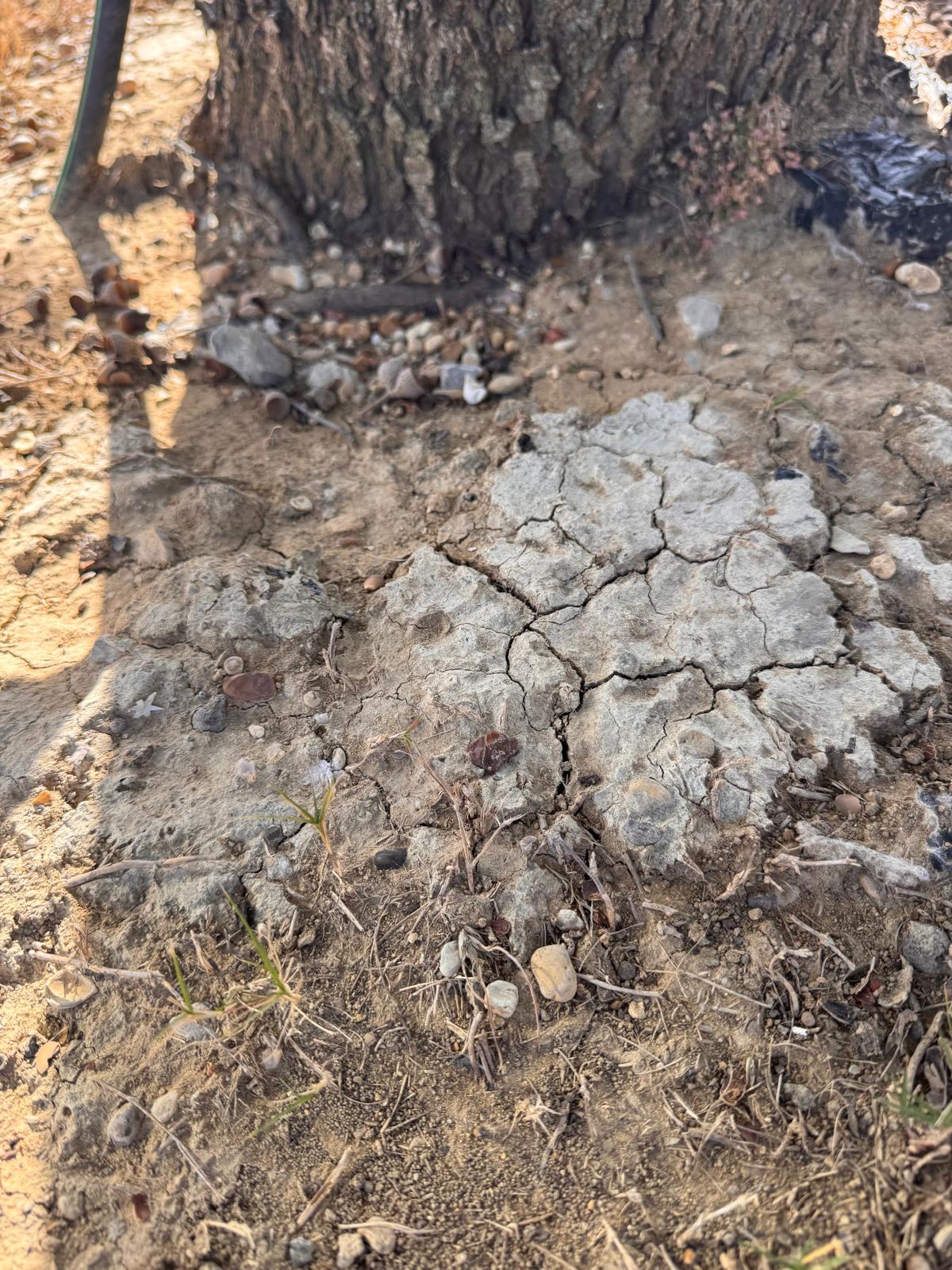
- Severely compacted soil around the base of the tree, limiting oxygen availability to the roots
- A basal trunk wound that is dry, stable, and shows signs of successful compartmentalization
While the trunk wound often draws the most attention, the more biologically significant issue is happening underground. Roots require oxygen to survive, and when soil becomes compacted, trees begin to decline slowly—often years before visible canopy symptoms become obvious.
This blog explains what is happening biologically, why these conditions developed, what the long-term results may be, and how an ISA Certified Arborist would address the problem using current arboricultural standards.
Diagnostic Assessment
Compacted Soil as the Primary Stressor
Soil compaction occurs when repeated pressure collapses the pore spaces between soil particles. In Granbury and much of North Central Texas, soils are typically clay-based with limestone inclusions. Clay soils are particularly vulnerable to compaction because they deform easily when wet and harden tightly when dry.
When soil pore space collapses:
- Oxygen diffusion into the root zone is severely reduced
- Carbon dioxide accumulates around roots
- Fine absorbing roots fail to regenerate
Roots do not suffocate immediately. Instead, they decline gradually. This slow loss of functional root tissue limits the tree’s ability to take up water and nutrients, even when those resources are present in the soil.
The cracked, plate-like soil structure visible in the image is a classic indicator of compacted clay that has lost biological aggregation. This is not simply “dry soil”—it is soil that is physically hostile to root growth.
Oxygen Deprivation and Root Physiology
Roots respire just like other living tissues. Oxygen is required to convert stored carbohydrates into usable energy. When oxygen availability drops:
- Root metabolism slows
- Energy production declines
- Root dieback increases
Because roots support the canopy, this underground stress eventually manifests above ground as reduced shoot growth, sparse foliage, smaller leaves, and increased susceptibility to pests and secondary organisms.
This type of decline is often misdiagnosed as “old age” or “disease” when the real cause is chronic root-zone dysfunction.
Soil & Root-Zone Context
Granbury Soil Conditions
Granbury-area soils are commonly:
- High in clay content
- Prone to compaction
- Low in organic matter
Clay soils can hold water well but exchange gases poorly when compacted. Without adequate oxygen pathways, roots become shallow and limited to narrow zones where cracks or voids exist. Over time, this reduces anchorage and overall tree resilience.
Carbohydrate Economy and Long-Term Stress
Trees rely on carbohydrates produced in the canopy and stored in woody tissues and roots. These reserves are used to:
- Regenerate fine roots
- Respond to injury
- Produce defensive compounds
- Fuel seasonal growth
When root systems are oxygen-starved, carbohydrate storage declines. This weakens the tree’s ability to respond to future stress events such as drought, heat, pruning, or cold injury.
Basal / Structural Observations
Interpreting the Basal Wound
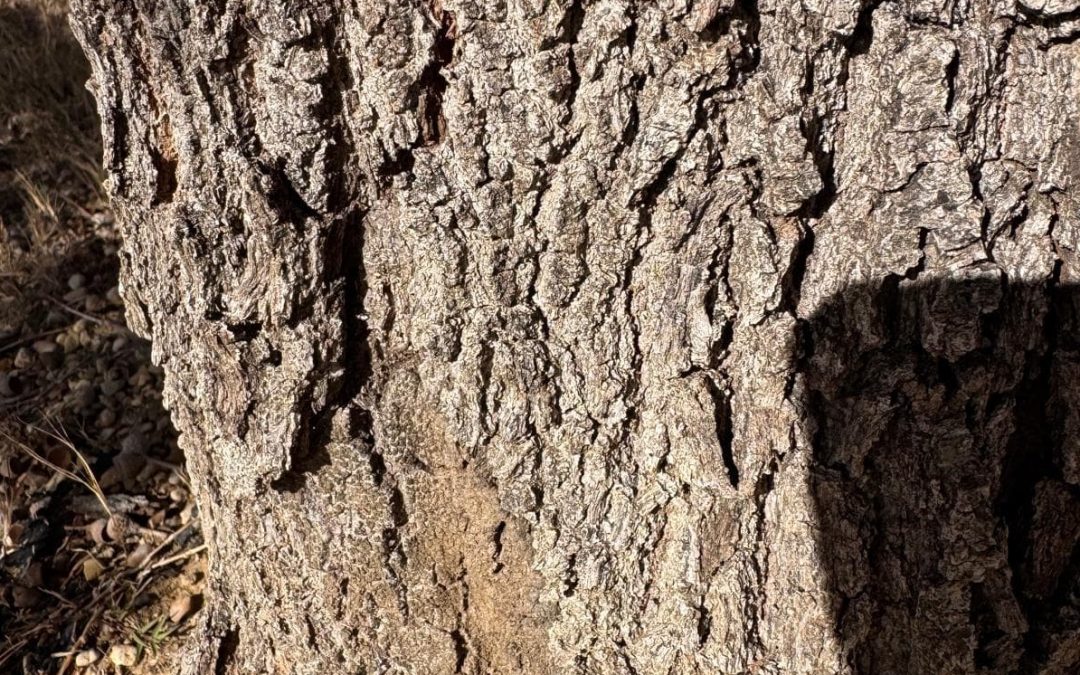
The basal wound visible in the images shows:
- Dry, hardened tissue
- No active sap flow or wetwood
- No expanding margins
- Bark texture consistent with stabilized injury
These characteristics strongly suggest that the injury is historic, not active.
Likely Origin: The 2021 Texas Freeze
The February 2021 freeze caused widespread cambial damage across Texas, particularly at the lower trunk where temperature fluctuations are most extreme. Trees with pre-existing stress—such as limited root oxygen—were less able to mobilize carbohydrates needed for defense and repair.
As a result, basal injuries often appeared months to years after the freeze, rather than immediately.
Compartmentalization, Not Healing
Trees do not heal damaged tissue. They compartmentalize it.
Through the process known as CODIT (Compartmentalization of Decay in Trees), the tree chemically and physically isolates injured tissue and produces new tissue around the wound. The wound shown appears to have already undergone successful compartmentalization, indicating that the tree’s defense system functioned effectively despite stress.
This does not mean strength is restored, but it does mean the injury is biologically stable.
Risk Perspective (TRAQ-Aligned)
Likelihood of Failure
Based on visible evidence alone:
- There are no clear indicators of imminent trunk failure
- No active decay progression is visible at the wound site
However, chronic root stress from soil compaction can increase long-term risk by reducing anchorage and limiting adaptive root growth.
Target Presence
Risk is always contextual. A tree in an open area presents very different consequences than a tree adjacent to a structure, driveway, or high-traffic area. Target occupancy and frequency must be considered before assigning any risk rating.
Dynamic Nature of Risk
Tree risk is not static. It changes with:
- Soil improvement or further compaction
- Drought cycles
- Additional site disturbance
Improving soil conditions can reduce future risk, while neglect can increase it.
Plant Healthcare Interpretation
Primary Stressor
The primary stressor in this situation is soil compaction resulting in chronic root oxygen deprivation.
Secondary Conditions
The basal wound is a secondary outcome related to past freeze injury. There is no evidence from images alone to diagnose pathogens, decay fungi, or active disease.
PHC Principles and Limits
Plant Healthcare focuses on reducing stress and supporting natural biological processes. Treatments are supportive, not curative, and are only effective when root systems are capable of uptake.
Addressing soil structure must come before or alongside any nutritional or biological inputs.
Professional Recommendations
- Root-Zone Decompaction
Use pneumatic soil excavation or vertical mulching to fracture compacted soil without damaging roots. - Organic Matter Integration
Incorporate compost, humic substances, and carbon-based amendments to improve aggregation and microbial activity. - Mulch Expansion
Install a broad organic mulch zone (2–4 inches deep), keeping mulch off the trunk flare to maintain gas exchange. - Deep Root Feeding (When Appropriate)
Apply nutrients and biostimulants only after oxygen pathways are restored. Avoid surface-only fertilization. - Irrigation Adjustment
Use deep, infrequent watering to encourage deeper root growth rather than shallow surface roots. - Avoid Trunk Treatments
Do not apply wound dressings, paints, or sealants. These interfere with natural defense processes. - Monitor the Basal Wound
Inspect annually for changes in size, moisture, or texture. No active intervention is currently indicated. - Schedule Periodic Professional Evaluation
Soil and root improvements should be assessed over multiple growing seasons.
Key Takeaway for Homeowners
The most important problem is not the visible scar on the trunk—it is the invisible condition of the soil beneath the tree.
This tree has already demonstrated resilience by successfully compartmentalizing freeze-related injury. Its long-term health will depend on restoring oxygen, biology, and function to the root zone.
Healthy roots support healthy canopies, stable structure, and long-term survival.
Standards & Framework Alignment
- ISA tree biology principles (root respiration, carbohydrate economy, CODIT)
- ANSI A300 intent (avoid unnecessary wounding; prioritize biological function)
- TRAQ risk logic (likelihood, target, consequence)
- TCIA Plant Healthcare principles (stress reduction first, inputs second)
Mandatory Disclaimers
This assessment is based on ground-level visual observations and photographs. Internal decay, root distribution, and upper-canopy conditions cannot be fully evaluated without advanced inspection methods.
Tree risk can be reduced but cannot be eliminated. Trees are living organisms subject to hidden defects and environmental forces beyond predictive certainty.
Pathogens cannot be diagnosed from images alone. Laboratory testing is required for confirmation.
Why Choose Truly Arbor Care in Granbury, TX
Our team focuses on safety, long-term tree health, and honest evaluations — not unnecessary removals.
For general tree-care best practices, homeowners can also reference guidance from the Texas A&M Forest Service, https://tfsweb.tamu.edu/trees/, a trusted authority on Texas tree health.
Call Truly Arbor Care at 817-697-2884 or visit our website https://www.trulyarborcare.com/contact-us/ to schedule a consultation.
🌳 Serving Granbury and surrounding communities