
Solitary Oak Leafminer in North Texas
Cameraria hamadryadella | Leaf Mining Damage in the DFW Metroplex
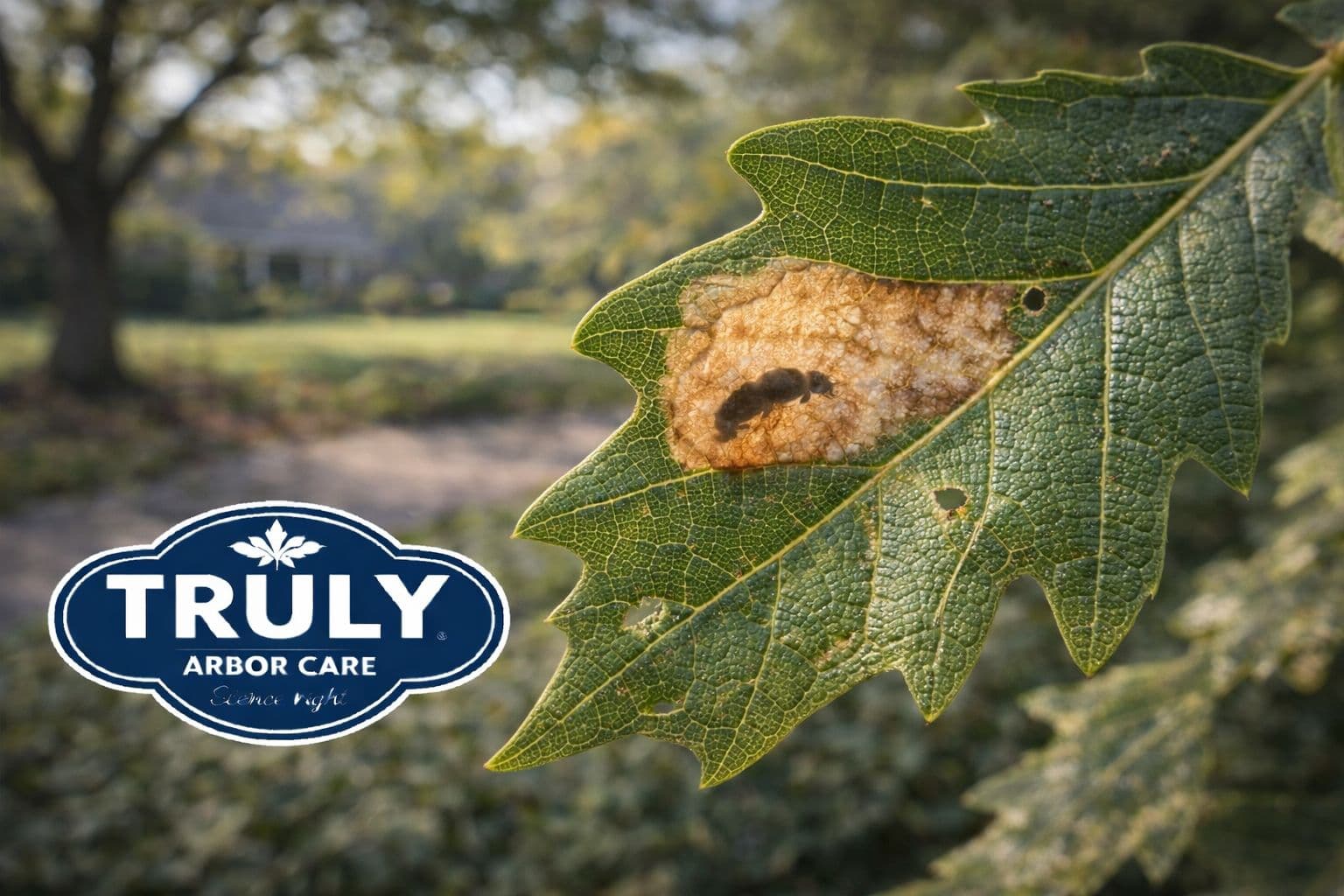
The solitary oak leafminer, Cameraria hamadryadella, is a small moth species whose larvae mine oak leaves throughout Texas. According to Texas A&M AgriLife Extension and Texas A&M Forest Service publications, leafminers feed within the leaf tissue, creating visible blotches or discolored areas.
In North Texas and across the DFW Metroplex, infestations are most commonly observed during spring and early summer when oak leaves are actively growing.
ISA Certified Arborist Evaluation and Texas A&M Research Context
As ISA Certified Arborists serving North Texas, Truly Arbor Care evaluates solitary oak leafminer activity using science-based plant health care standards aligned with Texas A&M research. Accurate identification is important because mining damage may resemble fungal leaf spot or environmental stress.
Texas A&M guidance indicates that most healthy oak trees tolerate minor leaf mining without long-term harm.
⸻
Identification and Morphology
Adult moths are very small and rarely noticed. They are typically light brown to tan in coloration.
The larval stage feeds within leaf tissue. Larvae create blotch mines between the upper and lower surfaces of the leaf, consuming internal tissues while leaving the outer leaf layers intact.
⸻
Distinguishing Characteristics
Key identifying features include:
- Small, oval or blotchy discolored areas on leaves
- Leaf tissue consumed internally
- Mines visible when held to light
No external chewing damage
Unlike skeletonizers, solitary oak leafminers do not remove the leaf surface; instead, they create internal blotches.
⸻
Host Trees in North Texas
Primary hosts include:
- Red oak species
- Live oak
- Other ornamental oak varieties
Texas A&M Forest Service documentation indicates that most infestations remain cosmetic and localized.
In the DFW Metroplex, ornamental oaks in urban settings may show visible mining during spring.
⸻
Life Cycle in Texas
Solitary oak leafminers may produce multiple generations per year in Texas.
- Adults lay eggs on leaf surfaces
- Larvae hatch and tunnel into leaf tissue
- Feeding continues within leaf
- Pupation occurs inside the leaf mine
- Adults emerge through small exit holes
Warm North Texas conditions may allow overlapping generations.
⸻
Impact on Tree Health
Damage may include:
- Brown or tan blotches on leaves
- Minor reduction in photosynthesis
- Aesthetic decline
Texas A&M AgriLife notes that healthy trees typically recover without structural impact unless severe infestations coincide with drought stress.
In the DFW Metroplex, visible leaf spotting is usually the primary concern.
⸻
Environmental Stress and Susceptibility
Trees experiencing:
- Drought
- Soil compaction
- Root disturbance
- Urban heat stress
may show more pronounced symptoms.
Maintaining tree vigor improves resilience in North Texas landscapes.
⸻
Management and Professional Guidance in North Texas
Texas A&M recommends monitoring severity before treatment.
Management strategies may include:
- Encouraging natural predators
- Targeted treatment during early larval stages when warranted
- Maintaining overall plant health
ANSI A300 Plant Health Care standards emphasize integrated pest management and accurate diagnosis.
⸻
Professional Assessment in the DFW Metroplex
As ISA Certified Arborists serving North Texas and the DFW Metroplex, Truly Arbor Care evaluates solitary oak leafminer infestations within a comprehensive plant health framework to determine whether intervention is necessary.
For more information, check out the Texas A&M article on solitary oak leafminer here.