
Soapberry Borer in North Texas
Agrilus prionurus | Trunk and Branch Dieback in the DFW Metroplex
The soapberry borer, Agrilus prionurus, is a metallic wood-boring beetle native to Texas and surrounding regions. According to Texas A&M Forest Service and Texas A&M AgriLife Extension publications, this species primarily infests western soapberry (Sapindus drummondii) and related hosts, especially when trees are stressed.
In North Texas and across the DFW Metroplex, soapberry borer activity is most often associated with drought stress, construction injury, and aging urban trees.
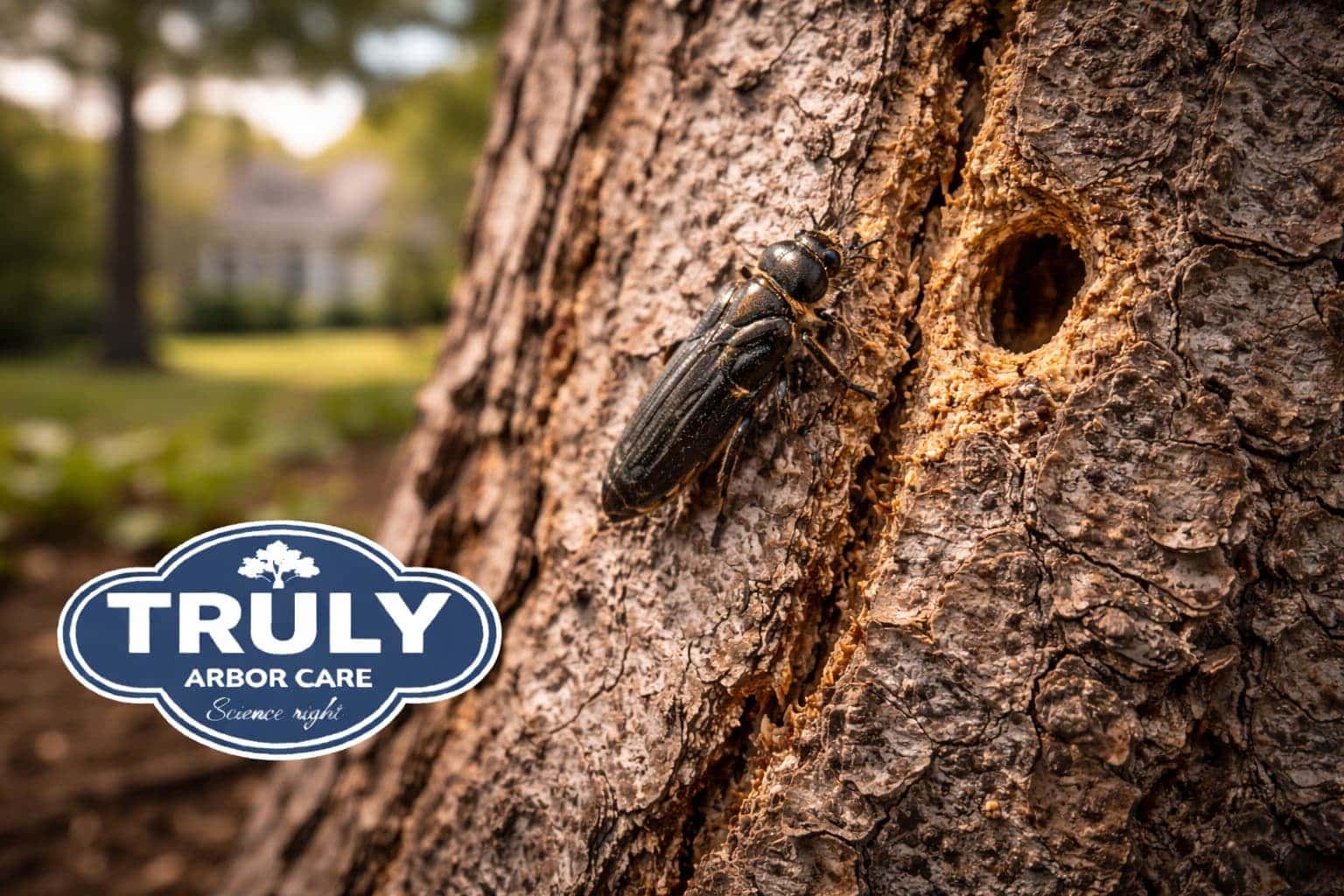
Identification and Morphology
Adult soapberry borers are slender metallic beetles belonging to the Buprestidae family, commonly referred to as metallic wood-boring beetles.
Adults are typically bronze to dark metallic in coloration and measure approximately 6 to 12 mm in length.
Larvae are cream-colored, flattened grubs with enlarged segments behind the head, characteristic of Agrilus species.
⸻
Distinguishing Characteristics
Key identifying features include:
- D-shaped exit holes in bark
- Vertical bark splitting
- Dieback in upper canopy
- Fine frass within bark crevices
Unlike bark beetles that remain beneath outer bark layers, Agrilus larvae bore through cambium and into sapwood tissues.
⸻
Host Trees in North Texas
Primary host:
- Western soapberry (Sapindus drummondii)
Occasional infestations may occur in closely related species.
Texas A&M Forest Service notes that Agrilus species often target trees under environmental stress rather than healthy, vigorous hosts.
In the DFW Metroplex, soapberry trees in urban settings are particularly vulnerable during extended summer drought.
⸻
Life Cycle in Texas
Soapberry borers generally produce one generation per year in Texas.
- Adults emerge in spring to early summer
- Eggs are laid on bark surfaces
- Larvae hatch and tunnel into cambial tissue
- Feeding continues through summer
- Pupation occurs within the wood
- Adults exit through D-shaped holes
Damage becomes noticeable after adult emergence.
⸻
Impact on Tree Health
Larval feeding disrupts water and nutrient transport by damaging vascular tissues.
Symptoms may include:
- Progressive canopy thinning
- Branch dieback
- Bark splitting
- Reduced leaf size
- Eventual structural weakening
Texas A&M AgriLife indicates that prolonged infestations combined with drought stress may lead to significant decline.
In North Texas urban landscapes, aesthetic decline often precedes structural concerns.
⸻
Environmental Stress and Susceptibility
Trees experiencing:
- Drought
- Soil compaction
- Root disturbance
- Mechanical injury
are more likely to attract egg-laying adults.
Maintaining soil health and irrigation consistency improves resilience.
⸻
Management and Professional Evaluation in the DFW Metroplex
Texas A&M guidance emphasizes stress reduction and monitoring.
Recommended practices include:
- Maintaining proper irrigation during dry periods
- Avoiding trunk injury
- Monitoring for early canopy thinning
- Removing severely infested trees when structural integrity is compromised
Preventative chemical treatments may be limited in effectiveness once larvae are established inside the wood.
ANSI A300 Plant Health Care standards emphasize preservation through vigor management and structural assessment.
⸻
Professional Assessment in North Texas
As ISA Certified Arborists serving North Texas and the DFW Metroplex, Truly Arbor Care evaluates soapberry borer infestations within a comprehensive plant health and structural risk framework.
Early identification improves preservation outcomes in high-value landscape trees.
For more information, check out the Texas A&M article on soapberry borers here.