
Variable Oakleaf Caterpillar in North Texas
Understanding Anisota virginiensis and Its Impact on Oak Trees in the DFW Metroplex
Pinkstriped oakworm (Anisota virginiensis) is a native defoliating caterpillar species that periodically affects oak trees throughout North Texas and the greater DFW Metroplex. This insect belongs to the Saturniidae family of moths and is commonly associated with seasonal defoliation events on oak species.
According to research published by Texas A&M AgriLife Extension and university entomology programs, pinkstriped oakworm populations occasionally reach outbreak levels where large numbers of caterpillars feed simultaneously on oak foliage. During these outbreaks, significant defoliation may occur over short periods of time.
Although most healthy mature trees can tolerate occasional feeding damage, repeated or severe infestations can weaken trees, reduce photosynthesis, and create environmental stress conditions that make the tree more vulnerable to secondary pests or diseases.
Professional diagnosis by an ISA Certified Arborist using science-based plant healthcare practices ensures that insect pressure is properly evaluated and managed. Arborists working under ANSI A300 tree care standards and TCIA plant healthcare guidelines can determine whether pest pressure requires treatment or if natural biological controls will regulate the population.
Understanding the biology, environmental triggers, and damage patterns associated with pinkstriped oakworms is essential for maintaining healthy oak trees across North Texas landscapes.
Host Trees Susceptible to Pinkstriped Oakworm
Pinkstriped oakworm larvae primarily feed on oak trees within the genus Quercus. Oaks are among the most important shade trees throughout North Texas urban forests and residential landscapes.
Common host trees include:
- Shumard Oak (Quercus shumardii)
- Red Oak (Quercus rubra)
- Pin Oak (Quercus palustris)
- Water Oak (Quercus nigra)
- Live Oak (Quercus virginiana)
These trees are widely planted throughout the DFW Metroplex due to their shade canopy, environmental benefits, and landscape value.
Because oaks are dominant species across many neighborhoods in North Texas, localized outbreaks of pinkstriped oakworm caterpillars can affect multiple trees within the same landscape.
However, healthy mature trees often recover from defoliation by producing a second flush of foliage later in the growing season.
⸻
Environmental Conditions That Promote Oakworm Outbreaks
Pinkstriped oakworm populations fluctuate naturally depending on environmental conditions.
According to Texas A&M research, several factors can contribute to population increases:
- Warm spring and summer temperatures
- Mild winters that allow greater larval survival
- Reduced predator populations
- Large concentrations of oak host trees
Urban environments within the DFW Metroplex sometimes create ideal conditions for insect populations because natural predator diversity may be reduced compared to forest ecosystems.
When environmental conditions favor reproduction, caterpillar populations may expand quickly, resulting in noticeable defoliation events across affected neighborhoods.
⸻
Life Cycle of the Pinkstriped Oakworm
Understanding the life cycle of Anisota virginiensis helps arborists determine when pest management treatments are most effective.
Egg Stage
Adult moths lay clusters of eggs on the underside of oak leaves during late spring and early summer.
Larval Stage
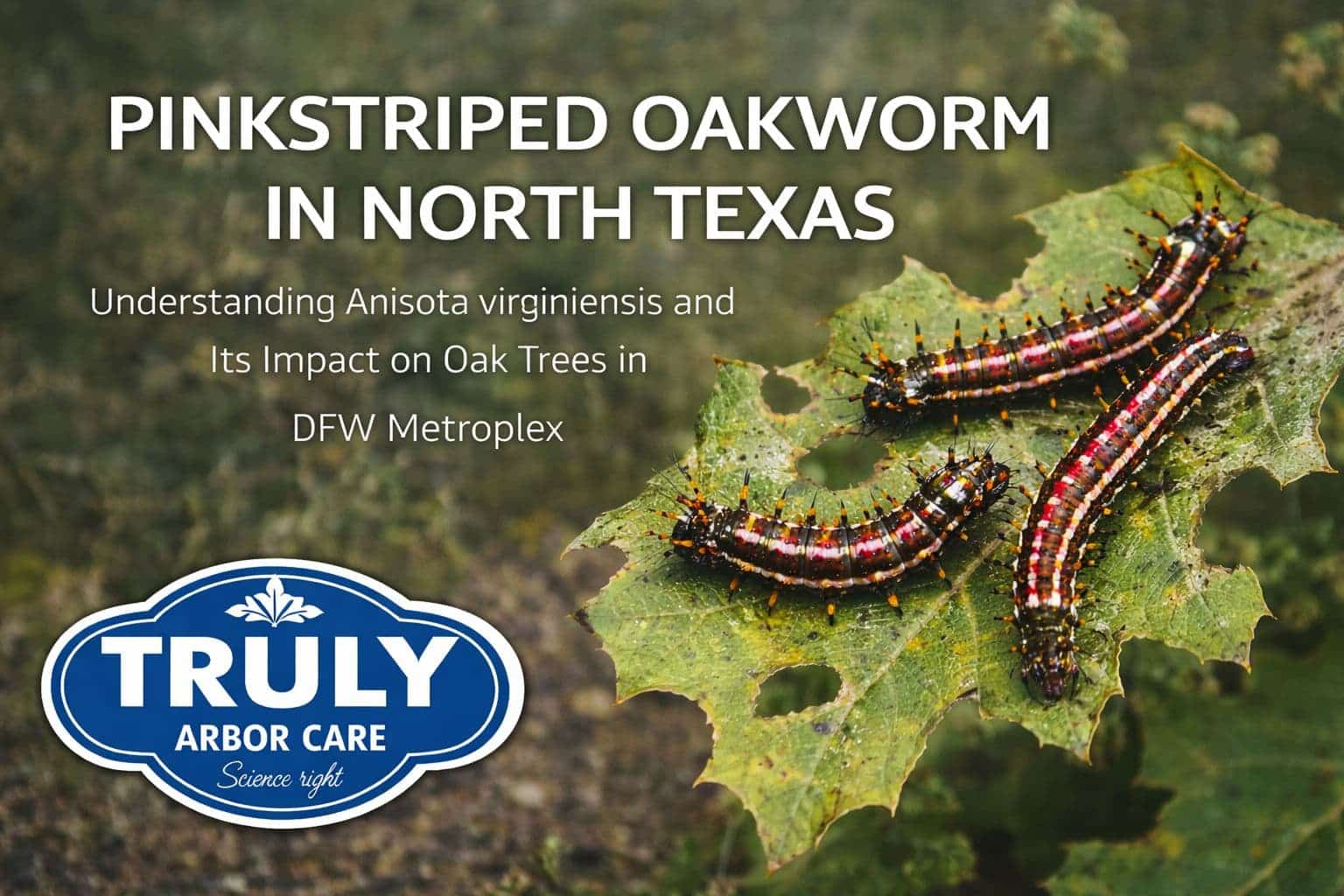
After hatching, caterpillars begin feeding on oak foliage. The larvae are easily identifiable due to their distinctive pink or orange stripes running along the length of the body.
During this stage, feeding damage becomes visible as caterpillars consume leaf tissue.
Pupal Stage
When larvae mature, they drop to the ground and pupate within the soil beneath the tree.
Adult Stage
Adult moths emerge from the soil and repeat the reproductive cycle.
In North Texas, multiple generations may occur depending on environmental conditions and seasonal temperatures.
⸻
Symptoms and Identification of Pinkstriped Oakworm Damage
The most visible symptom of pinkstriped oakworm infestations is leaf defoliation.
Typical signs of feeding damage include:
- Ragged leaf edges from chewing activity
- Skeletonized leaves where only veins remain
- Large groups of caterpillars feeding simultaneously
- Accumulations of frass (caterpillar droppings) beneath the canopy
- Thinning canopy during heavy infestations
During severe outbreaks, entire branches may be stripped of foliage.
ISA Certified Arborists evaluating tree health across North Texas routinely inspect oak canopies for signs of defoliating insects during seasonal plant healthcare evaluations.
⸻
Consequences of Severe Defoliation
Most mature oak trees can tolerate moderate defoliation without permanent damage. However, repeated or severe infestations may cause stress.
Potential impacts include:
- Reduced photosynthetic capacity
- Lower carbohydrate storage within the tree
- Increased vulnerability to drought stress
- Greater susceptibility to secondary pests and pathogens
Young trees and recently planted landscapes may be more vulnerable because their root systems and energy reserves are still developing.
When oak trees experience repeated stress from insect feeding combined with environmental stress factors such as drought or compacted soil conditions, long-term decline may occur.
⸻
Integrated Pest Management (IPM) for Oak Defoliators
Modern arboriculture emphasizes Integrated Pest Management (IPM) strategies for controlling insect pests.
IPM focuses on monitoring pest populations and applying treatments only when economic or ecological thresholds are reached.
Management strategies may include:
- Monitoring caterpillar populations during early larval stages
- Encouraging beneficial insects and natural predators
- Applying biological insecticides when necessary
- Using targeted systemic treatments for high-value trees
Most treatments are most effective when applied early in the larval development stage before extensive feeding damage occurs.
⸻
Plant Healthcare Programs That Protect Oak Trees
Proactive plant healthcare programs help trees withstand environmental stress and pest pressure.
Professional arborists may implement:
- Soil testing and nutrient balancing
- Root zone aeration to improve oxygen availability
- Organic soil amendments
- Mycorrhizal inoculation
- Proper watering strategies
Healthy soil conditions allow trees to develop strong root systems that support vigorous canopy growth and natural pest resistance.
These science-based plant healthcare programs are widely recommended by Texas A&M AgriLife Extension and professional arboriculture organizations.
⸻
Protecting Oak Trees Across North Texas
Oak trees provide shade, environmental benefits, and landscape value throughout the DFW Metroplex. Protecting these trees requires proactive monitoring and science-based plant healthcare management.
Routine inspections by an ISA Certified Arborist ensure that trees are evaluated according to ANSI A300 standards and modern arboricultural science.
Early detection of pest pressure allows property owners to intervene before insect populations cause severe damage to valuable oak trees across North Texas landscapes.
For more information, check out the Texas A&M article on Pinkstriped oakworm here.