
Pine Tip Moth in North Texas
Understanding Rhyacionia spp. and Its Impact on Pine Trees in the DFW Metroplex
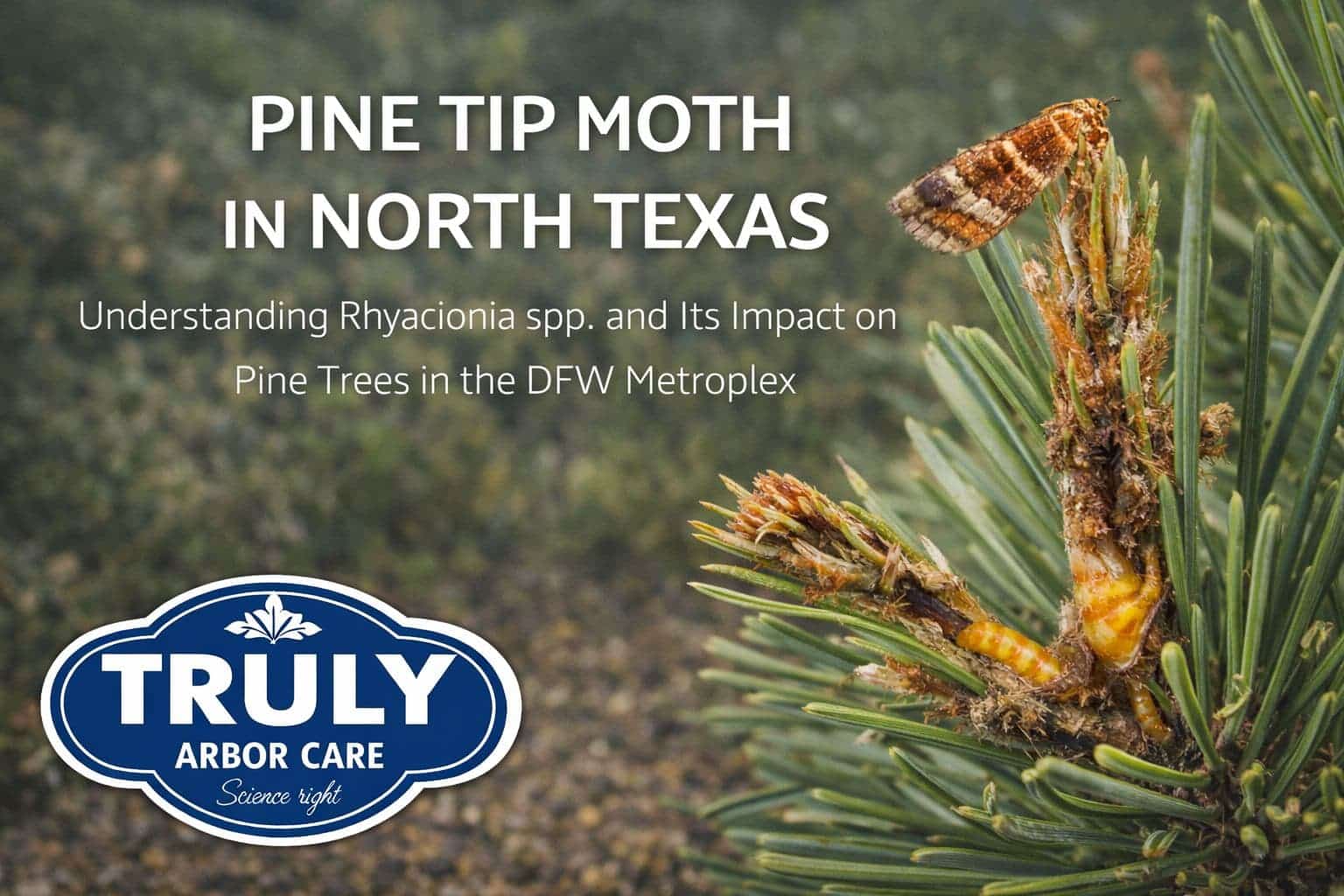
Pine tip moths are among the most common insect pests affecting pine trees throughout North Texas and the greater DFW Metroplex. These insects belong to the genus Rhyacionia and are small moths whose larvae feed on developing pine shoots, causing shoot dieback, distorted growth, and reduced tree vigor.
According to research published by Texas A&M AgriLife Extension and university entomology programs, pine tip moth damage is most common in young pine trees and newly established pine plantings. While mature trees may tolerate occasional infestations, repeated attacks can stunt growth and create long-term structural problems in ornamental or plantation pines.
The larvae of pine tip moths tunnel into the tips of new pine shoots where they feed on the developing tissue. This feeding activity disrupts normal growth patterns and can cause the affected shoots to wilt, turn brown, and die.
Because pine trees are widely planted throughout the DFW Metroplex and North Texas landscapes for windbreaks, screening, and ornamental use, monitoring pine tip moth populations is an important part of professional plant healthcare programs.
Routine inspections by an ISA Certified Arborist following ANSI A300 tree care standards and TCIA plant healthcare protocols help identify pest pressure early and implement integrated pest management strategies that protect pine tree health.
Pine Species Susceptible to Pine Tip Moth
Pine tip moths primarily affect trees within the genus Pinus. Several pine species commonly planted in North Texas landscapes may serve as hosts.
Susceptible species include:
- Loblolly Pine (Pinus taeda)
- Shortleaf Pine (Pinus echinata)
- Slash Pine (Pinus elliottii)
- Austrian Pine (Pinus nigra)
- Ponderosa Pine (Pinus ponderosa)
Young trees are particularly vulnerable because their growth depends heavily on healthy terminal shoots. When pine tip moth larvae destroy these shoots, the tree may develop multiple competing leaders or distorted branch structure.
In ornamental landscapes across North Texas, pine tip moth damage is most frequently observed in newly planted pines used for privacy screens, windbreaks, and landscape accents.
⸻
Environmental Conditions That Encourage Pine Tip Moth Activity
Pine tip moth populations fluctuate depending on seasonal weather conditions and host availability.
Texas A&M entomology research indicates that several environmental factors can influence outbreaks:
- Warm spring temperatures
- Mild winters allowing higher larval survival
- Abundant young pine growth
- Reduced predator populations
Urban environments within the DFW Metroplex may sometimes favor insect population growth because natural predator populations may be lower than in natural forest ecosystems.
Multiple generations of pine tip moths can occur during a single growing season, particularly when environmental conditions are favorable.
⸻
Life Cycle of the Pine Tip Moth
Understanding the life cycle of Rhyacionia species helps determine when treatments are most effective.
Egg Stage
Adult moths lay eggs on pine needles and young shoots during spring.
Larval Stage
After hatching, larvae bore into the tips of pine shoots and begin feeding internally. This stage causes the most significant damage to the tree.
Pupal Stage
After feeding within the shoot, larvae pupate inside the damaged tissue.
Adult Stage
Adult moths emerge from the pupae and begin a new reproductive cycle.
Texas A&M research indicates that several generations may occur annually depending on climate conditions. This repeated cycle allows populations to increase rapidly if not monitored.
⸻
Symptoms and Identification of Pine Tip Moth Damage
Pine tip moth infestations produce distinctive symptoms that arborists can identify during tree health inspections.
Common signs include:
- Browning of pine shoot tips
* Wilted or dead terminal growth
* Curled or distorted pine shoots
* Multiple lateral shoots forming after tip damage
* Reduced vertical growth of young trees
Damaged shoots often contain small entrance holes where larvae tunneled into the plant tissue.
ISA Certified Arborists evaluating pine tree health across North Texas routinely inspect developing shoots for signs of tip moth activity during seasonal plant healthcare evaluations.
⸻
Consequences of Pine Tip Moth Infestations
Healthy mature pine trees typically tolerate occasional feeding damage. However, repeated infestations can cause long-term structural and growth problems.
Potential consequences include:
- Reduced tree height growth
* Multiple competing leaders
* Deformed branch structure
* Increased susceptibility to environmental stress
Young pine trees planted for screening or windbreak purposes may develop irregular growth patterns if infestations occur repeatedly during early development.
In North Texas landscapes where pine trees provide ornamental structure or privacy screening, unmanaged pine tip moth infestations can reduce the aesthetic value of the planting.
⸻
Integrated Pest Management for Pine Tip Moth
Modern arboriculture emphasizes Integrated Pest Management (IPM) strategies for controlling insect pests while protecting beneficial organisms and minimizing unnecessary pesticide use.
Professional management strategies may include:
- Monitoring moth emergence using pheromone traps
* Identifying early larval feeding activity
* Encouraging beneficial insect predators
* Applying targeted insecticide treatments when necessary
Timing treatments correctly is essential because insecticides are most effective when larvae are exposed before tunneling into the shoots.
ISA Certified Arborists develop pest management programs based on monitoring results and environmental conditions.
⸻
Plant Healthcare Programs That Protect Pine Trees
Preventive plant healthcare programs can help pine trees withstand pest pressure and environmental stress.
Professional plant healthcare services may include:
- Soil testing and nutrient balancing
- Root aeration and oxygenation
- Organic soil amendments
- Proper irrigation management
- Seasonal pest monitoring
Healthy soil conditions support vigorous root systems and strong shoot development, which improves a tree’s ability to recover from insect feeding damage.
These science-based practices are widely recommended by Texas A&M AgriLife Extension and professional arboriculture organizations.
⸻
Protecting Pine Trees Across North Texas
Pine trees contribute important landscape value across North Texas communities. They provide evergreen screening, wind protection, and ornamental diversity within the urban forest.
Protecting these trees requires proactive monitoring and science-based plant healthcare strategies.
Routine inspections by an ISA Certified Arborist ensure pine trees are evaluated according to ANSI A300 standards and modern arboricultural science. Early detection of pest pressure allows property owners to intervene before pine tip moth populations cause significant damage.
For more information, check out the Texas A&M article on Pine tip moths here.