
Peachtree Borer in North Texas
Synanthedon exitiosa
Trunk and Root Crown Damage in the DFW Metroplex
The peachtree borer, Synanthedon exitiosa, is a clearwing moth whose larvae bore into the trunk and root crown of peach and other stone fruit trees. According to Texas A&M AgriLife Extension, this insect is one of the most destructive pests of peach trees in Texas and can cause serious structural damage when infestations are unmanaged.
In North Texas and the DFW Metroplex, peachtree borer infestations are commonly observed in residential orchards, backyard fruit plantings, and ornamental Prunus species under environmental stress.
Identification and Morphology
Adult peachtree borers resemble wasps, with clear wings and metallic blue-black bodies marked with orange bands on the abdomen. This mimicry helps them avoid predators.
The damaging stage is the larval stage. Larvae are creamy white with brown heads and may reach up to 1 inch in length. They bore into the cambium and lower trunk tissues near the soil line.
Unlike bark beetles, peachtree borer larvae tunnel within the root crown and lower trunk rather than beneath the bark higher up the tree.
⸻
Distinguishing Characteristics
Key identifying features include:
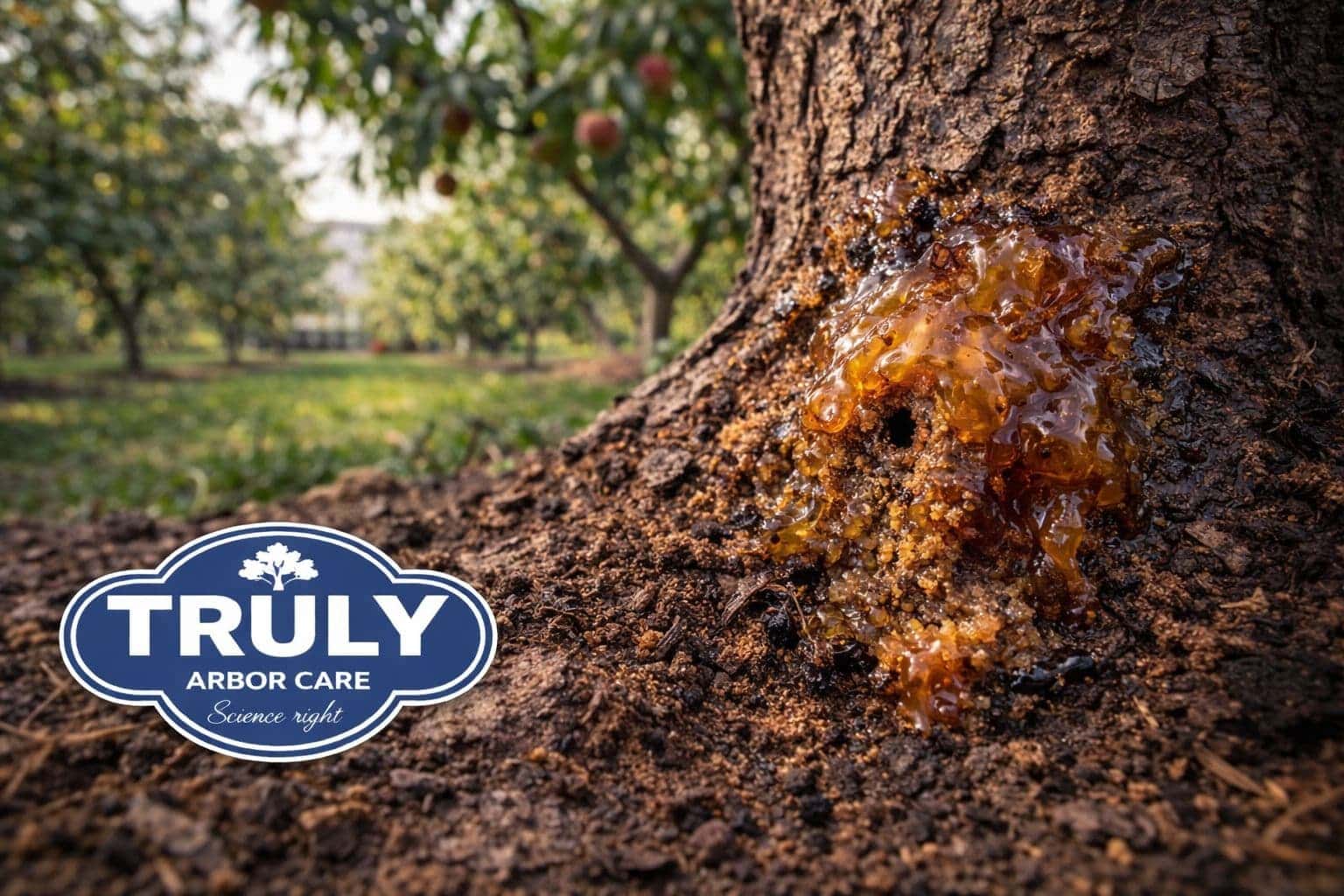
- Gummosis at the base of the trunk
- Amber-colored sap mixed with frass
- Entry holes near soil line
- Sudden decline in young peach trees
Texas A&M documentation emphasizes that heavy gum exudation at the trunk base is one of the most reliable field indicators.
⸻
Host Range in Texas
Primary hosts include:
- Peach
- Plum
- Nectarine
- Cherry
- Other Prunus species
In North Texas landscapes, young and newly planted peach trees are particularly vulnerable. Stress from improper planting depth, drought, or mechanical injury increases susceptibility.
⸻
Life Cycle in Texas
In Texas, peachtree borer typically produces one generation per year.
- Adults emerge in late spring to summer
- Females lay eggs on bark near soil line
- Larvae hatch and bore into cambium
- Feeding continues through summer
- Larvae overwinter inside the trunk
Damage is often most severe at the root crown.
⸻
Impact on Tree Health
Larval feeding disrupts water and nutrient transport by damaging cambial tissues. Young trees may decline rapidly and can die if girdling occurs.
Texas A&M AgriLife Extension notes that older, established trees may tolerate limited feeding, but repeated infestations significantly weaken structural integrity.
In the DFW Metroplex, backyard orchard plantings are most commonly affected.
⸻
Environmental Stress and Risk
Trees experiencing:
- Drought stress
- Mechanical injury at trunk base
- Improper mulch placement against trunk
- Soil compaction
are more attractive to egg-laying females.
Maintaining proper trunk clearance and irrigation consistency reduces infestation risk.
⸻
Management and Prevention in North Texas
Texas A&M guidance recommends preventative management strategies including:
- Monitoring trunk base for gum and frass
- Maintaining weed-free trunk area
- Avoiding mulch contact with bark
- Timed insecticide applications when adults are active
Early detection is critical because internal feeding is difficult to reverse once larvae are established.
ANSI A300 Plant Health Care standards emphasize maintaining overall tree vigor and minimizing stress factors.
⸻
Professional Evaluation in the DFW Metroplex
As ISA Certified Arborists serving North Texas, Truly Arbor Care evaluates peachtree borer infestations within a comprehensive plant health framework. Early intervention significantly improves preservation outcomes in high-value fruit trees.
For more information, check out the Texas A&M article on peachtree borer here.