
Oak Leafroller in North Texas
Rolled Leaf Damage in the DFW Metroplex
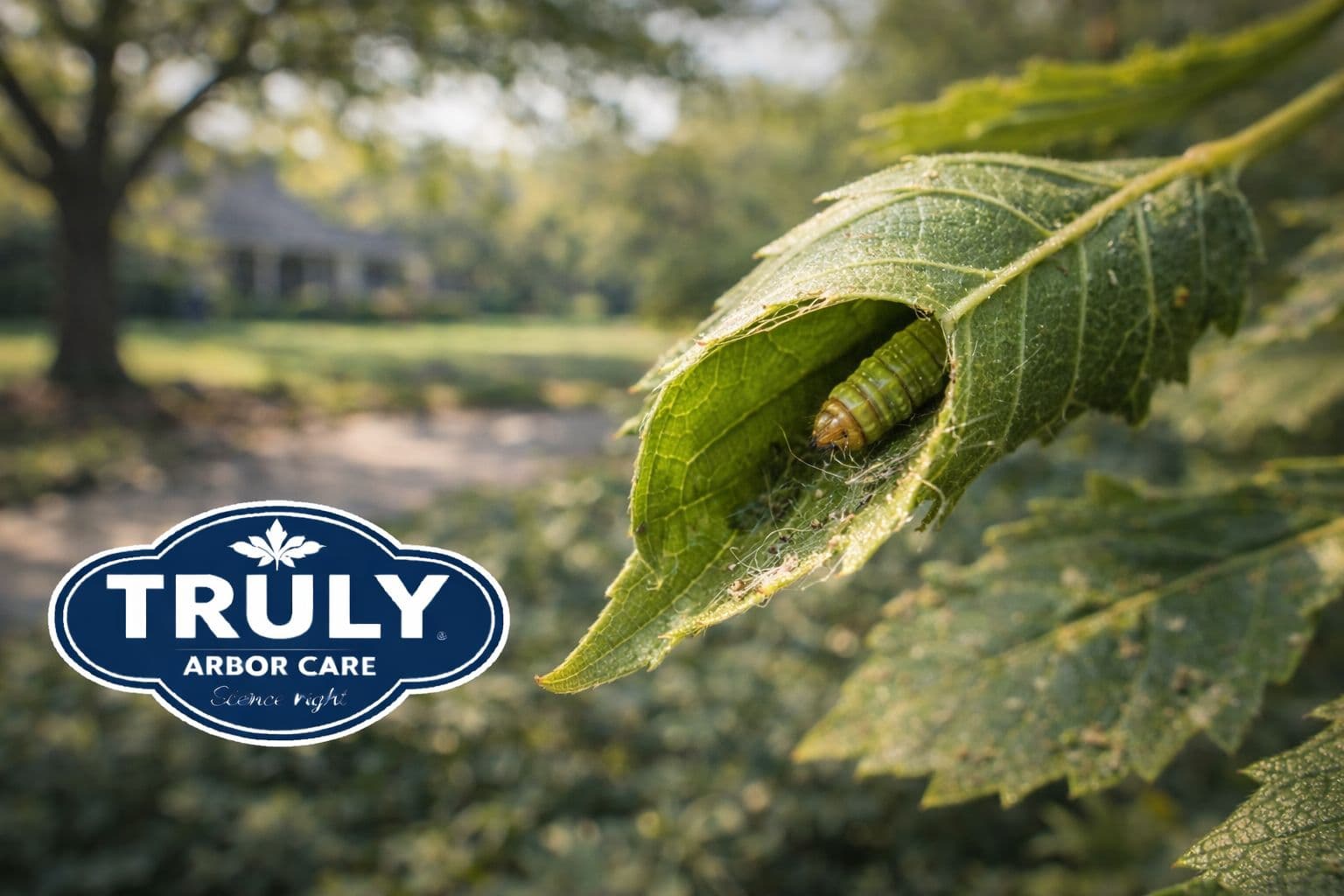
The oak leafroller, Archips semiferana, is a native leaf-feeding moth whose larvae feed on oak foliage throughout Texas. According to Texas A&M AgriLife Extension and Texas A&M Forest Service publications, oak leafrollers are commonly observed during spring when larvae roll or fold leaves to create protective feeding shelters.
In North Texas and across the DFW Metroplex, infestations are typically noticeable during early to mid-spring when newly expanded oak leaves are vulnerable.
ISA Certified Arborist Evaluation and Texas A&M Research Context
As ISA Certified Arborists serving North Texas, Truly Arbor Care evaluates oak leafroller infestations using science-based plant health care standards aligned with Texas A&M research. Proper identification is essential because rolled leaves may be mistaken for fungal leaf curl or environmental stress injury.
Texas A&M guidance indicates that most healthy oak trees tolerate limited leafroller feeding without long-term damage.
⸻
Identification and Morphology
Adult oak leafroller moths are small, brownish moths with subtle wing markings. They are rarely noticed by homeowners.
The damaging stage is the larval stage. Caterpillars are green to brown and relatively small, feeding within leaves that are folded or rolled together with silk.
⸻
Distinguishing Characteristics
Key identifying features include:
- Rolled or folded oak leaves
- Silk binding leaves together
- Feeding damage within leaf roll
- Frass inside leaf shelter
Unlike tent caterpillars, oak leafrollers create small individual shelters rather than large communal webs.
⸻
Host Trees in North Texas
Primary hosts include:
- Red oak species
- Live oak
- Post oak
- Other native oaks
Texas A&M Forest Service documentation indicates that leafrolling species are generally host-specific and cause localized feeding.
In the DFW Metroplex, ornamental and native oaks may show visible rolled leaves in spring.
⸻
Life Cycle in Texas
Oak leafrollers typically produce one generation per year in Texas.
- Eggs overwinter on bark
- Larvae hatch in early spring
- Feeding occurs during leaf expansion
- Pupation occurs within leaf rolls or nearby structures
- Adults emerge later in spring
Feeding activity generally subsides as leaves mature.
⸻
Impact on Tree Health
Damage may include:
- Minor canopy thinning
- Cosmetic leaf distortion
- Temporary reduction in photosynthetic capacity
Texas A&M AgriLife indicates that most infestations are aesthetic and rarely threaten mature tree health.
However, repeated defoliation combined with drought stress in North Texas may reduce vigor.
⸻
Environmental Stress and Susceptibility
Trees experiencing:
- Drought
- Compacted soils
- Root disturbance
- Urban heat stress
may show slower recovery from defoliation.
Maintaining tree vigor improves resilience.
⸻
Management and Professional Guidance in North Texas
Texas A&M recommends monitoring populations before implementing treatment.
Management strategies may include:
- Mechanical removal of rolled leaves
- Targeted insecticide application during early larval stages
- Maintaining overall tree health
ANSI A300 Plant Health Care standards emphasize integrated pest management and proper diagnosis.
⸻
Professional Assessment in the DFW Metroplex
As ISA Certified Arborists serving North Texas and the DFW Metroplex, Truly Arbor Care evaluates oak leafroller infestations within a comprehensive plant health framework to determine whether intervention is necessary.
For more information, check out the Texas A&M article on oak leafroller here.