
Linden Looper in North Texas
Erannis tiliaria | Early-Season Defoliation in the DFW Metroplex
The linden looper, Erannis tiliaria, is a native geometrid moth whose larvae feed on the foliage of hardwood trees throughout parts of Texas. According to Texas A&M AgriLife Extension and Texas A&M Forest Service guidance, linden looper activity is typically observed in early spring when larvae consume newly expanding leaves.
In North Texas and across the DFW Metroplex, infestations are most commonly associated with shade trees in residential and urban landscapes.
ISA Certified Arborist Evaluation and Texas A&M Research Context
As ISA Certified Arborists serving North Texas, Truly Arbor Care evaluates linden looper infestations using science-based diagnostic standards aligned with Texas A&M research. Because early-season defoliation may resemble freeze damage or drought stress, proper identification of Erannis tiliaria is critical before recommending management.
Texas A&M guidance indicates that most healthy, established trees tolerate limited spring defoliation without long-term injury.
⸻
Identification and Morphology
Adult linden looper moths are light brown to gray with subtle wing markings. Females are often wingless or have reduced wings, depending on population.
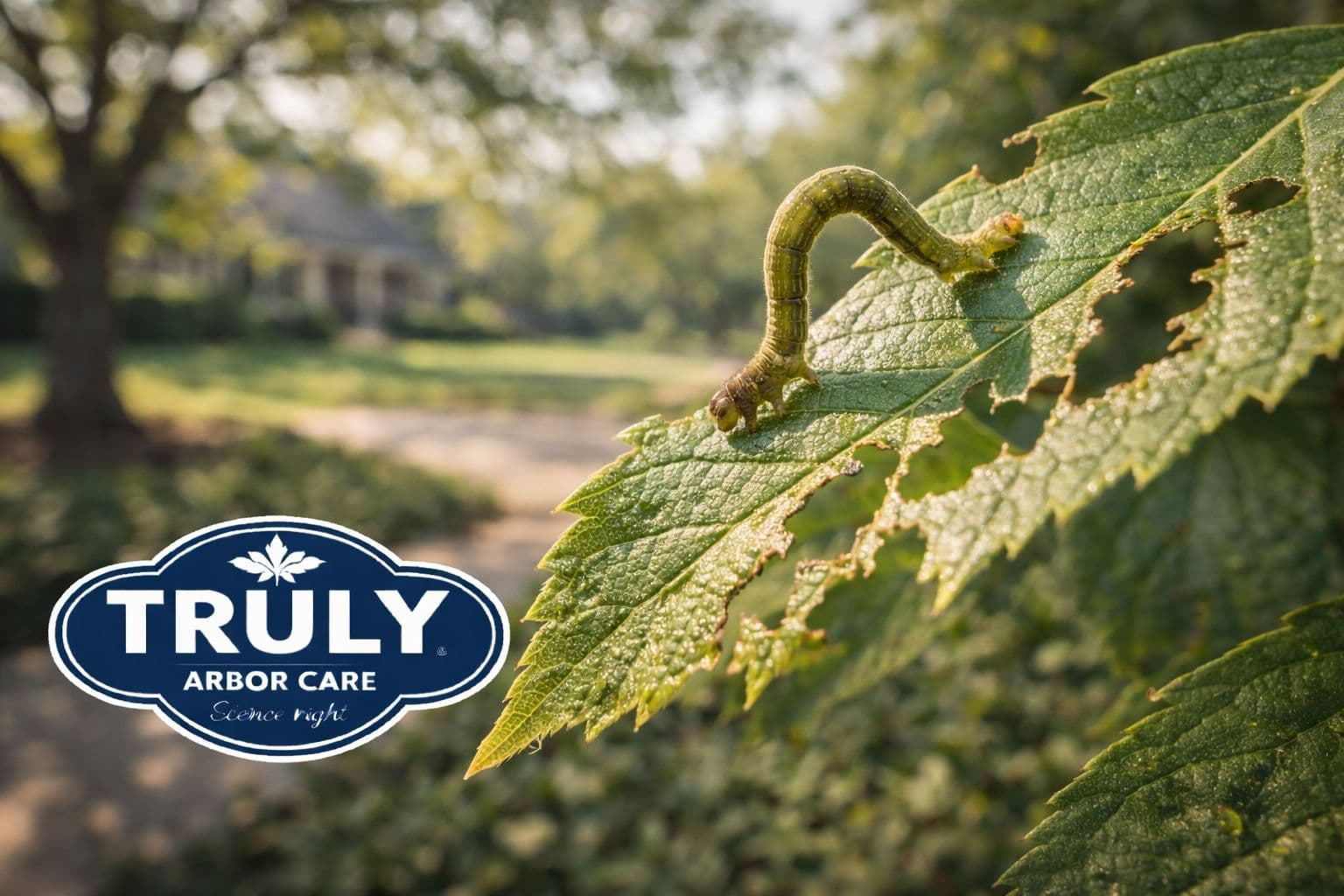
Larvae are slender, green to brown caterpillars that move in a looping or inchworm-like motion, characteristic of geometrid species. Mature larvae typically reach about 1 to 1.5 inches in length.
⸻
Distinguishing Characteristics
Key identifying features include:
- Inchworm-like looping movement
- Feeding on newly emerging leaves
- Irregular chewing along leaf margins
- Early spring canopy thinning
Unlike tent caterpillars, linden loopers do not construct silk tents.
⸻
Host Trees in North Texas
Primary hosts may include:
- Linden (Tilia species)
- Oak
- Elm
- Maple
- Various hardwood shade trees
Texas A&M Forest Service documentation notes that linden and other ornamental hardwoods may show noticeable feeding damage during outbreak years.
In the DFW Metroplex, landscape trees planted in high-density urban environments are most likely to display visible defoliation.
⸻
Life Cycle in Texas
Linden looper typically produces one generation per year.
- Eggs overwinter on twigs
- Larvae hatch in early spring
- Feeding occurs during leaf expansion
- Pupation occurs in soil
- Adults emerge later in the season
Early-season feeding coincides with vulnerable new growth.
⸻
Impact on Tree Health
Defoliation may result in:
- Temporary canopy thinning
- Reduced photosynthetic capacity
- Slowed early-season growth
Texas A&M AgriLife indicates that healthy trees typically refoliate after early-season feeding. However, repeated outbreaks combined with drought stress in North Texas may reduce vigor over time.
In the DFW Metroplex, aesthetic impact is often the primary concern.
⸻
Environmental Stress and Susceptibility
Trees experiencing:
- Drought stress
- Soil compaction
- Root disturbance
- Urban heat exposure
may recover more slowly from defoliation.
Maintaining soil health and consistent irrigation improves resilience.
⸻
Management and Professional Guidance in North Texas
Texas A&M recommends monitoring larval populations before implementing treatment.
Management strategies may include:
- Mechanical removal when feasible
- Targeted insecticide application during early larval stages
- Maintaining overall tree vigor
ANSI A300 Plant Health Care standards emphasize integrated pest management and environmental stress reduction.
⸻
Professional Assessment in the DFW Metroplex
As ISA Certified Arborists serving North Texas and the DFW Metroplex, Truly Arbor Care evaluates linden looper infestations within a comprehensive plant health framework to determine whether intervention is necessary.
For more information, check out the Texas A&M article on Linden Looper here.