
Euonymus Scale in Texas
Unaspis euonymi | Shrub and Ornamental Decline in DFW Landscapes
Euonymus scale, Unaspis euonymi, is an armored scale insect that primarily affects euonymus shrubs and certain ornamental plantings throughout Texas. According to Texas A&M AgriLife Extension, this pest is one of the most destructive insects impacting evergreen ornamental shrubs in residential and commercial landscapes.
In North Texas, heavy infestations are common in foundation plantings, commercial hedges, and high-density shrub beds where air circulation is limited and plant stress is elevated.
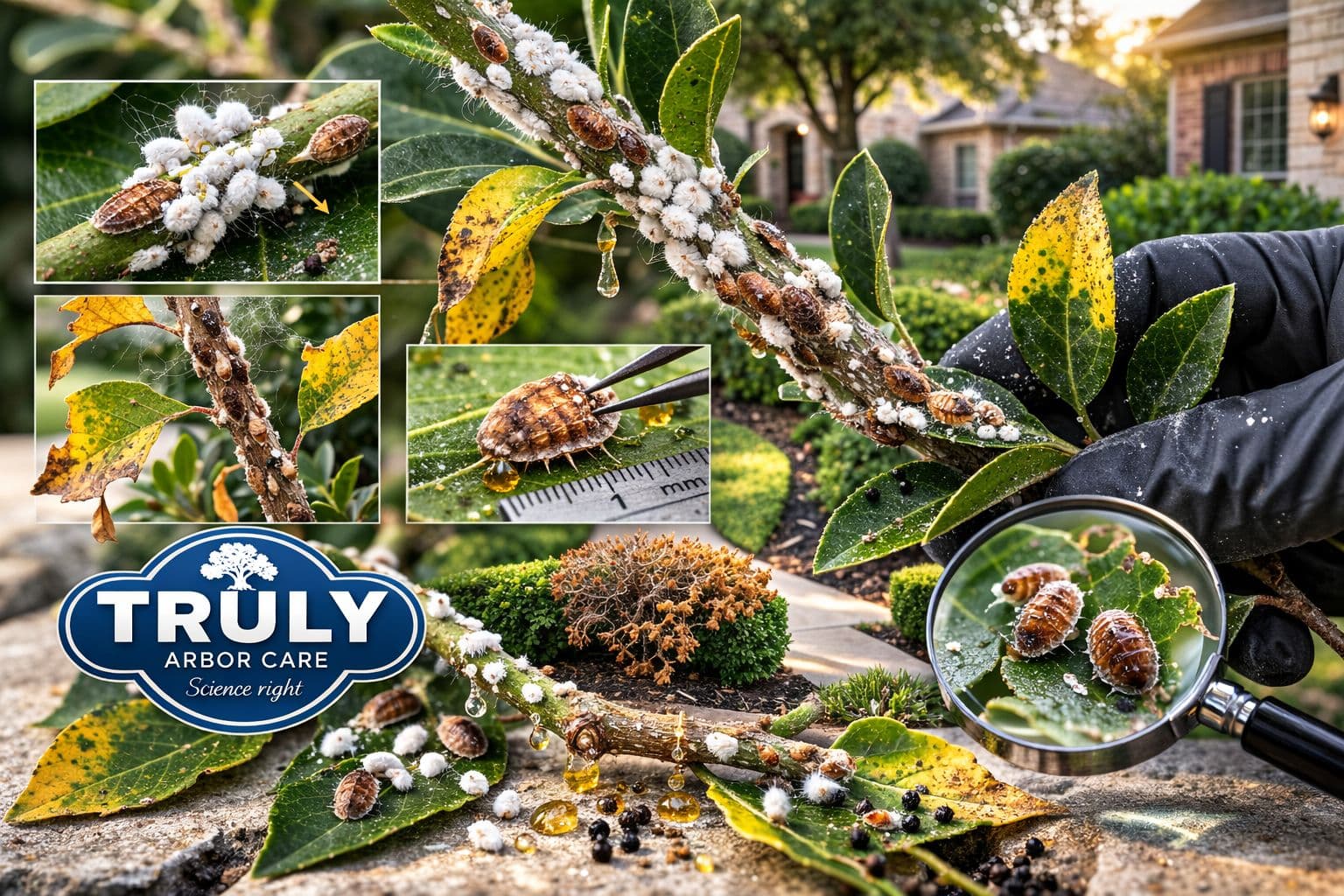
Identification and Morphology
Euonymus scale is a small armored scale insect belonging to the family Diaspididae.
Females appear as dark brown, elongated, oyster-shaped coverings attached to stems and twigs. Males are smaller and white, often clustered along stems, creating a cottony or crusted appearance.
The insects feed by inserting piercing mouthparts into plant tissue and extracting sap.
⸻
Distinguishing Characteristics
Key indicators include:
- White male scale covers densely clustered on stems
- Brown elongated female scales attached to bark
- Yellow spotting on leaves
- Premature leaf drop
- Branch dieback in severe infestations
Infestations often begin on lower stems and gradually move upward.
⸻
Host Range in Texas
Primary hosts include:
- Evergreen euonymus
- Wintercreeper euonymus
- Certain holly varieties
- Pachysandra in some cases
Texas A&M extension materials note that evergreen euonymus is particularly susceptible and may suffer severe decline when infestations are unmanaged.
In DFW landscapes, this pest is frequently observed in mass plantings along building foundations.
⸻
Life Cycle in Texas
Euonymus scale may produce multiple generations per year in Texas due to extended warm seasons.
- Eggs hatch beneath protective female scale covering
- Crawlers emerge and disperse to new feeding sites
- Crawlers settle and develop protective armor
- Multiple overlapping generations occur in warm climates
Crawler stage is the most vulnerable to chemical treatment.
⸻
Signs and Impact on Shrubs
Common symptoms include:
- Leaf yellowing or chlorosis
- Speckled foliage
- Premature leaf drop
- Twig dieback
- Overall shrub thinning
Heavy infestations can weaken shrubs significantly and may result in plant death if untreated.
Unlike defoliating caterpillars, scale insects cause chronic decline through continuous sap extraction.
⸻
Environmental Stress Factors
Euonymus scale infestations are often intensified by:
- Poor air circulation
- Dense planting patterns
- Drought stress
- Nutrient imbalance
- Compacted soils
North Texas summer heat can exacerbate plant stress and accelerate infestation severity.
⸻
Management and Treatment
Texas A&M AgriLife Extension recommends:
- Early detection during crawler stage
- Horticultural oil applications
- Targeted systemic insecticides when warranted
- Pruning heavily infested branches
- Improving overall shrub vigor
ANSI A300 Plant Health Care standards emphasize integrated management rather than routine blanket spraying.
⸻
Professional Evaluation in DFW
As ISA Certified Arborists serving the Dallas–Fort Worth region, Truly Arbor Care evaluates scale infestations within a broader plant health framework. Early intervention significantly improves preservation outcomes in ornamental shrub plantings.
For more information, check out the Texas A&M article on Euonymus scale here.