
Elm Spanworm in Texas
Ennomos subsignarius | Defoliation Risk in DFW Landscapes
The elm spanworm, Ennomos subsignarius, is a native defoliating moth species found throughout portions of Texas and the eastern United States. According to Texas A&M AgriLife Extension and Texas A&M Forest Service publications, elm spanworm larvae feed primarily on elm foliage and can cause noticeable defoliation during outbreak years.
While large-scale forest outbreaks are uncommon in Texas compared to northern states, localized infestations may occur in urban and residential landscapes. In the Dallas–Fort Worth region, ornamental and native elm species can experience aesthetic damage when caterpillar populations increase during favorable environmental conditions.
Identification and Morphology
Adult elm spanworm moths are light tan to cream-colored with subtle wing markings and a wingspan of approximately 1.5 to 2 inches. The moths are typically active at night and are rarely noticed by homeowners.
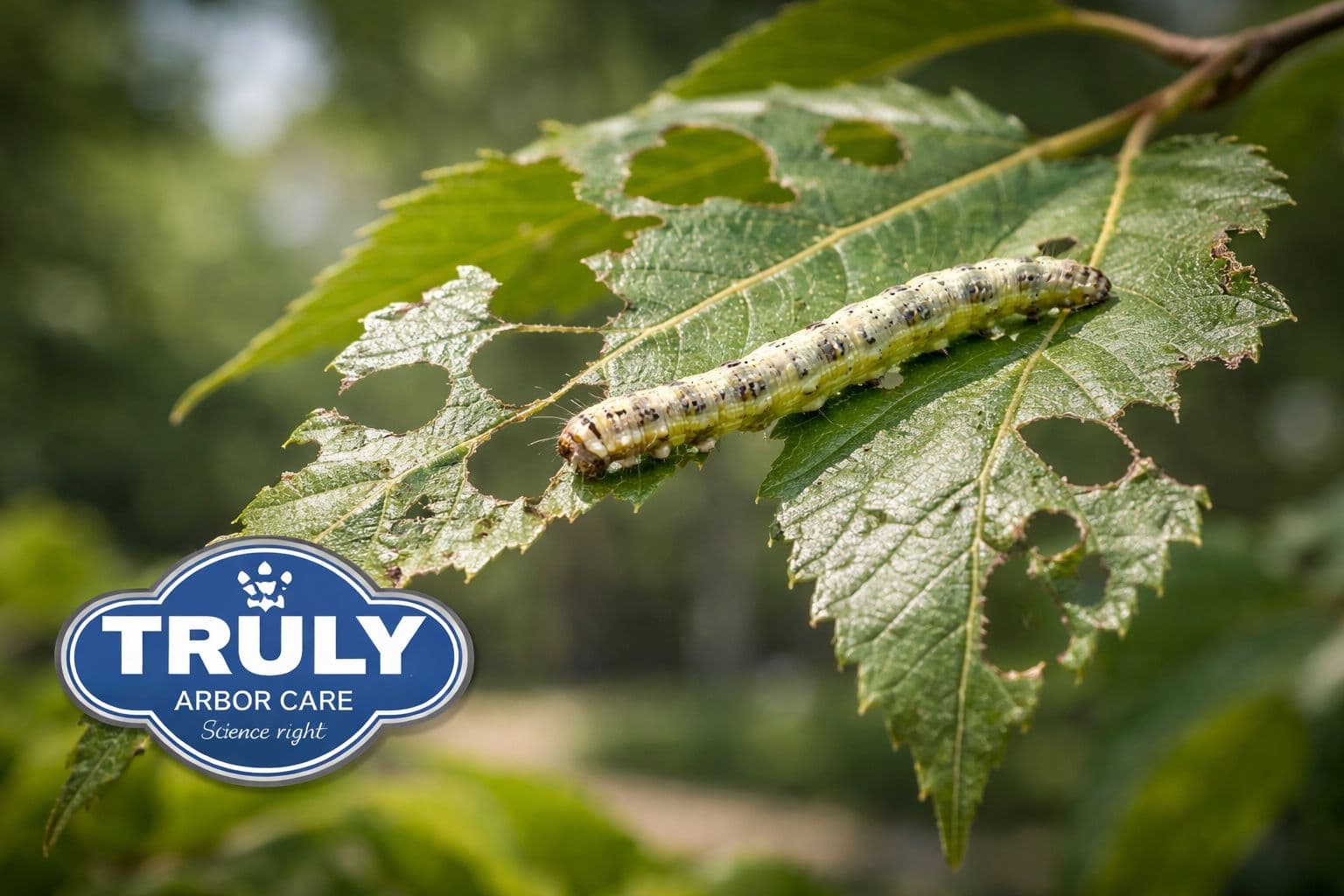
The damaging stage is the larval stage. Caterpillars are slender, elongated, and often pale green or brown. They move in a looping motion characteristic of geometrid caterpillars, commonly referred to as “inchworms.”
Larvae may reach approximately one inch in length when fully mature.
⸻
Distinguishing Characteristics
Key identifying features include:
- Slender inchworm-like caterpillars
- Looping movement when crawling
- Feeding along leaf margins
- Gradual thinning of elm canopy
Unlike forest tent caterpillars, elm spanworm larvae do not form large communal tents.
⸻
Host Trees in Texas
Primary hosts include:
- American elm
- Cedar elm
- Winged elm
- Other elm species
Texas A&M references note that elm spanworm outbreaks are often more noticeable in ornamental plantings than in natural forest stands within Texas.
In North Texas, cedar elm and other landscape elms may experience periodic defoliation, especially following mild winters and favorable spring conditions.
⸻
Life Cycle in Texas
Elm spanworm typically has one generation per year in Texas.
- Eggs overwinter on bark
- Larvae hatch in spring
- Caterpillars feed through late spring to early summer
- Pupation occurs in soil or leaf litter
- Adults emerge later in the season
Defoliation typically occurs during the active feeding period in late spring.
⸻
Signs and Impact of Infestation
Common symptoms include:
- Leaf margin feeding
- Skeletonized foliage
- Progressive thinning of canopy
- Premature leaf drop in heavier infestations
Texas A&M Forest Service materials indicate that healthy, established trees typically recover from a single defoliation event. However, repeated defoliation combined with drought stress may reduce carbohydrate reserves and long-term vigor.
In DFW urban landscapes, aesthetic impact is often the primary concern rather than mortality.
⸻
Environmental Stress and Susceptibility
Trees experiencing:
- Drought stress
- Soil compaction
- Root disturbance
- Improper pruning
may be more vulnerable to insect pressure and slower to recover from defoliation.
North Texas summer heat can compound stress following spring defoliation events.
⸻
Management and Professional Evaluation
Texas A&M AgriLife Extension recommends treatment decisions based on severity and tree health.
Management strategies may include:
- Monitoring early larval development
- Mechanical removal in small infestations
- Targeted insecticide applications when canopy loss becomes significant
- Maintaining tree vigor through proper irrigation and soil health
ANSI A300 Plant Health Care standards emphasize preservation of overall tree health rather than routine preventative chemical treatment.
⸻
Professional Assessment in DFW
As ISA Certified Arborists serving the Dallas–Fort Worth region, Truly Arbor Care evaluates elm spanworm infestations within a comprehensive plant health care framework. This includes canopy density assessment, host vigor analysis, and long-term risk evaluation.
For more information, check out the Texas A&M article on elm spanworm here.