
Cynipid Wasp in North Texas
Family Cynipidae
Oak Gall Formation in the DFW Metroplex
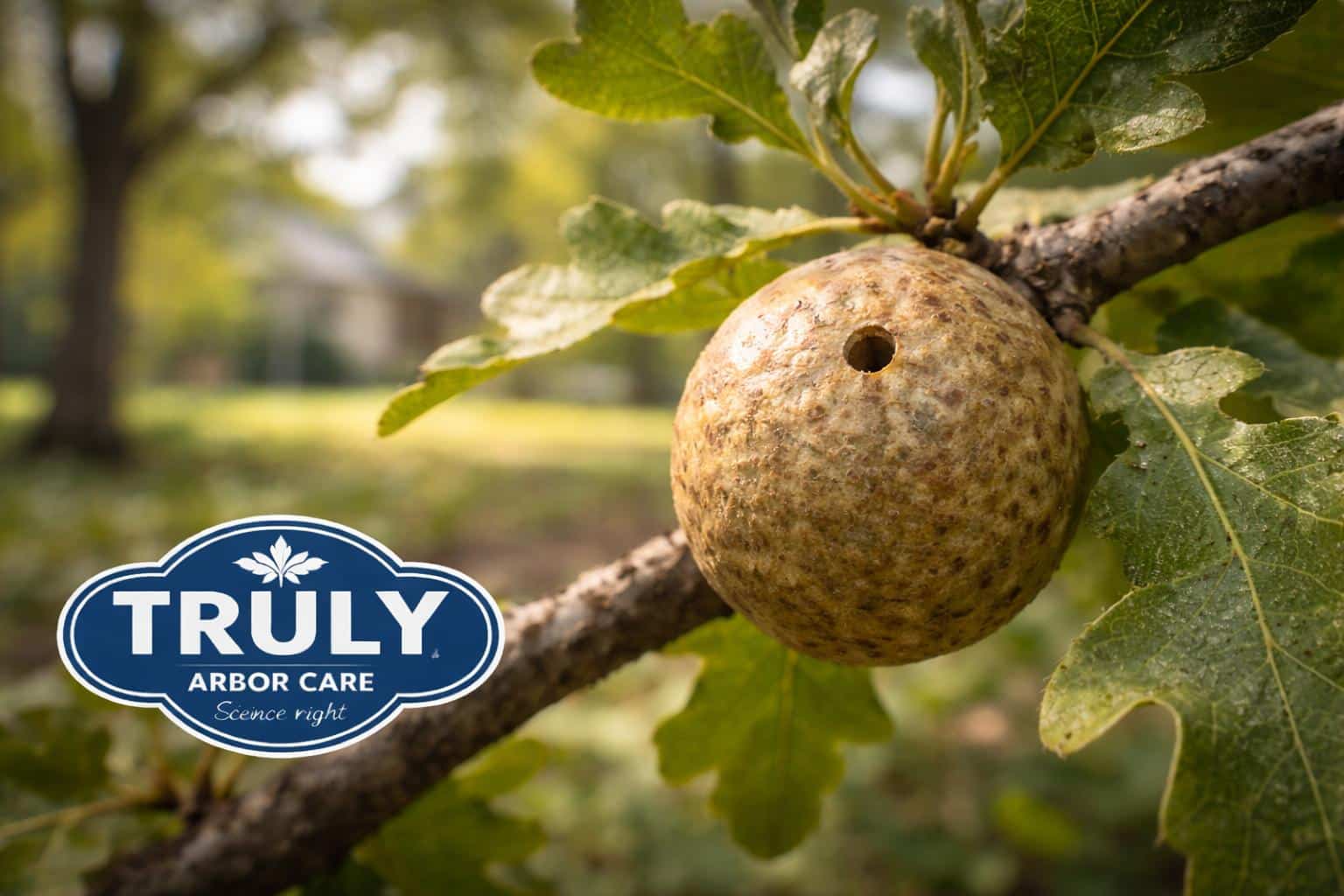
Cynipid wasps are small gall-forming insects belonging to the family Cynipidae. According to Texas A&M AgriLife Extension and Texas A&M Forest Service publications, these insects are responsible for the formation of various galls on oak species throughout Texas.
In North Texas and across the DFW Metroplex, cynipid wasp activity is most commonly observed on native and ornamental oaks, where galls may form on leaves, twigs, or stems.
ISA Certified Arborist Evaluation and Texas A&M Research Context
As ISA Certified Arborists serving North Texas, Truly Arbor Care evaluates gall-forming insects such as cynipid wasps using science-based diagnostic standards aligned with Texas A&M research. Proper identification is essential because galls are often mistaken for fungal disease or structural defects.
Texas A&M AgriLife emphasizes that most oak galls caused by cynipid wasps are primarily aesthetic and do not significantly threaten healthy trees.
⸻
Identification and Morphology
Adult cynipid wasps are very small, typically only a few millimeters in length. They are dark in color and rarely observed due to their size.
The most visible indicator is the gall itself. Galls vary widely in size, shape, and texture depending on species.
Common forms include:
- Round leaf galls
- Spiny or horned galls
- Woody stem galls
- Small blister-like leaf galls
⸻
Gall Formation and Development
Galls develop when female wasps lay eggs in plant tissue. The developing larva releases chemical signals that stimulate abnormal plant growth.
The gall provides:
- Protection
- Nutrition
- Shelter
Larval development occurs entirely within the gall chamber.
⸻
Host Trees in North Texas
Primary hosts include:
- Live oak
- Red oak species
- Post oak
- Other native oak varieties
Texas A&M Forest Service documentation indicates that most cynipid galls are species-specific and typically do not spread aggressively between unrelated tree species.
In the DFW Metroplex, live oaks frequently display visible gall formations.
⸻
Life Cycle in Texas
Cynipid wasps typically have complex life cycles that may include alternating generations.
- Eggs are deposited in plant tissue
- Larvae develop within galls
- Adults emerge through small exit holes
- New generations repeat the process
Emergence timing varies depending on species and environmental conditions.
⸻
Impact on Tree Health
Texas A&M AgriLife Extension notes that most cynipid galls are cosmetic and do not significantly affect tree health.
However, heavy gall production may result in:
- Minor leaf distortion
- Localized twig swelling
- Temporary aesthetic concerns
Healthy oaks generally tolerate gall formation without long-term damage.
⸻
Environmental Stress Considerations
Trees experiencing:
- Drought stress
- Soil compaction
- Urban heat exposure
may exhibit more noticeable gall formation due to increased physiological sensitivity.
Maintaining overall tree vigor supports resilience.
⸻
Management and Professional Evaluation in the DFW Metroplex
Texas A&M guidance typically recommends no treatment for most cynipid wasp galls.
Management strategies may include:
- Monitoring
- Pruning heavily affected twigs when necessary
- Maintaining tree health
Chemical treatments are rarely recommended because larvae are protected inside galls.
ANSI A300 Plant Health Care standards emphasize correct diagnosis before intervention.
⸻
Professional Assessment in North Texas
As ISA Certified Arborists serving North Texas and the DFW Metroplex, Truly Arbor Care evaluates oak gall activity within a comprehensive plant health framework to determine whether management is necessary or whether natural ecological processes should be allowed to continue.
For more information, check out the Texas A&M article on the Cynipid wasps here.