
Cottonwood Twig Borer in North Texas
Gypsonoma haimbachiana | Shoot and Twig Damage in the DFW Metroplex
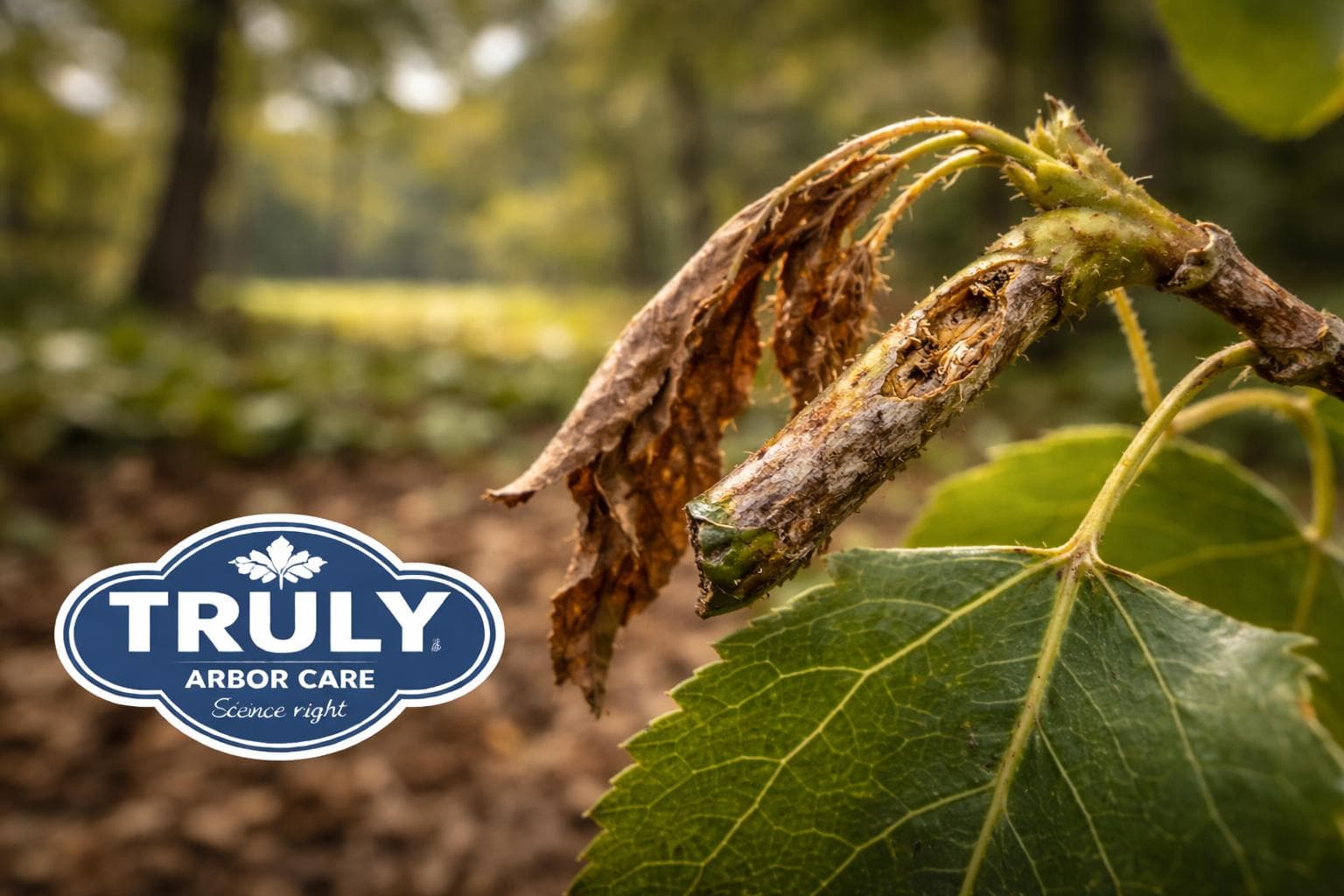
The cottonwood twig borer, Gypsonoma haimbachiana, is a native moth species whose larvae bore into the tender shoots and twigs of cottonwood and poplar trees. According to Texas A&M AgriLife Extension and Texas A&M Forest Service resources, this insect primarily affects young, rapidly growing trees and nursery stock.
In North Texas and throughout the DFW Metroplex, infestations are most commonly observed in spring and early summer when new growth is actively expanding.
ISA Certified Arborist Evaluation and Texas A&M Research Context
As ISA Certified Arborists serving North Texas, Truly Arbor Care evaluates cottonwood twig borer activity using science-based diagnostic standards aligned with Texas A&M research. Accurate identification of Gypsonoma haimbachiana is critical because shoot dieback may resemble drought stress, mechanical injury, or pine tip moth damage in other species.
Texas A&M publications emphasize that young trees are most susceptible, particularly in areas experiencing rapid urban development and soil disturbance within the DFW Metroplex.
⸻
Identification and Morphology
Adult moths are small and inconspicuous, typically gray-brown with subtle wing markings. Adults are rarely noticed.
The damaging stage is the larval stage. Caterpillars are small, pale-colored larvae that bore into tender shoots and twigs.
Because feeding occurs internally, larvae are rarely visible until damage becomes evident.
⸻
Distinguishing Characteristics
Key indicators of infestation include:
- Wilting or drooping shoot tips
- Browning of new growth
- Hollowed twigs
- Small entry holes in tender stems
- Frass within bored shoots
Infested shoots may snap easily due to internal tunneling.
⸻
Host Trees in North Texas
Primary hosts include:
- Eastern cottonwood
- Hybrid poplars
- Occasionally willow species
Texas A&M Forest Service documentation notes that young plantings and nursery stock are particularly vulnerable.
In the DFW Metroplex, new landscape developments with recently planted cottonwoods may show the highest incidence.
⸻
Life Cycle in Texas
Cottonwood twig borer typically produces multiple generations per year in Texas.
- Adults lay eggs on tender shoots
- Larvae bore into developing twigs
- Feeding occurs internally
- Pupation occurs within the damaged shoot
- Adults emerge and repeat the cycle
Warm North Texas conditions may accelerate reproductive cycles.
⸻
Impact on Tree Health
Damage primarily affects shoot growth and overall tree form.
Repeated infestations may result in:
- Distorted branching structure
- Reduced height growth
- Aesthetic decline
- Increased vulnerability to secondary stress
Texas A&M research indicates that while mature trees generally tolerate limited damage, young trees may suffer growth setbacks.
⸻
Environmental Stress and Susceptibility
Trees experiencing:
- Drought stress
- Compacted soils
- Planting shock
- Root disturbance
may experience more severe shoot dieback.
Maintaining irrigation consistency and soil health supports recovery in North Texas landscapes.
⸻
Management and Professional Guidance in the DFW Metroplex
Texas A&M guidance recommends monitoring new growth during early spring.
Management strategies may include:
- Pruning and removing damaged shoots
- Targeted insecticide applications timed to egg hatch
- Maintaining tree vigor
ANSI A300 Plant Health Care standards emphasize preserving structural form and managing environmental stress rather than routine preventative spraying.
⸻
Professional Assessment in North Texas
As ISA Certified Arborists serving North Texas and the DFW Metroplex, Truly Arbor Care evaluates cottonwood twig borer damage within a comprehensive plant health framework to determine appropriate management and long-term structural considerations.
For more information, check out the Texas A&M article on cottonwood twig borer here.