
Cottonwood Borer in North Texas
Plectrodera scalator | Longhorned Beetle Damage in the DFW Metroplex
The cottonwood borer, Plectrodera scalator, is a large longhorned beetle native to Texas and much of the southern United States. According to Texas A&M AgriLife Extension and Texas A&M Forest Service publications, cottonwood borers primarily infest cottonwood and related hardwood species, especially when trees are stressed or recently planted.
In North Texas and throughout the DFW Metroplex, infestations are most often observed in young cottonwood plantings and trees growing in disturbed soils.
Identification and Morphology
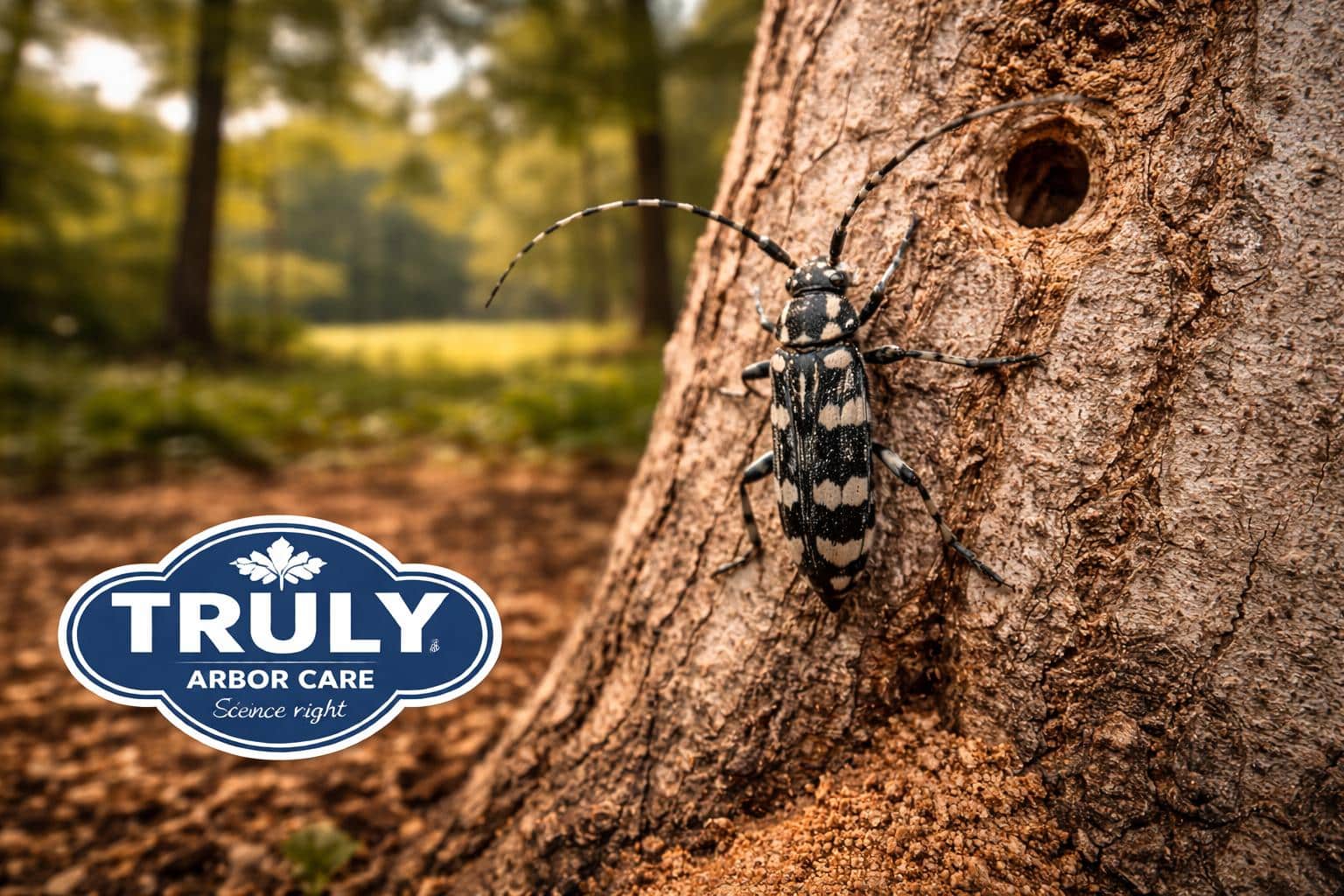
Adult cottonwood borers are large and distinctive, measuring up to 1.5 inches in length. They are characterized by:
- Black body with bold white or cream banding
- Extremely long antennae
- Robust cylindrical form typical of Cerambycidae
Larvae are cream-colored, legless grubs that bore deep into the trunk and root collar.
⸻
Distinguishing Characteristics
Key identifying features include:
- Large round exit holes
- Coarse sawdust at base of tree
- Wilting or dieback in young trees
- Visible adult beetles on trunk in summer
Unlike smaller bark beetles, cottonwood borers produce larger diameter exit holes consistent with longhorn beetles.
⸻
Host Trees in North Texas
Primary hosts include:
- Eastern cottonwood
- Hybrid cottonwood varieties
- Occasionally willow and poplar species
Texas A&M documentation indicates that young trees under stress are most susceptible.
In the DFW Metroplex, cottonwood borers are frequently observed in urban plantings near construction zones.
⸻
Life Cycle in Texas
Cottonwood borers typically have a multi-year life cycle.
- Adults emerge in late spring and summer
- Eggs are laid in bark crevices near soil line
- Larvae bore into trunk and root crown
- Feeding continues for extended periods
- Pupation occurs within the wood
Damage may persist for multiple growing seasons.
⸻
Impact on Tree Health
Larval tunneling weakens structural wood and disrupts vascular flow.
Symptoms may include:
- Reduced canopy density
- Structural instability in young trees
- Increased susceptibility to secondary decay organisms
Texas A&M AgriLife notes that while mature trees may tolerate limited damage, young cottonwoods are at higher risk of mortality.
In North Texas, soil disturbance and drought significantly increase vulnerability.
⸻
Environmental Stress and Susceptibility
Trees experiencing:
- Construction damage
- Compacted soils
- Poor drainage
- Drought stress
are more likely to attract egg-laying adults.
Maintaining proper irrigation and root health improves resilience.
⸻
Management and Professional Evaluation in the DFW Metroplex
Texas A&M guidance emphasizes preventative care and stress reduction.
Recommended strategies include:
- Avoiding trunk injury
- Monitoring young plantings
- Removing severely infested trees when structural compromise is significant
Chemical control is generally limited once larvae are deep within wood.
ANSI A300 Plant Health Care standards emphasize structural assessment and vigor management.
⸻
Professional Assessment in North Texas
As ISA Certified Arborists serving North Texas and the DFW Metroplex, Truly Arbor Care evaluates cottonwood borer infestations within a comprehensive plant health and structural risk framework.
Early detection improves preservation outcomes in newly planted trees.
For more information, check out the Texas A&M article on cottonwood borers here.