
Chalcid Wasp in North Texas
Eurytoma spp.
Gall and Seed-Associated Insect Activity in the DFW Metroplex
Chalcid wasps, commonly classified within the genus Eurytoma, are small parasitic wasps found throughout Texas, including North Texas and the DFW Metroplex. According to Texas A&M AgriLife Extension resources, many chalcid wasp species are associated with plant galls, seeds, or other insect hosts and may act as either plant pests or beneficial parasitoids depending on species.
In North Texas landscapes, chalcid wasps are most often encountered in association with gall formations or seed-feeding activity on ornamental and native trees.
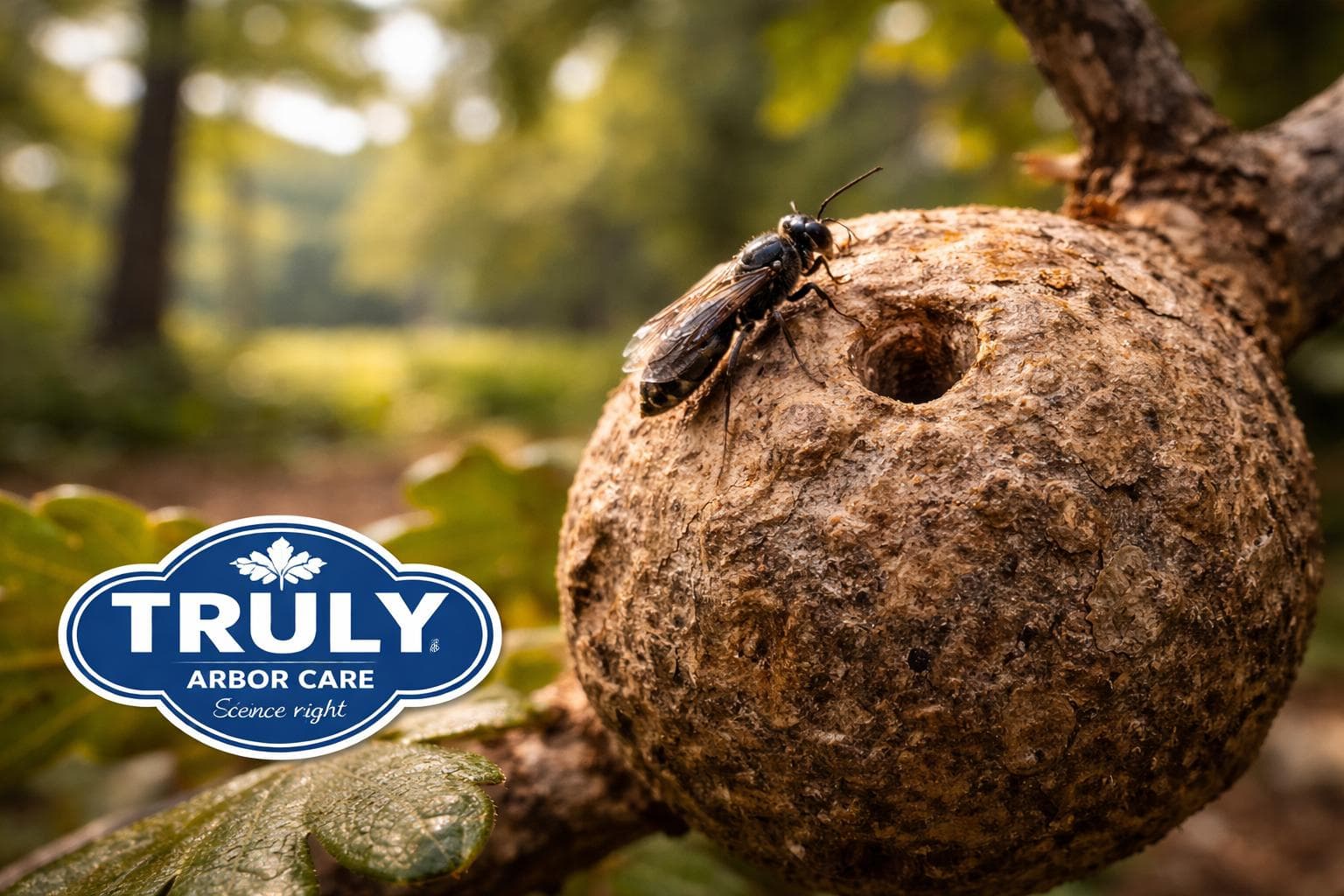
Identification and Morphology
Adult chalcid wasps are small, typically metallic black or dark in color, and measure only a few millimeters in length. They possess:
- Narrow waists
- Clear wings
- Elbowed antennae
- Compact, hardened bodies
Because of their small size, they are rarely noticed unless present in significant numbers.
⸻
Gall and Seed Associations
Many Eurytoma species develop within plant galls or seeds. Galls are abnormal plant growths triggered by insect activity.
Texas A&M publications note that some chalcid wasps may:
- Develop inside oak galls
- Feed within seeds
- Parasitize other insects inside plant tissue
The exact host relationship depends on species.
⸻
Host Trees and Landscape Context in North Texas
Chalcid wasps are most frequently associated with:
- Oak species
- Seed-bearing hardwoods
- Ornamental shade trees
In the DFW Metroplex, chalcid activity may be observed during periods of heavy gall formation or seed drop.
Most chalcid species are not directly harmful to healthy trees and are often considered part of the natural ecosystem.
⸻
Life Cycle in Texas
While life cycles vary by species, general patterns include:
- Eggs deposited in galls, seeds, or host insects
- Larval development within plant tissue
- Pupation inside gall or seed
- Adult emergence through small exit holes
Emergence timing varies based on host species and environmental conditions.
⸻
Impact on Tree Health
Texas A&M AgriLife Extension indicates that most chalcid wasps cause minimal direct structural damage to trees.
In many cases, visible plant effects are limited to:
- Gall formation
- Seed damage
- Minor aesthetic concerns
Because of their parasitic role, some chalcid wasps may actually help regulate populations of other insects.
In North Texas urban landscapes, infestations are typically more noticeable than damaging.
⸻
Management and Professional Evaluation
Control is rarely necessary unless specific gall infestations are severe and affect tree appearance or seed production.
Recommended actions may include:
- Monitoring gall populations
- Pruning heavily affected branches when appropriate
- Maintaining overall tree vigor
ANSI A300 Plant Health Care standards emphasize understanding ecological context before treatment decisions are made.
⸻
Professional Assessment in the DFW Metroplex
As ISA Certified Arborists serving North Texas and the DFW Metroplex, Truly Arbor Care evaluates gall-forming insects within a broader plant health framework to determine whether management is warranted or if natural ecological balance should be preserved.
For more information, check out the Texas A&M article on Chalcid wasps here.