
Catalpa Sphinx in North Texas
Ceratomiа catalpae | Defoliation of Catalpa Trees
The catalpa sphinx, Ceratomiа catalpae, is a native moth species whose larvae are commonly referred to as catalpa worms. According to Texas A&M AgriLife Extension resources, these caterpillars feed almost exclusively on catalpa trees and may cause repeated seasonal defoliation.
In North Texas landscapes, catalpa sphinx populations can fluctuate significantly from year to year. While infestations may appear severe, healthy catalpa trees typically recover from a single defoliation event.
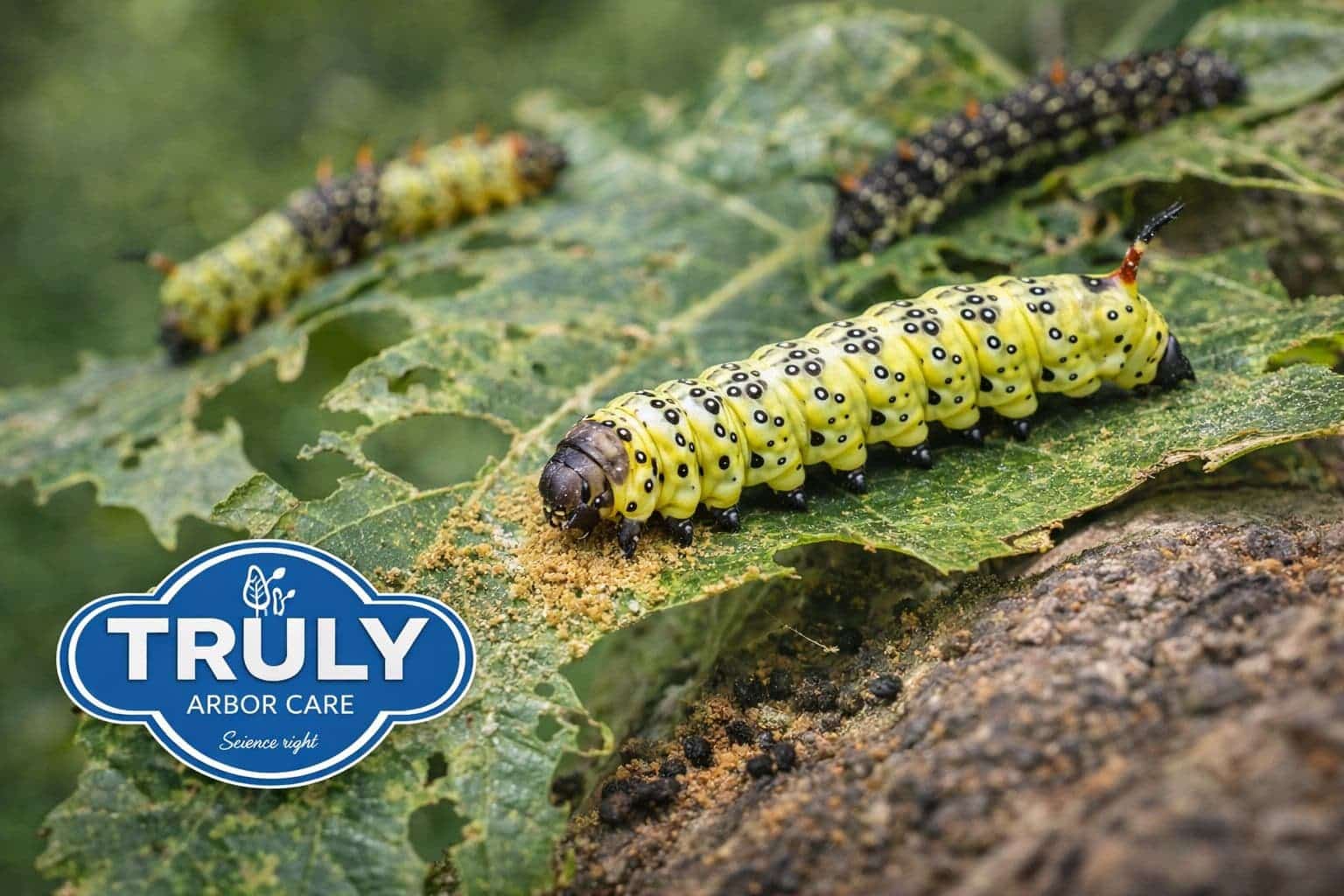
Identification and Morphology
Adult catalpa sphinx moths are medium to large gray-brown moths with a wingspan of approximately 2 to 3 inches. The forewings are mottled gray and brown, allowing the moth to blend into bark surfaces.
Larvae are easily identifiable. They are smooth-bodied caterpillars that may appear green, yellow, or dark with black markings. Mature larvae often display a prominent black horn at the rear of the body, characteristic of sphinx moth species.
⸻
Distinguishing Characteristics
Key identifying features include:
- Large, smooth caterpillars on catalpa leaves
- Rear horn typical of sphinx larvae
- Rapid defoliation of host canopy
- Multiple generations per year in warm climates
Unlike buck moth caterpillars, catalpa sphinx larvae do not possess venomous spines.
⸻
Life Cycle in Texas
Texas A&M extension publications note that catalpa sphinx moths may produce multiple generations per year in Texas, particularly in warmer regions.
- Adults lay eggs on catalpa foliage
- Eggs hatch within days
- Larvae feed heavily on leaves
- Pupation occurs in the soil beneath host trees
In North Texas, peak feeding activity commonly occurs during late spring and summer.
⸻
Host Specificity
Ceratomiа catalpae is highly host-specific. Primary hosts include:
- Southern catalpa
- Northern catalpa
Unlike generalist defoliators, catalpa sphinx larvae rarely attack other tree species. Because of this specialization, infestations are limited to catalpa plantings.
⸻
Signs and Impact of Infestation
Common symptoms include:
- Rapid leaf consumption
- Skeletonized or completely stripped foliage
- Accumulation of frass beneath the canopy
- Temporary canopy thinning
Texas A&M research indicates that mature, established catalpa trees generally tolerate defoliation well. However, repeated heavy feeding combined with drought stress may reduce vigor over time.
⸻
Ecological and Landscape Considerations
Catalpa worms are often harvested as fishing bait, and in some regions landowners intentionally encourage limited populations. From a plant health perspective, monitoring is recommended when defoliation becomes severe or repeated across seasons.
⸻
Management in North Texas
Texas A&M AgriLife Extension recommends treatment only when necessary. Management strategies include:
- Monitoring early larval stages
- Mechanical removal when populations are light
- Targeted insecticide application when defoliation threatens tree health
ANSI A300 Plant Health Care standards emphasize maintaining tree vigor rather than routine chemical application.
⸻
Professional Evaluation
As ISA Certified Arborists serving the Dallas–Fort Worth region, Truly Arbor Care evaluates defoliation severity within a broader plant health framework. Healthy catalpa trees typically recover, but evaluation is recommended when environmental stressors compound insect pressure.
For more information, check out the Texas A&M article on Catalpa worms here.