
Ambrosia Beetles in North Texas
Science-Based Identification, Impact, and Management | Truly Arbor Care
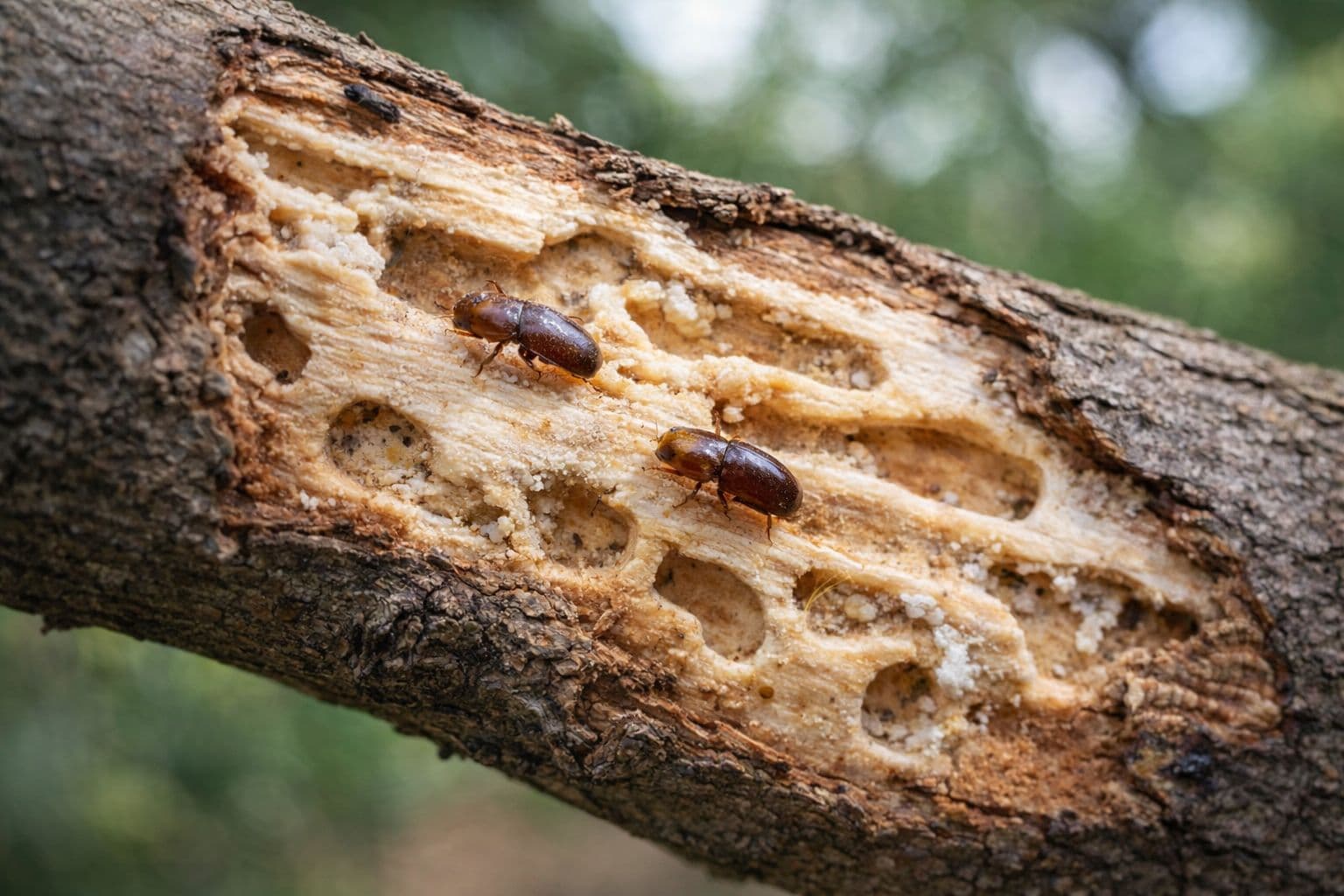
Ambrosia beetles are a group of wood-boring insects that include both native bark beetles and pinhole borers. While many species colonize dead or dying trees as part of natural decomposition, some aggressive species can damage living trees in urban and forested landscapes. Texas A&M Forest Service notes that these beetles are attracted to stressed hosts, where they cultivate symbiotic fungi as a food source and create extensive feeding galleries. In North Texas, environmental stressors such as drought, soil compaction, and heat stress increase susceptibility.
Biology and Lifecycle of Ambrosia Beetles
Ambrosia beetles exhibit a fungus-dependent lifecycle. Adults locate suitable hosts by detecting chemical signals such as ethanol released from stressed wood. Female beetles tunnel into the sapwood and inoculate galleries with specialized ambrosia fungi. These fungi grow along the gallery walls, providing nourishment for larvae and adults.
After eggs are laid within the gallery, larvae feed exclusively on the fungal growth. Multiple generations can occur within a growing season under favorable conditions. Once mature, adults emerge and disperse to find new host trees, accelerating spread. Research from entomology programs at universities like Purdue and North Carolina State supports this lifecycle model and describes how temperature and moisture influence reproduction rates.
⸻
Host Range and Susceptibility
Unlike some host-specific bark beetles, ambrosia beetles have a broad host range. They will attack many hardwood and ornamental species — including oak, elm, pecan, and maple — especially when trees are physiologically stressed. In North Texas, drought, compacted clay soils, and mechanical injury lower host defenses, making healthy trees appear attractive to colonizing beetles.
Ambrosia beetles do not typically bore deep into living tissue; rather they exploit weakened hosts via mass attack. Only a fraction of beetles may penetrate living tissue, but the cumulative effect of galleries and fungal growth can disrupt water transport and weaken structural integrity over time.
⸻
Early Detection and Symptoms
Initial infestation symptoms are subtle and often overlooked:
- Small circular bore holes (0.5–1 mm) on the trunk
- Compact white sawdust “noodles” (frass) at the base of the tree or in bark furrows
- Dark staining around galleries beneath bark
- Leaf discoloration and reduced vigor
Peeling back bark typically reveals cylindrical galleries colonized by ambrosia fungi that extend into the sapwood and outer xylem. These galleries disrupt normal vascular function, eventually leading to dieback and leaf loss. According to Texas A&M Forest Service extension materials, once foliar symptoms appear, the tree is often too compromised to recover, making early detection critical.
⸻
Environmental Stress and Beetle Attraction
Beetles are programmed to find stressed hosts. Scientific studies from Penn State and the University of Kentucky confirm that ethanol and other stress-related volatiles act as strong attractants. In North Texas, common stress factors include:
- Extended drought and heat stress
- Soil compaction and poor aeration
- Root injury from construction or grade change
- Imbalanced soil nutrients
Managing these stressors improves natural defense mechanisms and reduces the risk of ambrosia beetle colonization.
⸻
Management and Control
Effective ambrosia beetle management focuses on prevention and early intervention:
- Maintain vigor through proper irrigation and root-zone care
- Reduce soil compaction and improve drainage
- Promptly remove and destroy heavily infested trees
- Apply targeted insecticides only when warranted and early in the infestation cycle
Chemical treatment may be considered when beetles are detected prior to extensive gallery formation, but broad prophylactic spraying without confirmed presence is discouraged under ANSI A300 Part 10 Plant Health Care standards. According to research compiled by the International Society of Arboriculture and university entomology departments, prevention and stress reduction are the most effective long-term strategies.
⸻
When Removal Becomes Necessary
Once canopy decline and leaf discoloration are evident, ambrosia beetle damage is often advanced. Interrupted water transport and extensive gallery networks significantly reduce the likelihood of recovery. Structural integrity may be compromised, especially in larger trees with extensive colonization. In these situations, risk assessment based on ISA Tree Risk Assessment Qualified (TRAQ) principles determines whether removal is the safest and most responsible option.
⸻
Professional Evaluation in North Texas
As ISA Certified Arborists serving the Dallas–Fort Worth region, Truly Arbor Care evaluates ambrosia beetle pressure within a comprehensive plant health care framework. This includes species identification, environmental stress assessment, and integration of soil and root health diagnostics before management decisions are made. Early professional evaluation increases the potential for preservation and reduces unnecessary treatment.
For more information, check out the Texas A&M article on the ambrosia beetle here.