
Structural Root Rot in North Texas Trees
Understanding Ganoderma Root and Butt Rot in the DFW Metroplex
Structural root rot is a serious fungal disease affecting many mature trees throughout North Texas and the greater DFW Metroplex. One of the most common pathogens responsible for this condition is Ganoderma species, particularly Ganoderma lucidum and Ganoderma curtisii, which cause decay in the lower trunk, buttress roots, and structural root system of trees.
According to Texas A&M AgriLife Extension and university forest pathology research, Ganoderma root and butt rot is a wood decay disease that destroys lignin and cellulose within the structural wood of trees. The fungus colonizes the root system and lower trunk, gradually weakening the tree’s structural stability.
Because the disease attacks the structural roots responsible for anchoring the tree, affected trees may become hazardous and prone to failure during storms or high winds. In urban environments across North Texas where large mature trees are common, structural root rot presents a significant safety concern.
Routine evaluations by an ISA Certified Arborist following ANSI A300 tree care standards and TCIA plant healthcare protocols are essential for identifying root decay and assessing tree risk throughout the DFW Metroplex.
Tree Species Susceptible to Structural Root Rot
Ganoderma root rot affects a wide variety of hardwood trees commonly planted throughout North Texas landscapes.
Susceptible host species include:
- Oak species (Quercus spp.)
- Maple species (Acer spp.)
- Elm species (Ulmus spp.)
- Sycamore (Platanus occidentalis)
- Pecan (Carya illinoinensis)
- Sweetgum (Liquidambar styraciflua)
- Hackberry (Celtis species)
Oak trees are among the most commonly affected hosts in North Texas urban forests. Mature trees with large structural root systems are particularly vulnerable once infection begins.
Because Ganoderma fungi colonize dead or decaying wood first, trees growing near old stumps or buried root systems may be more susceptible.
Environmental Conditions That Promote Structural Root Rot
Several environmental conditions common in North Texas landscapes may increase the likelihood of structural root rot.
Environmental factors that contribute to infection include:
- Soil compaction
- Poor soil drainage
- Root injuries caused by construction
- Buried root flares
- Old stumps remaining in the soil
- Mechanical damage to root systems
Texas A&M research indicates that Ganoderma fungi often colonize dead wood in soil before spreading to living roots.
Trees weakened by environmental stress or root damage are more vulnerable to infection.
Disease Infection and Life Cycle
The life cycle of Ganoderma root rot begins when fungal spores land on exposed wood surfaces.
Spores germinate and colonize dead roots or decaying wood in the soil. From there, the fungus may spread into the roots of nearby living trees.
Once inside the root system, the fungus spreads through the wood tissues and begins breaking down structural fibers.
As decay progresses, the structural integrity of the root system weakens. The fungus may eventually spread into the lower trunk of the tree.
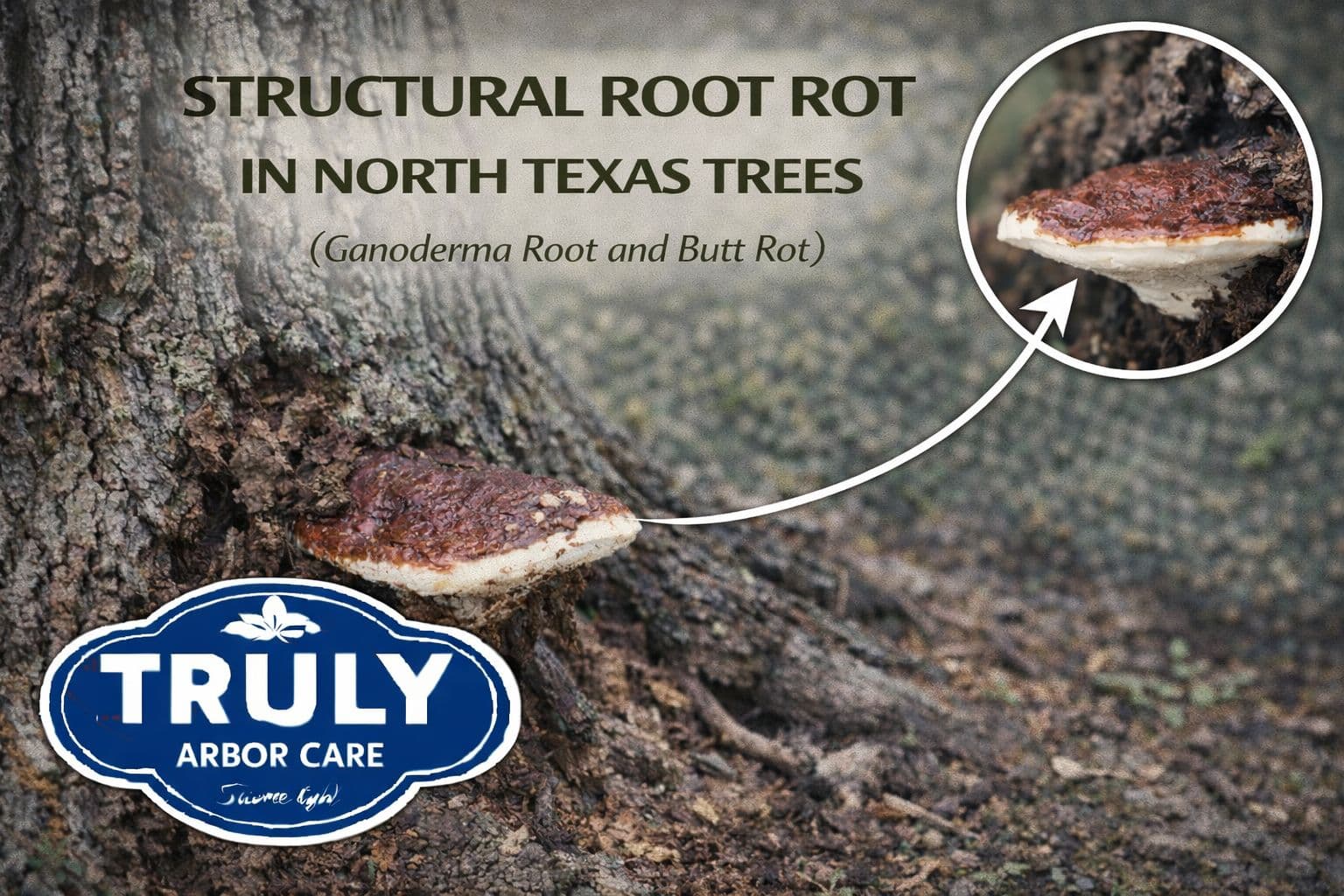
Ganoderma fungi produce distinctive shelf-like fruiting bodies known as conks on the trunk near the root collar.
These conks release millions of spores that may infect nearby trees.
Symptoms and Identification of Structural Root Rot
Structural root rot produces several visible symptoms that arborists can identify during tree health inspections.
Common symptoms include:
- Shelf-like fungal conks on the lower trunk
- White or brown wood decay beneath the bark
- Progressive canopy thinning
- Reduced leaf size and vigor
- Sudden branch dieback
- Lean or instability in the tree
The presence of Ganoderma conks on the trunk is a strong indicator that significant internal decay may already be present.
ISA Certified Arborists evaluating tree safety across North Texas frequently inspect the root collar area when assessing potential root decay.
Consequences if Structural Root Rot Is Left Unmanaged
Structural root rot can have severe consequences for tree stability.
Potential outcomes include:
- Loss of structural root support
- Increased risk of tree failure
- Branch or trunk collapse during storms
- Complete tree mortality
Because the decay occurs within the structural root system, affected trees may fail suddenly without significant warning.
In North Texas landscapes where large shade trees are common, structural root rot represents a major safety concern for property owners.
Managing Structural Root Rot Through Tree Risk Assessment
Management of structural root rot focuses primarily on monitoring tree stability and assessing risk.
ISA Certified Arborists trained in tree risk assessment under ANSI A300 and ISA Tree Risk Assessment Qualification (TRAQ) protocols evaluate trees for structural stability and potential hazards.
Management strategies may include:
- Monitoring for fungal conks
- Assessing root flare health
- Evaluating canopy stability
- Removing hazardous trees when necessary
- Improving soil conditions to reduce stress on remaining trees
Because structural decay cannot be reversed, early detection and risk assessment are essential for protecting people and property.
Protecting Urban Trees Across North Texas and the DFW Metroplex
Structural root diseases highlight the importance of proactive tree risk management. Mature trees provide valuable shade, environmental benefits, and aesthetic value across North Texas landscapes, but they must be monitored for structural integrity.
Routine inspections by an ISA Certified Arborist ensure trees are evaluated according to ANSI A300 standards and modern arboricultural science. Early detection of root decay allows property owners to make informed decisions about tree management and safety across the DFW Metroplex.
For more information, check out the Texas A&M article on Ganoderma root rot here.