
Sphaeropsis Tip Blight in North Texas Pines
Understanding Sphaeropsis sapinea and Its Impact on Pine Trees in the DFW Metroplex
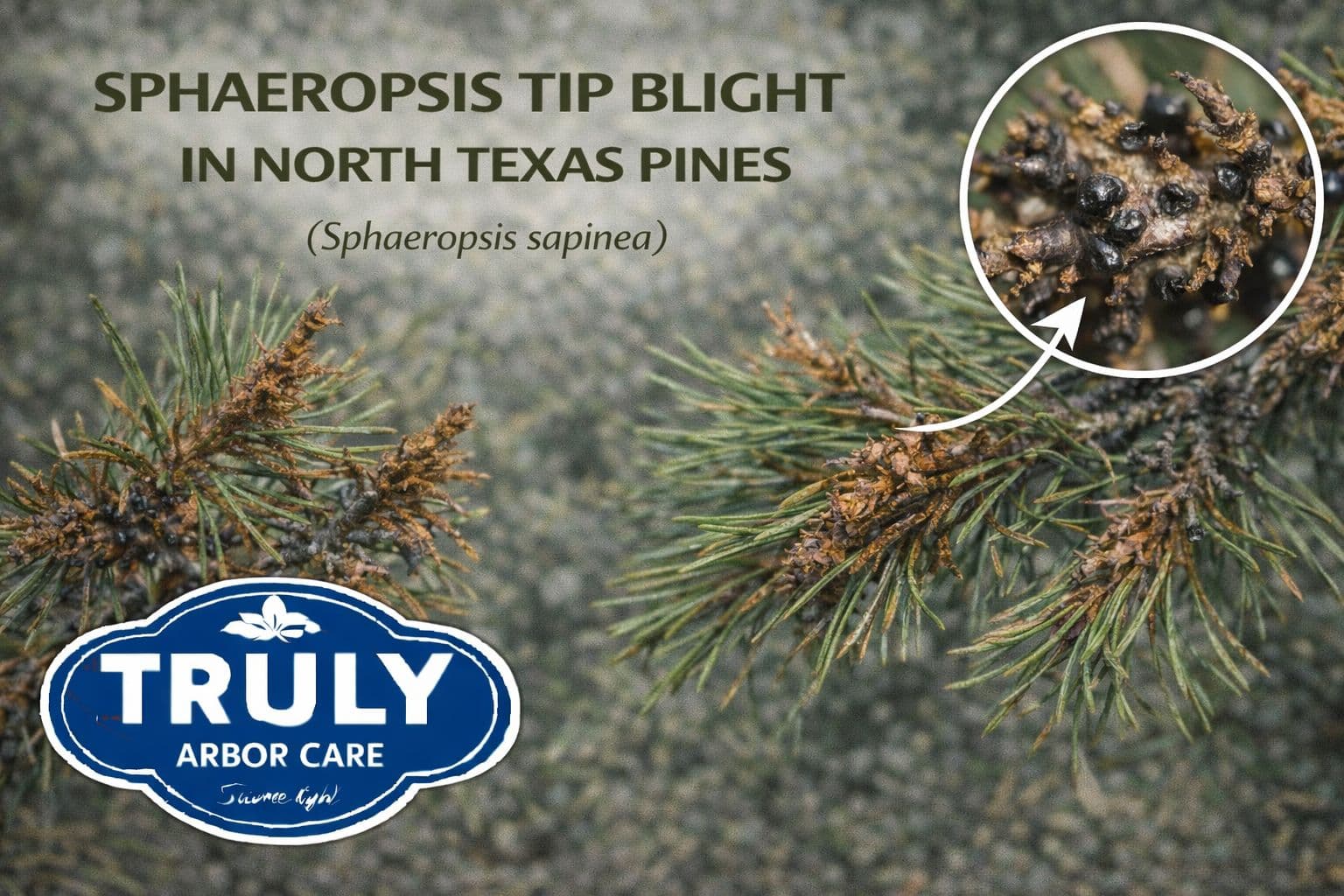
Sphaeropsis tip blight is a fungal disease affecting pine trees throughout North Texas and the greater DFW Metroplex. The disease is caused by the fungal pathogen Sphaeropsis sapinea, also known as Diplodia pinea, which infects new shoots, needles, and cones of pine trees.
According to Texas A&M AgriLife Extension and university forest pathology research, Sphaeropsis tip blight primarily affects stressed pine trees and is one of the most common diseases of ornamental pines in urban landscapes. The fungus attacks newly developing shoots and causes browning, stunted growth, and branch dieback.
Infected shoots fail to elongate properly, and the needles may remain short and brown. As the disease progresses, repeated infections can weaken the tree and cause thinning of the canopy.
Routine inspections by an ISA Certified Arborist following ANSI A300 tree care standards and TCIA plant healthcare protocols are essential for detecting conifer diseases early and protecting pine health throughout North Texas landscapes.
Pine Species Susceptible to Sphaeropsis Tip Blight
Sphaeropsis sapinea infects many pine species commonly planted throughout the DFW Metroplex.
Common susceptible hosts include:
- Austrian Pine (Pinus nigra)
- Scots Pine (Pinus sylvestris)
- Ponderosa Pine (Pinus ponderosa)
- Mugo Pine (Pinus mugo)
- Loblolly Pine (Pinus taeda)
Austrian pine is among the most frequently affected species in ornamental plantings. These trees are commonly used in North Texas landscapes for their evergreen appearance and wind resistance.
Mature trees under environmental stress are particularly vulnerable to infection.
Environmental Conditions That Promote Sphaeropsis Infection
Environmental stress is a major factor contributing to Sphaeropsis tip blight outbreaks.
Environmental conditions common across North Texas that encourage infection include:
- Drought stress
- High summer temperatures
- Soil compaction
- Mechanical bark injury
- Storm damage
- Poor soil conditions limiting root development
Texas A&M research indicates that stressed trees are far more susceptible to infection than healthy trees.
In the DFW Metroplex where drought and extreme heat frequently occur, stressed pine trees may become vulnerable to fungal colonization.
Disease Infection and Life Cycle
The life cycle of Sphaeropsis sapinea begins when fungal spores overwinter in infected needles, cones, and bark tissue.
During warm, wet weather conditions, spores are released and spread by wind or rain splash onto new pine shoots.
When spores land on developing shoots or needles, they germinate and penetrate plant tissue.
Once inside the shoot, the fungus colonizes the tissue and prevents normal growth. Infected shoots become stunted and eventually die.
Small black fruiting bodies known as pycnidia may form on infected needles and cones, releasing additional spores that spread the infection.
Multiple infection cycles may occur during favorable environmental conditions.
Symptoms and Identification of Sphaeropsis Tip Blight
Sphaeropsis tip blight produces several recognizable symptoms that arborists can identify during tree inspections.
Common symptoms include:
- Browning of new pine shoots
- Short, stunted needles
- Branch tip dieback
- Black fungal fruiting bodies on cones and needles
- Thinning canopy in affected trees
Infected shoots often appear scorched and fail to grow normally during the growing season.
ISA Certified Arborists evaluating pine health across North Texas frequently diagnose Sphaeropsis infections when inspecting stressed ornamental pines.
Consequences if Sphaeropsis Tip Blight Is Left Unmanaged
If Sphaeropsis tip blight is allowed to persist without management, repeated infections can weaken pine trees.
Potential consequences include:
- Progressive branch dieback
- Reduced canopy density
- Decline in tree vigor
- Increased susceptibility to bark beetles and other insects
- Tree mortality in severe cases
Young trees and ornamental pine plantings may experience significant aesthetic damage.
In North Texas landscapes where pine trees provide evergreen structure and wind protection, unmanaged infections may reduce landscape value.
Managing Sphaeropsis Tip Blight Through Plant Healthcare
Management of Sphaeropsis tip blight focuses on improving tree vigor and reducing environmental stress.
ISA Certified Arborists following ANSI A300 standards and TCIA plant healthcare protocols may recommend integrated management strategies.
These may include:
- Pruning infected shoots
- Removing infected cones and debris
- Improving soil conditions and root health
- Managing irrigation during drought periods
- Applying preventative fungicide treatments when necessary
Preventative treatments are most effective during early spring when new shoots are developing.
Routine monitoring allows arborists to identify infections early and prevent severe canopy damage.
Protecting Pine Trees Across North Texas and the DFW Metroplex
Pine trees play an important role in landscapes throughout North Texas, providing evergreen canopy and wind protection. Maintaining their health requires proactive plant healthcare management and early disease detection.
Routine inspections by an ISA Certified Arborist ensure pine trees are maintained according to ANSI A300 standards and modern arboricultural science. Early identification of Sphaeropsis tip blight allows property owners to implement management strategies that preserve the health of pine trees across the DFW Metroplex.
For more information, check out the Texas A&M article on Sphaeropsis tip blight here.