
Seiridium Canker in North Texas Cypress Trees
Understanding Seiridium spp. and Its Impact on Leyland Cypress and Other Conifers in the DFW Metroplex
Seiridium canker is a fungal disease that commonly affects cypress trees and other conifers throughout North Texas and the greater DFW Metroplex. The disease is caused by fungal pathogens in the genus Seiridium, most commonly Seiridium unicorne and Seiridium cardinale, which infect bark tissue and cause branch dieback, canker formation, and progressive canopy decline.
According to Texas A&M AgriLife Extension and university plant pathology research, Seiridium canker is one of the most common diseases affecting Leyland cypress trees used in residential landscapes. The fungus enters the tree through bark wounds and spreads through the cambium layer, disrupting the transport of water and nutrients.
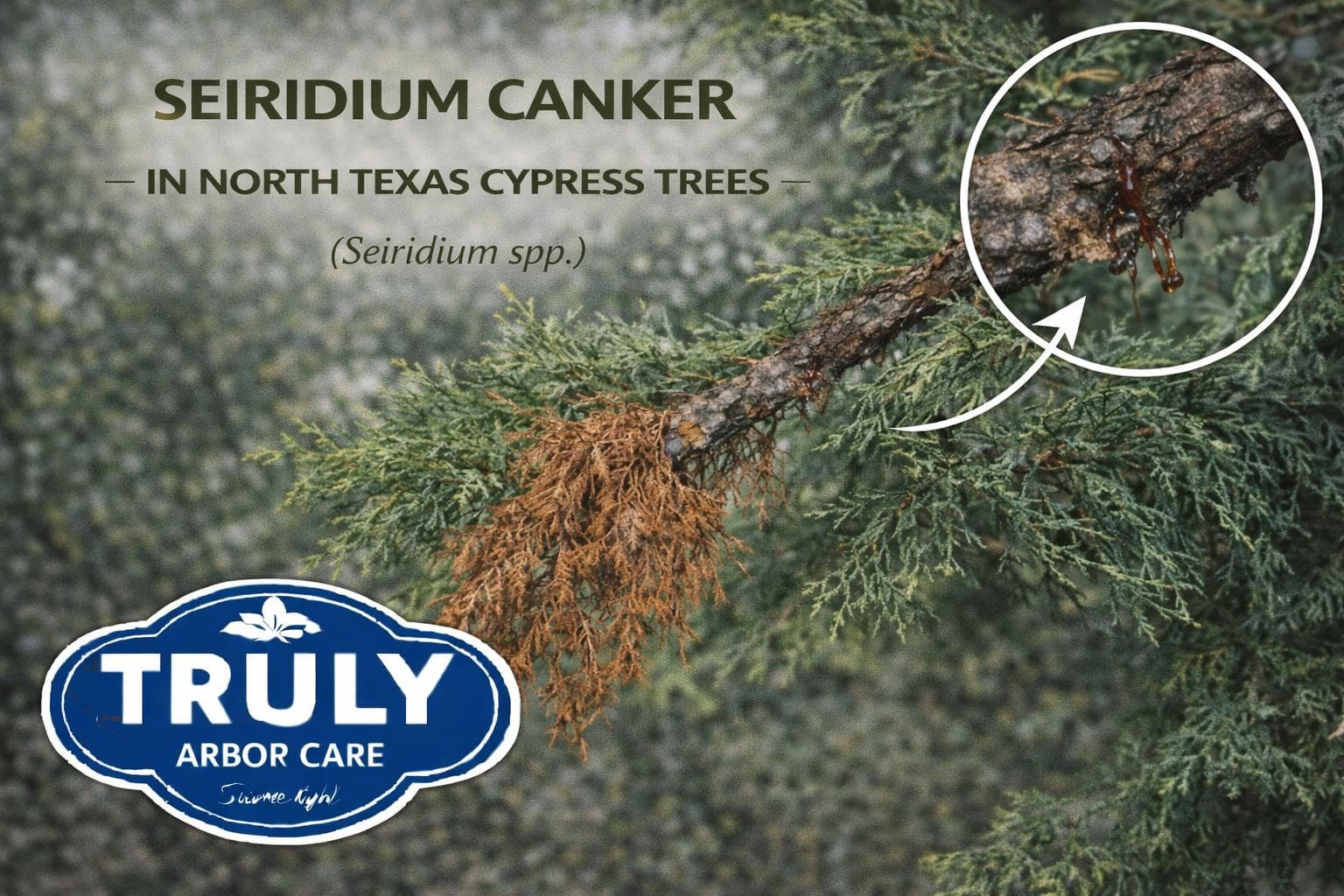
Once infection occurs, sunken lesions form along branches or stems. As the canker expands, it may girdle branches, causing foliage to turn brown and die.
Because Leyland cypress and other cypress species are widely planted as privacy screens throughout North Texas, Seiridium canker has become a frequent concern for property owners across the DFW Metroplex.
Routine inspections by an ISA Certified Arborist following ANSI A300 tree care standards and TCIA plant healthcare protocols are essential for detecting canker diseases early and protecting conifer health across North Texas landscapes.
Cypress Species Susceptible to Seiridium Canker
Seiridium fungi primarily infect conifer species within the cypress family.
Common susceptible host trees include:
- Leyland Cypress (× Cuprocyparis leylandii)
- Italian Cypress (Cupressus sempervirens)
- Arizona Cypress (Cupressus arizonica)
- Monterey Cypress (Cupressus macrocarpa)
Leyland cypress is the most commonly affected species in North Texas landscapes. These trees are frequently planted as fast-growing privacy screens, windbreaks, and property boundaries.
Dense plantings often increase the risk of disease spread.
Environmental Conditions That Promote Seiridium Infection
Seiridium canker is strongly associated with environmental stress conditions that weaken the tree.
Environmental factors common in North Texas that increase susceptibility include:
- Drought stress
- High summer temperatures
- Soil compaction
- Poor soil drainage
- Mechanical bark injury
- Improper pruning practices
- Storm damage to branches
Texas A&M research indicates that drought stress is one of the primary triggers for Seiridium infections.
Trees weakened by water stress may lose the ability to defend against fungal invasion.
Disease Infection and Life Cycle
The infection cycle of Seiridium canker begins when fungal spores land on bark surfaces.
Spores germinate and penetrate the bark through wounds or cracks. Once inside the tree, the fungus spreads through the cambium layer and kills surrounding plant cells.
As the infection progresses, cankers form along branches or stems.
Fungal fruiting bodies may develop on infected bark, releasing additional spores that spread to nearby trees through rain splash and wind.
Multiple infection cycles may occur during warm, humid weather.
Symptoms and Identification of Seiridium Canker
Seiridium canker produces distinctive symptoms that arborists can identify during tree health inspections.
Common symptoms include:
- Individual branches turning brown within the canopy
- Sunken lesions on branches or trunk
- Resin flow or sap bleeding from infected areas
- Patchy canopy dieback
- Progressive decline of the tree
One characteristic symptom is the presence of isolated brown branches scattered throughout an otherwise green canopy.
ISA Certified Arborists evaluating cypress trees across North Texas frequently identify Seiridium infections when inspecting stressed privacy screens.
Consequences if Seiridium Canker Is Left Unmanaged
If Seiridium canker is allowed to progress without management, the disease may spread rapidly through susceptible trees.
Potential consequences include:
- Branch girdling and dieback
- Loss of privacy screening in landscape plantings
- Progressive canopy thinning
- Structural weakening of branches
- Complete tree mortality
Because Leyland cypress trees are often planted close together, the disease may spread quickly through entire rows of trees.
In North Texas landscapes where these trees are used as privacy barriers, severe infections may result in widespread canopy loss.
Managing Seiridium Canker Through Plant Healthcare
Effective management of Seiridium canker focuses on reducing environmental stress and maintaining tree vigor.
ISA Certified Arborists following ANSI A300 standards and TCIA plant healthcare protocols may recommend integrated management strategies.
These may include:
- Pruning infected branches well below the canker
- Sanitizing pruning tools between cuts
- Improving irrigation practices during drought periods
- Reducing soil compaction
- Increasing spacing between trees when planting
Early pruning of infected limbs can slow disease spread.
Maintaining overall tree health improves the tree’s ability to compartmentalize fungal infections.
Protecting Cypress Trees Across North Texas and the DFW Metroplex
Cypress trees are widely used throughout North Texas landscapes as privacy screens and ornamental plantings. Maintaining their health requires proactive plant healthcare management and early disease detection.
Routine inspections by an ISA Certified Arborist ensure trees are maintained according to ANSI A300 standards and modern arboricultural science. Early detection of Seiridium canker allows property owners to implement management strategies that preserve the health and function of cypress plantings across the DFW Metroplex.
For more information, check out the Texas A&M article on Seiridium canker here.