
Powdery Mildew in North Texas
Understanding Oidium and Related Powdery Mildew Fungi in the DFW Metroplex
Powdery mildew is a common fungal disease affecting a wide variety of trees, shrubs, and ornamental plants throughout North Texas and the greater DFW Metroplex. The disease is caused by several fungal pathogens belonging to the order Erysiphales, often identified in landscape plants as Oidium species.
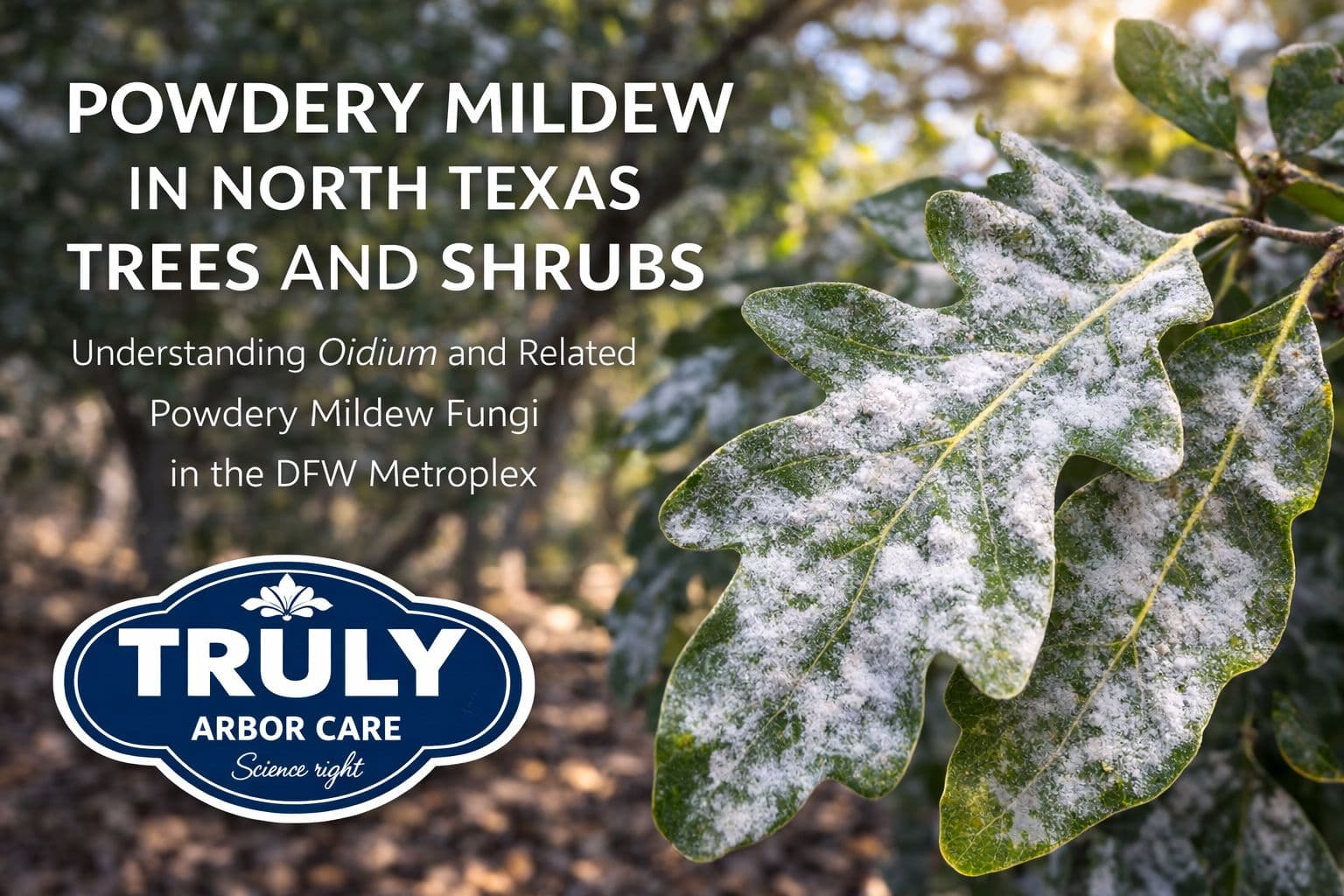
According to research published by Texas A&M AgriLife Extension and university plant pathology programs, powdery mildew fungi infect plant leaves and young shoots, producing the characteristic white or gray powdery growth on the surface of foliage. Unlike many fungal pathogens, powdery mildew does not require standing water on leaves to infect plants, which allows the disease to develop even during relatively dry conditions.
The fungus grows on the surface of plant tissues and extracts nutrients from plant cells through specialized feeding structures called haustoria. As the infection spreads, leaf tissue becomes distorted, photosynthesis is reduced, and overall plant vigor may decline.
Although powdery mildew rarely kills mature trees, repeated infections can weaken plants and reduce their aesthetic quality. Professional evaluation by an ISA Certified Arborist following ANSI A300 tree care standards and TCIA plant healthcare protocols ensures proper identification and management of powdery mildew across North Texas landscapes.
Understanding the environmental conditions and plant species susceptible to powdery mildew helps arborists design effective plant healthcare strategies that maintain healthy trees and shrubs throughout the DFW Metroplex.
Tree and Shrub Species Susceptible to Powdery Mildew
Powdery mildew fungi infect a wide range of ornamental plants commonly found in North Texas landscapes.
Susceptible hosts include:
- Crape Myrtle (Lagerstroemia indica)
- Oak species (Quercus spp.)
- Maple species (Acer spp.)
- Dogwood (Cornus florida)
- Roses (Rosa spp.)
- Lilac (Syringa spp.)
- Zinnias and ornamental flowers
Crape myrtle trees are among the most commonly affected hosts across the DFW Metroplex, particularly older varieties that lack resistance to powdery mildew.
Oak and maple trees may also develop powdery mildew infections during periods of favorable environmental conditions.
Young plants and newly installed landscapes may show more severe symptoms because their root systems and energy reserves are still developing.
⸻
Environmental Conditions That Promote Powdery Mildew
Powdery mildew develops most aggressively under specific environmental conditions.
Texas A&M plant pathology research indicates that the following factors increase infection risk:
- Temperatures between 70°F and 85°F
- High humidity levels
- Shaded growing conditions
- Dense plantings that restrict airflow
- Excess nitrogen fertilization promoting soft growth
Unlike many fungal diseases, powdery mildew spores can germinate without free water on leaf surfaces.
Because of this unique characteristic, powdery mildew can develop during warm, humid weather even when rainfall is minimal.
Urban landscapes throughout North Texas sometimes create ideal conditions for powdery mildew development due to dense plantings and restricted airflow.
⸻
Life Cycle of Powdery Mildew Fungi
The life cycle of powdery mildew fungi begins when airborne spores land on susceptible plant leaves.
Spore Germination
Under favorable conditions, spores germinate and produce fungal filaments known as hyphae.
Surface Growth
The fungus spreads across the surface of the leaf and forms the familiar white powdery coating.
Nutrient Extraction
Specialized feeding structures called haustoria penetrate individual plant cells and extract nutrients without immediately killing the cells.
Spore Production
As the fungus matures, it produces additional spores that spread through wind currents to nearby plants.
Multiple infection cycles can occur during the growing season when environmental conditions remain favorable.
⸻
Symptoms and Identification of Powdery Mildew
Powdery mildew produces distinctive symptoms that arborists can identify during plant health inspections.
Common symptoms include:
- White powdery coating on leaves and stems
- Distorted or curled foliage
- Yellowing or chlorosis of leaves
- Premature leaf drop
- Reduced plant vigor
In severe infections, entire plant surfaces may become covered with fungal growth.
ISA Certified Arborists evaluating tree and shrub health throughout North Texas frequently identify powdery mildew during warm, humid periods of the growing season.
Accurate diagnosis is important because several different pathogens can produce similar foliar symptoms.
⸻
Consequences of Severe Powdery Mildew Infections
Although powdery mildew rarely causes tree mortality, repeated infections can stress plants and reduce their ornamental value.
Potential impacts include:
- Reduced photosynthetic capacity
- Slower plant growth
- Distorted foliage development
- Premature leaf drop
- Reduced flowering in ornamental plants
Young trees and shrubs may experience greater stress because their root systems and energy reserves are still developing.
In landscapes across the DFW Metroplex, severe powdery mildew outbreaks can significantly reduce the aesthetic appeal of ornamental plantings.
⸻
Integrated Disease Management Strategies
Managing powdery mildew requires a combination of cultural practices and targeted treatments.
ISA Certified Arborists often implement integrated plant healthcare strategies including:
- Pruning to improve airflow within the canopy
- Reducing dense plantings that restrict air circulation
- Selecting mildew-resistant plant varieties
- Managing fertilizer programs to avoid excessive nitrogen
- Applying preventative fungicide treatments when necessary
Fungicide treatments are most effective when applied early before infections become severe.
Monitoring environmental conditions and plant health helps arborists determine when intervention is necessary.
⸻
Plant Healthcare Programs That Protect Landscape Plants
Preventive plant healthcare programs are the most effective approach to managing powdery mildew.
Professional plant healthcare services may include:
- Soil testing and nutrient balancing
- Root aeration and oxygenation
- Organic soil amendments
- Mycorrhizal inoculation
- Proper irrigation management
- Seasonal disease monitoring
Healthy soil conditions support strong root systems and vigorous canopy growth, which improves a plant’s ability to resist fungal infections.
These science-based practices are widely recommended by Texas A&M AgriLife Extension and professional arboriculture organizations.
⸻
Protecting Trees and Shrubs Across North Texas
Trees and ornamental plants provide critical environmental and aesthetic benefits across North Texas and the DFW Metroplex. Protecting these plants requires proactive monitoring and professional plant healthcare management.
Routine inspections by an ISA Certified Arborist ensure trees and shrubs are evaluated according to ANSI A300 standards and modern arboricultural science.
Early diagnosis and proper plant healthcare strategies help maintain healthy landscapes and reduce the impact of powdery mildew outbreaks.
For more information, check out the Texas A&M article on Powdery mildew here.