
Phytophthora Root Rot in North Texas
Trees and Shrubs- Understanding Phytophthora spp. and Its Impact on Landscape Plants in the DFW Metroplex
Phytophthora root rot is a serious soilborne disease affecting many trees and shrubs throughout North Texas and the greater DFW Metroplex. The disease is caused by water-mold pathogens in the genus Phytophthora, which attack the root systems of plants and disrupt the uptake of water and nutrients.
According to Texas A&M AgriLife Extension and university plant pathology research, Phytophthora species thrive in wet soil conditions and are commonly associated with poorly drained landscapes, over-irrigation, and compacted clay soils. The pathogen infects root tissues and causes decay, resulting in gradual decline and eventual plant death if the disease becomes severe.
Unlike many fungal pathogens that infect leaves or branches, Phytophthora primarily targets the root system and lower trunk of the plant. As the root system deteriorates, the plant becomes unable to transport water and essential nutrients, leading to canopy decline and stress symptoms.
Routine monitoring by an ISA Certified Arborist following ANSI A300 tree care standards and TCIA plant healthcare protocols is essential for diagnosing root diseases early and maintaining healthy landscapes across North Texas.
Trees and Shrubs Susceptible to Phytophthora Root Rot
Phytophthora species infect a wide variety of landscape plants commonly planted throughout the DFW Metroplex.
Common susceptible hosts include:
- Oak species (Quercus spp.)
- Maple species (Acer spp.)
- Dogwood (Cornus florida)
- Azalea (Rhododendron species)
- Camellia (Camellia species)
- Boxwood (Buxus species)
- Yew (Taxus species)
- Magnolia (Magnolia grandiflora)
Many ornamental shrubs used in residential landscaping are particularly vulnerable when planted in poorly drained soils.
Young trees and newly installed landscape plants are often at the highest risk because their root systems are still developing.
Environmental Conditions That Promote Phytophthora Infection
Phytophthora pathogens require saturated soil conditions to thrive. Several environmental factors common across North Texas landscapes can encourage disease development.
These include:
- Poor soil drainage in clay soils
- Over-irrigation of landscapes
- Heavy rainfall events
- Compacted soils that retain water
- Planting too deeply in the soil
- Mulch piled excessively against the trunk
Texas A&M research indicates that the pathogen spreads through water movement in soil. When soils remain saturated, spores called zoospores swim through water films and infect nearby roots.
In the DFW Metroplex where clay soils are common, improper irrigation practices frequently contribute to Phytophthora outbreaks.
Disease Infection and Life Cycle
The life cycle of Phytophthora begins when spores in the soil become active under wet conditions.
Motile spores known as zoospores move through water-saturated soil and attach to plant roots. Once the spores reach the root surface, they germinate and penetrate the root tissue.
The pathogen colonizes the root cortex and begins destroying root cells. As root tissues decay, the plant’s ability to absorb water and nutrients declines.
Phytophthora can also infect the root collar and lower trunk in severe cases, leading to collar rot.
The pathogen produces additional spores that remain in the soil and infect nearby plants when conditions become favorable again.
Symptoms and Identification of Phytophthora Root Rot
Because the disease attacks roots first, symptoms often appear gradually in the canopy.
Common symptoms include:
- Leaf yellowing or chlorosis
- Reduced shoot growth
- Wilting during warm weather
- Premature leaf drop
- Dieback of branches
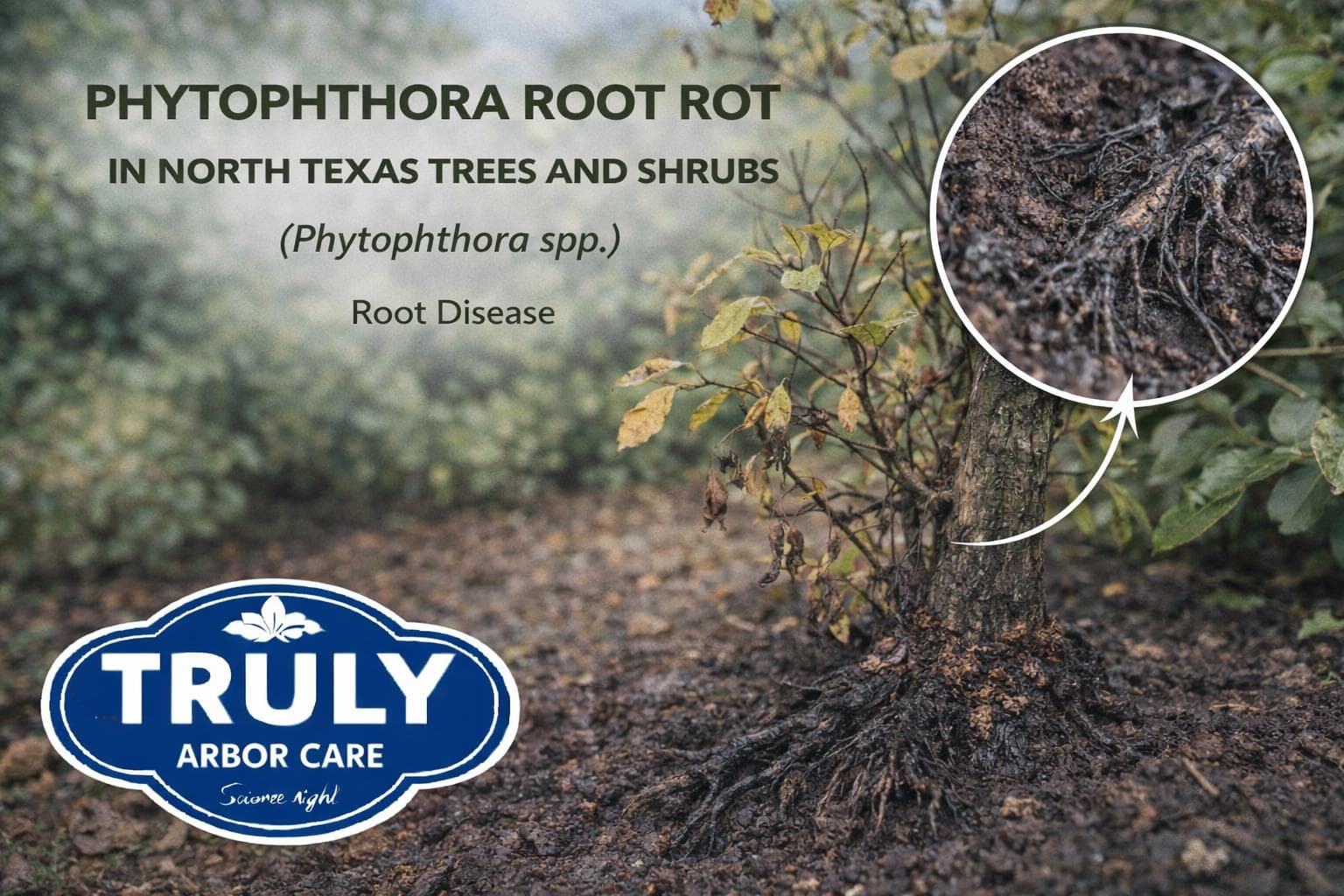
- Darkened or decayed roots
- Bark discoloration near the root collar
Infected roots often appear dark brown and soft instead of firm and white.
ISA Certified Arborists diagnosing decline symptoms across North Texas frequently inspect the root collar and soil conditions when evaluating suspected root diseases.
Consequences if Phytophthora Root Rot Is Left Unmanaged
If Phytophthora root rot is allowed to progress without management, the root system may continue to deteriorate.
Potential consequences include:
- Progressive canopy decline
- Reduced structural root support
- Increased susceptibility to drought stress
- Complete plant mortality
Young trees and ornamental shrubs may die within a short period once the root system becomes severely damaged.
In North Texas landscapes where ornamental plantings provide aesthetic value, unmanaged root diseases can lead to significant plant loss.
Managing Phytophthora Root Rot Through Plant Healthcare
Management of Phytophthora root rot focuses primarily on correcting environmental conditions that promote pathogen growth.
ISA Certified Arborists following ANSI A300 standards and TCIA plant healthcare protocols may recommend integrated management strategies.
These may include:
- Improving soil drainage conditions
- Reducing irrigation frequency
- Installing proper drainage systems
- Avoiding deep planting
- Improving soil aeration
- Using resistant plant species when replanting
In some cases, systemic fungicides specifically labeled for Phytophthora control may be used as part of a comprehensive plant healthcare program.
Routine monitoring helps identify early symptoms before severe root damage occurs.
Protecting Trees and Shrubs Across North Texas and the DFW Metroplex
Root diseases such as Phytophthora root rot highlight the importance of proper landscape management and soil health.
Routine inspections by an ISA Certified Arborist ensure trees and shrubs are maintained according to ANSI A300 standards and modern arboricultural science. Early diagnosis and improved soil conditions can significantly reduce the risk of root diseases across North Texas landscapes.
For more information, check out the Texas A&M article on Phytophthora root rot here.