
Oak Leaf Spot North Texas
Understanding Tubakia quercina and Oak Leaf Spot Diseases in the DFW Metroplex
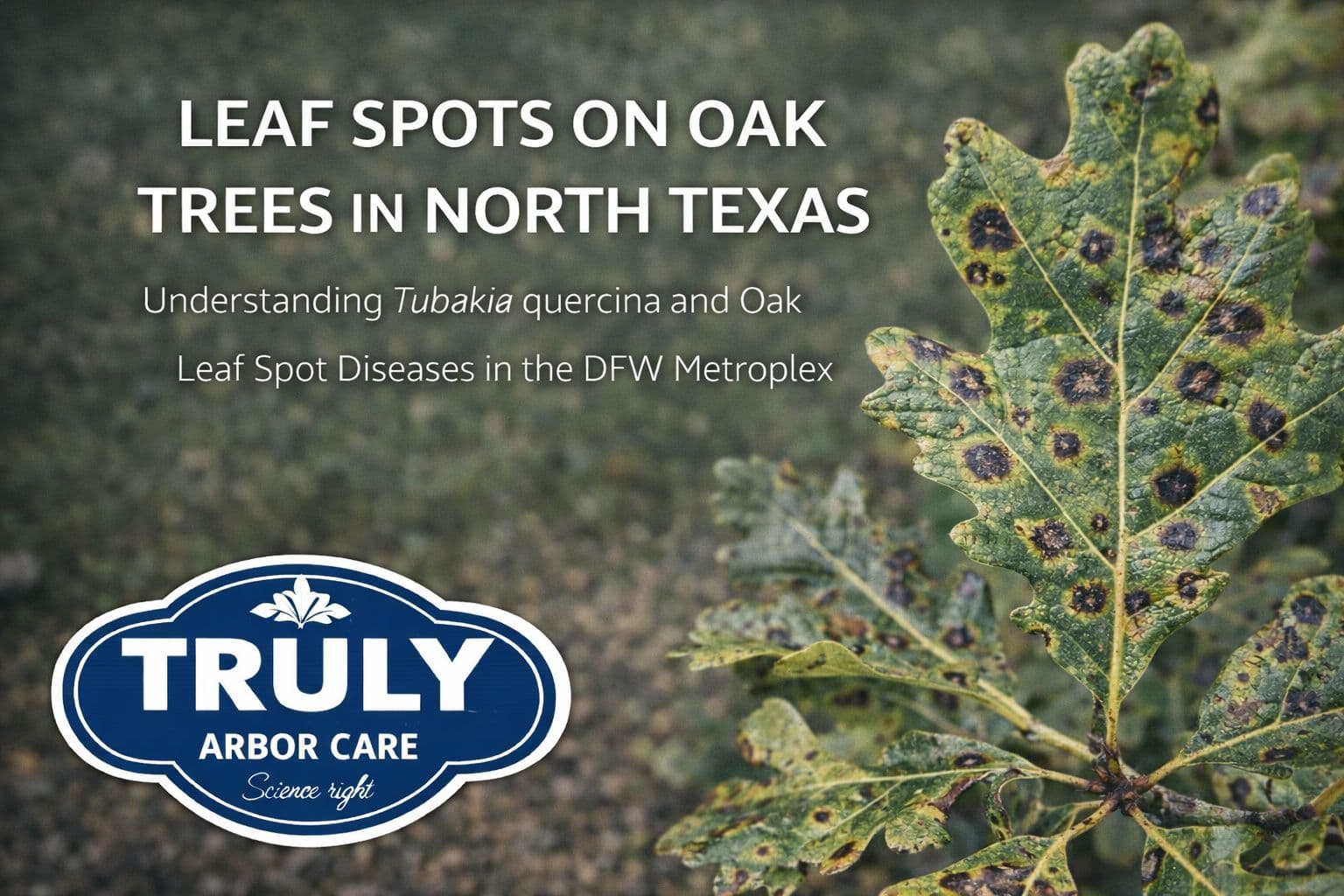
Leaf spot diseases affecting oak trees are common throughout North Texas and the greater DFW Metroplex. One of the primary fungal pathogens responsible for these symptoms is Tubakia quercina, a fungus that infects oak leaves and produces distinctive dark lesions that can spread across the leaf surface.
According to research published by Texas A&M AgriLife Extension and university plant pathology programs, Tubakia leaf spot primarily affects red oak species and becomes most active during periods of prolonged moisture and moderate temperatures.
Although oak leaf spot diseases rarely kill mature trees, repeated infections can reduce photosynthesis, weaken the canopy, and increase environmental stress. In urban landscapes across the DFW Metroplex where trees already face heat stress, compacted soils, and irregular watering patterns, these foliar diseases may contribute to gradual tree decline.
Proper diagnosis by an ISA Certified Arborist following ANSI A300 tree care standards and TCIA plant healthcare protocols ensures that leaf spot diseases are accurately identified and managed through science-based plant healthcare strategies.
Understanding the biology, environmental triggers, and treatment options associated with oak leaf spot diseases is essential for maintaining healthy oak canopies across North Texas landscapes.
Oak Species Susceptible to Leaf Spot Diseases
The fungal pathogen Tubakia quercina primarily infects oak species within the genus Quercus. Many of these trees are widely planted across North Texas residential and commercial landscapes.
Common susceptible species include:
- Shumard Oak (Quercus shumardii)
- Red Oak (Quercus rubra)
- Pin Oak (Quercus palustris)
- Water Oak (Quercus nigra)
- Black Oak (Quercus velutina)
Red oak group species tend to show the most noticeable symptoms of Tubakia leaf spot.
These trees are extremely common throughout the DFW Metroplex, particularly in urban neighborhoods where they provide shade, wildlife habitat, and landscape value.
Young trees and newly transplanted oaks may experience more severe symptoms because their root systems are still developing.
⸻
Environmental Conditions That Promote Oak Leaf Spot
Leaf spot diseases are strongly influenced by environmental conditions that favor fungal growth.
According to Texas A&M plant pathology research, the following factors increase infection risk:
- Prolonged rainfall during spring and early summer
- High humidity levels
- Temperatures between 60°F and 75°F
- Dense tree canopies with poor airflow
- Accumulation of infected leaf litter
During wet weather conditions, fungal spores spread through rain splash and wind, allowing the pathogen to infect new leaves.
In the DFW Metroplex, leaf spot outbreaks are often most visible following periods of extended spring rainfall.
Urban landscapes with poor canopy airflow may also increase disease pressure.
⸻
Life Cycle of the Oak Leaf Spot Fungus
The life cycle of Tubakia quercina begins when fungal spores overwinter in fallen infected leaves.
Spring Activation
During spring, spores become active and are released from infected leaf litter on the ground.
Spore Dispersal
Rain splash and wind carry spores onto newly emerging oak leaves.
Leaf Infection
When spores land on moist leaf surfaces, they germinate and penetrate the leaf tissue.
Lesion Development
The fungus colonizes plant cells and produces dark necrotic lesions on the leaf surface.
Spore Production
Additional spores form within the lesions and spread to nearby leaves, allowing multiple infection cycles during the growing season.
⸻
Symptoms and Identification of Oak Leaf Spot
Oak leaf spot diseases produce several recognizable symptoms that arborists can identify during tree health inspections.
Common symptoms include:
- Small dark brown or black spots on leaves
- Lesions expanding along leaf veins
- Yellow halos surrounding infected areas
- Leaf distortion or curling
- Premature leaf drop
As lesions enlarge, infected leaves may appear blotchy or scorched.
ISA Certified Arborists evaluating oak health throughout North Texas frequently diagnose leaf spot diseases during spring and early summer inspections.
Because several pathogens can produce similar symptoms, accurate identification is important before treatment strategies are implemented.
⸻
Consequences of Severe Leaf Spot Infections
Healthy mature oak trees typically tolerate mild infections without long-term damage. However, repeated or severe outbreaks can cause stress.
Potential impacts include:
- Reduced photosynthetic capacity
- Premature leaf drop
- Reduced carbohydrate reserves
- Increased susceptibility to drought stress
- Slower annual growth
Young trees and newly planted landscapes may be particularly vulnerable because their root systems are still developing.
In North Texas landscapes where oak trees contribute significantly to shade and property value, repeated defoliation can reduce canopy density and aesthetic quality.
⸻
Integrated Disease Management Strategies
Managing oak leaf spot diseases requires an integrated plant healthcare approach.
Professional management strategies may include:
- Monitoring disease activity during spring
- Improving airflow through proper canopy pruning
- Removing infected leaf litter beneath trees
- Improving irrigation practices
- Applying preventative fungicide treatments when necessary
Most fungicide treatments are preventative rather than curative and must be applied before infection occurs.
ISA Certified Arborists design disease management programs based on environmental conditions, tree health, and landscape risk factors.
⸻
Plant Healthcare Programs That Protect Oak Trees
Preventive plant healthcare programs can significantly reduce disease pressure in oak trees.
Professional plant healthcare services may include:
- Soil testing and nutrient balancing
- Root aeration and oxygenation
- Organic soil amendments
- Mycorrhizal inoculation
- Proper irrigation management
- Seasonal disease monitoring
Healthy soil conditions allow trees to develop stronger root systems that support vigorous canopy growth and improved disease resistance.
These science-based plant healthcare practices are widely recommended by Texas A&M AgriLife Extension and professional arboriculture organizations.
⸻
Protecting Oak Trees Across North Texas
Oak trees are among the most valuable components of the urban forest throughout North Texas and the DFW Metroplex. Maintaining their health requires proactive monitoring and science-based plant healthcare strategies.
Routine inspections by an ISA Certified Arborist ensure trees are evaluated according to ANSI A300 standards and modern arboricultural science.
Early detection of leaf spot diseases allows property owners to intervene before infections cause significant canopy stress.
For more information, check out the Texas A&M article on Leaf spot diseases here.