
Oak Leaf Blister in North Texas Oak Trees
Understanding Taphrina caerulescens and Its Impact on Oaks in the DFW Metroplex
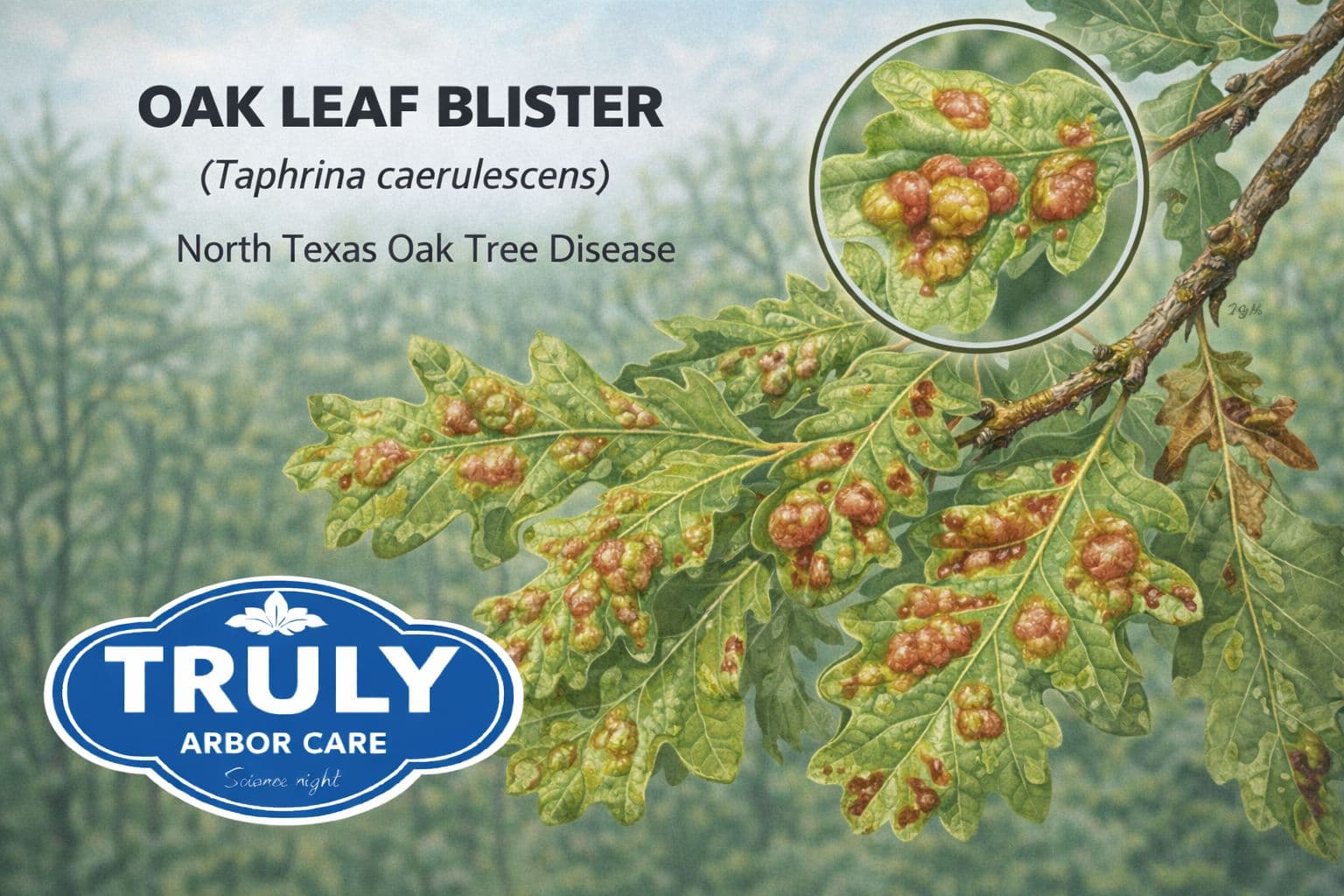
Oak leaf blister is a fungal disease that affects several species of oak trees throughout North Texas and the DFW Metroplex. The disease is caused by the fungal pathogen Taphrina caerulescens, which infects newly emerging leaves during early spring. This pathogen primarily targets young leaf tissue and results in blister-like swellings on the leaf surface.
According to Texas A&M AgriLife Extension and university plant pathology research, oak leaf blister is generally considered a cosmetic disease in mature trees. However, repeated infections combined with environmental stress can weaken trees over time and reduce photosynthetic capacity.
The fungus disrupts normal leaf development by invading the leaf tissue shortly after bud break. As the infection progresses, abnormal cell growth produces raised blisters that eventually turn brown and may lead to premature leaf drop.
Routine inspections by an ISA Certified Arborist following ANSI A300 tree care standards and TCIA plant healthcare protocols help identify leaf diseases early and maintain the long-term health of oak trees across North Texas landscapes.
Oak Species Susceptible to Oak Leaf Blister
The fungal pathogen Taphrina caerulescens primarily affects oak species within the red oak group.
Common susceptible species found throughout the DFW Metroplex include:
- Shumard Oak (Quercus shumardii)
- Red Oak (Quercus rubra)
- Pin Oak (Quercus palustris)
- Water Oak (Quercus nigra)
- Black Oak (Quercus velutina)
These species are widely planted in residential landscapes, parks, and commercial properties throughout North Texas due to their rapid growth and attractive canopy structure.
While white oak species may occasionally show mild symptoms, red oak species tend to experience more noticeable infections.
Environmental Conditions That Promote Oak Leaf Blister
Oak leaf blister infections occur primarily during cool, wet spring weather conditions.
Environmental factors common in North Texas that encourage infection include:
- Extended rainfall during bud break
- High humidity levels
- Cool spring temperatures between 50°F and 68°F
- Dense tree canopies that reduce airflow
- Persistent morning dew on foliage
Texas A&M research indicates that fungal spores infect leaves as they emerge from buds. Once the leaves mature, they become resistant to infection.
Because the infection window is limited to early leaf development, outbreaks vary from year to year depending on spring weather conditions.
Disease Infection and Life Cycle
The life cycle of Taphrina caerulescens begins when fungal spores overwinter on bark surfaces and bud scales of infected oak trees.
During spring, spores become active and infect newly emerging leaves. The fungus penetrates the leaf tissue and begins altering normal plant cell development.
As infected cells expand abnormally, raised blisters form on the upper surface of the leaf. These blisters may appear green, yellow, or reddish during early development.
Over time, the blisters turn brown as infected tissue dies.
The fungus then produces additional spores on the leaf surface, which may spread to nearby foliage during wet conditions.
However, once leaves mature and harden, new infections typically stop for the remainder of the season.
Symptoms and Identification of Oak Leaf Blister
Oak leaf blister produces distinctive symptoms that make it relatively easy to recognize.
Common symptoms include:
- Raised blister-like swellings on leaves
- Yellow, green, or reddish patches on the leaf surface
- Blisters that later turn brown
- Distorted leaf shape
- Premature leaf drop in severe cases
The blistered areas are usually scattered across the leaf surface and may vary in size.
In most cases, infected leaves remain on the tree but may appear distorted or thickened.
ISA Certified Arborists evaluating oak tree health in North Texas often identify leaf blister during spring canopy inspections.
Because the symptoms resemble other leaf diseases, professional diagnosis ensures accurate identification.
Consequences if Oak Leaf Blister Is Left Unmanaged
In most cases, oak leaf blister causes minimal long-term damage to mature trees.
However, severe infections combined with environmental stress may result in:
- Reduced photosynthesis
- Premature leaf drop
- Temporary canopy thinning
- Reduced tree vigor
Young or newly planted oak trees may be more vulnerable to repeated infections because they have smaller energy reserves.
In North Texas landscapes where oaks serve as major shade trees, repeated leaf damage may reduce overall tree health when combined with drought stress or soil compaction.
Managing Oak Leaf Blister Through Plant Healthcare Programs
Because infections occur early in the season, management strategies focus primarily on preventative care.
ISA Certified Arborists following ANSI A300 standards and TCIA plant healthcare protocols may recommend the following approaches.
These include:
- Improving tree vigor through proper fertilization
- Maintaining healthy soil conditions
- Reducing environmental stress factors
- Monitoring spring weather conditions
- Applying preventative fungicide treatments during high-risk seasons
Preventative fungicides are most effective when applied before bud break.
Once leaf infection occurs, treatment options are limited until the following growing season.
Routine plant healthcare monitoring allows arborists to identify patterns of infection and implement preventative measures when necessary.
Protecting Oak Trees Across North Texas and the DFW Metroplex
Oak trees are among the most valuable components of the urban forest across North Texas. Protecting these trees requires proactive monitoring and early disease identification.
Regular inspections by an ISA Certified Arborist ensure trees are maintained according to ANSI A300 standards and modern arboricultural science. With proper plant healthcare programs in place, oak leaf blister can be managed effectively while preserving the health and longevity of oak trees across the DFW Metroplex.
For more information, check out the Texas A&M article on Oak leaf blister here.