
Maple and Sycamore Leaf Spot in North Texas
Understanding Rhytisma and Related Fungal Leaf Spot Pathogens in the DFW Metroplex
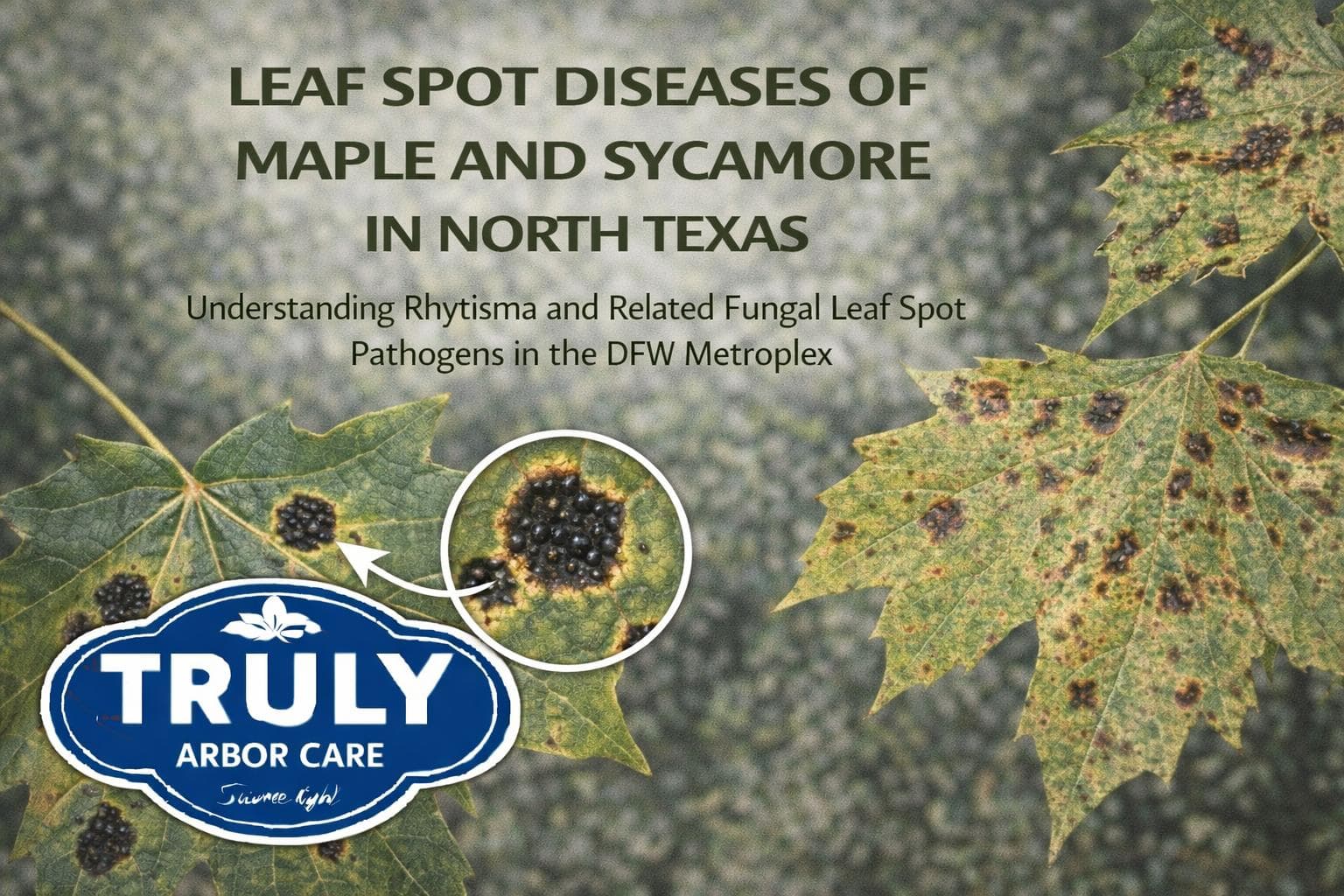
Leaf spot diseases affecting maple and sycamore trees are common foliar fungal infections observed throughout North Texas and the greater DFW Metroplex. One of the most recognizable pathogens associated with these infections is Rhytisma species, particularly Rhytisma acerinum, which produces distinctive black tar-like spots on maple leaves. Other fungal pathogens may also contribute to leaf spot symptoms on sycamore and maple species.
According to Texas A&M AgriLife Extension and university plant pathology research, these fungal diseases infect leaves during cool and wet spring conditions. The pathogens colonize leaf tissue and cause necrotic lesions that reduce the tree’s ability to perform photosynthesis.
Although leaf spot diseases rarely kill mature trees, repeated yearly infections may weaken trees and reduce canopy vigor. In urban environments across North Texas where trees may already experience environmental stress, these infections can contribute to overall decline.
Routine monitoring by an ISA Certified Arborist following ANSI A300 tree care standards and TCIA plant healthcare protocols helps identify foliar diseases early and maintain healthy shade trees throughout the DFW Metroplex.
Tree Species Susceptible to Maple and Sycamore Leaf Spots
Leaf spot fungi affect a variety of deciduous hardwood trees commonly planted across North Texas landscapes.
Common susceptible host species include:
- Red Maple (Acer rubrum)
- Silver Maple (Acer saccharinum)
- Sugar Maple (Acer saccharum)
- Japanese Maple (Acer palmatum)
- American Sycamore (Platanus occidentalis)
- London Plane Tree (Platanus × acerifolia)
Maple trees are the primary host for Rhytisma species responsible for tar spot disease, while sycamore trees may develop several types of fungal leaf spots.
These species are widely planted across the DFW Metroplex due to their shade value and ornamental appeal.
Environmental Conditions That Promote Leaf Spot Infections
Leaf spot fungi thrive under environmental conditions that provide prolonged leaf moisture.
Environmental conditions common across North Texas that encourage infection include:
- Cool spring temperatures between 50°F and 70°F
- Extended rainfall periods
- High humidity levels
- Dense tree canopies with limited airflow
- Accumulation of infected leaf litter beneath trees
Texas A&M research indicates that fungal spores infect leaves during the early stages of leaf development. When moisture remains on the leaf surface for extended periods, spores germinate and penetrate the leaf tissue.
In the DFW Metroplex, wet spring weather often leads to visible outbreaks of leaf spot diseases.
Disease Infection and Life Cycle
The life cycle of Rhytisma and related leaf spot fungi begins when spores overwinter in fallen infected leaves.
During the following spring, fungal spores are released and carried by wind or rain splash onto newly emerging leaves.
Once spores land on moist leaf surfaces, they germinate and penetrate the leaf tissue.
The fungus colonizes the leaf cells and forms necrotic lesions that expand as the infection progresses.
In the case of tar spot on maple leaves, the lesions eventually develop into raised black structures that contain fungal reproductive spores.
These structures release spores that infect new leaves the following year.
Symptoms and Identification of Maple and Sycamore Leaf Spots
Leaf spot diseases produce visible symptoms that arborists can easily identify during canopy inspections.
Common symptoms include:
- Small yellow or brown spots on leaf surfaces
- Irregular blotches that expand over time
- Black tar-like spots on maple leaves
- Leaf discoloration and distortion
- Premature leaf drop in severe infections
Tar spot disease on maple leaves is particularly distinctive due to the large black raised spots that develop on the leaf surface.
ISA Certified Arborists evaluating tree health across North Texas frequently diagnose leaf spot diseases during spring and early summer canopy inspections.
Consequences if Leaf Spot Diseases Are Left Unmanaged
In most cases, leaf spot diseases cause primarily aesthetic damage rather than severe tree mortality.
However, repeated infections can contribute to chronic stress.
Potential consequences include:
- Reduced photosynthesis
- Premature leaf drop
- Reduced energy reserves
- Slower tree growth
- Increased susceptibility to drought stress
Young trees and newly planted landscapes may experience more severe symptoms due to limited energy reserves.
In North Texas landscapes where shade trees contribute to property value, unmanaged leaf spot outbreaks may reduce ornamental quality.
Managing Leaf Spot Diseases Through Plant Healthcare
Management of leaf spot diseases focuses on reducing environmental conditions that favor fungal development.
ISA Certified Arborists following ANSI A300 standards and TCIA plant healthcare protocols may recommend several strategies.
These may include:
- Removing infected leaf litter
- Improving airflow through canopy pruning
- Managing irrigation practices
- Improving soil health and root vigor
- Applying preventative fungicide treatments when necessary
Removing fallen infected leaves is one of the most effective ways to reduce fungal spores that cause reinfection.
Routine plant healthcare monitoring allows arborists to detect disease patterns and recommend preventive treatments when necessary.
Protecting Shade Trees Across North Texas and the DFW Metroplex
Maple and sycamore trees provide valuable shade and aesthetic value across North Texas landscapes. Protecting these trees requires proactive plant healthcare management and early disease detection.
Routine inspections by an ISA Certified Arborist ensure trees are maintained according to ANSI A300 standards and modern arboricultural science. Proper canopy management and sanitation practices help reduce the impact of leaf spot diseases across the DFW Metroplex.
For more information, check out the Texas A&M article on Leaf spot diseases here.