
Hypoxylon Canker in North Texas
Understanding Hypoxylon spp. and Its Impact on Hardwood Trees in the DFW Metroplex
Hypoxylon canker is a fungal disease that affects several hardwood tree species throughout North Texas and the greater DFW Metroplex. The disease is caused by fungi in the genus Hypoxylon, most commonly Hypoxylon atropunctatum and related species, which colonize weakened or stressed trees and cause bark decay and structural wood deterioration.
According to Texas A&M AgriLife Extension and university plant pathology research, Hypoxylon fungi are considered opportunistic pathogens. They typically infect trees that are already under environmental stress such as drought, soil compaction, construction damage, or root disturbance.
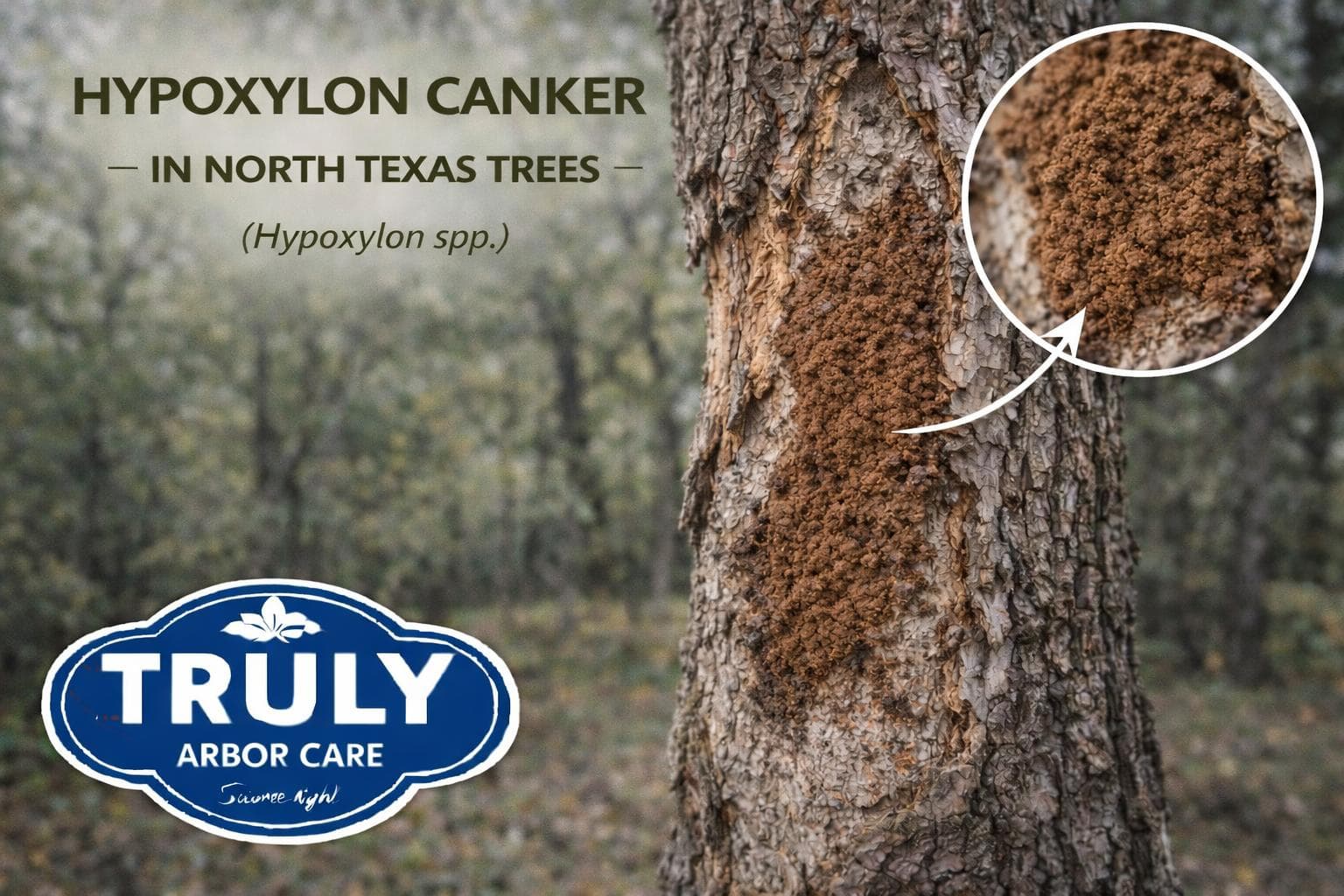
Once a tree becomes weakened, the fungus invades the bark and sapwood tissues. As the infection develops, the fungus produces dark spore-bearing structures beneath the bark, eventually causing the bark to slough off and expose the fungal growth beneath.
Hypoxylon canker often progresses rapidly once symptoms appear. Because the disease typically affects trees already under stress, the condition can lead to rapid decline and structural instability.
Routine monitoring by an ISA Certified Arborist following ANSI A300 tree care standards and TCIA plant healthcare protocols is critical for identifying stress-related diseases and protecting tree health across North Texas landscapes.
Tree Species Susceptible to Hypoxylon Canker
Hypoxylon fungi infect a wide range of hardwood tree species commonly planted in the DFW Metroplex.
Common susceptible hosts include:
- Oak species (Quercus spp.)
- Post Oak (Quercus stellata)
- Red Oak (Quercus rubra)
- Live Oak (Quercus virginiana)
- Hickory (Carya species)
- Pecan (Carya illinoinensis)
- Elm (Ulmus species)
- Sweetgum (Liquidambar styraciflua)
Oak trees are among the most commonly affected hosts in North Texas. Trees that experience prolonged drought stress or root damage are particularly vulnerable.
In many cases, Hypoxylon canker appears on mature shade trees that have recently undergone environmental stress.
Environmental Conditions That Promote Hypoxylon Infection
Hypoxylon canker is strongly associated with environmental stress factors that weaken the tree’s natural defense mechanisms.
Environmental conditions common across North Texas that encourage infection include:
- Prolonged drought conditions
- Extreme summer heat
- Soil compaction
- Construction activity near root zones
- Root disturbance
- Poor soil drainage
- Storm damage to branches
Texas A&M research indicates that drought stress is one of the most common triggers for Hypoxylon infections. Trees that are unable to transport sufficient water may lose the ability to defend against opportunistic fungi.
In the DFW Metroplex where summer heat and drought conditions are common, stressed trees may become vulnerable to fungal colonization.
Disease Infection and Life Cycle
Hypoxylon fungi are commonly present in the environment and may exist harmlessly on tree surfaces until the host becomes weakened.
When a tree experiences significant stress, the fungus invades the bark and colonizes the cambial layer and outer sapwood.
As the infection progresses, fungal mycelium spreads through the wood tissues. Eventually the bark begins to crack and peel away, revealing powdery or crust-like fungal structures beneath.
These structures release spores that may spread to nearby weakened trees.
Unlike some fungal pathogens, Hypoxylon typically does not infect healthy trees. Instead, it acts as a secondary pathogen that accelerates decline in stressed trees.
Symptoms and Identification of Hypoxylon Canker
Hypoxylon canker produces distinctive symptoms that arborists can identify during tree health inspections.
Common symptoms include:
- Rapid canopy thinning
- Dead branches appearing throughout the canopy
- Bark cracking and peeling
- Gray, silver, or black fungal growth beneath bark
- Powdery spore masses on exposed wood
- Sudden decline in tree vigor
When bark sloughs off the trunk or branches, the fungal stroma beneath may appear gray at first and later turn black as spores mature.
ISA Certified Arborists diagnosing tree decline across North Texas frequently identify Hypoxylon infections when exposed fungal structures appear on oak trunks.
Consequences if Hypoxylon Canker Is Left Unmanaged
Once Hypoxylon canker becomes visible on the trunk or large branches, the disease often progresses quickly.
Potential consequences include:
- Rapid canopy dieback
- Loss of structural wood integrity
- Increased risk of branch failure
- Complete tree mortality
Because the fungus decays structural wood, infected trees may become hazardous and prone to failure during storms or high winds.
In North Texas landscapes where mature shade trees provide significant environmental and aesthetic value, Hypoxylon infections may lead to costly removals.
Managing Hypoxylon Canker Through Plant Healthcare
Management of Hypoxylon canker focuses primarily on preventing environmental stress and maintaining tree vigor.
ISA Certified Arborists following ANSI A300 standards and TCIA plant healthcare protocols may recommend several preventive strategies.
These may include:
- Improving soil health and root conditions
- Reducing soil compaction
- Managing irrigation during drought periods
- Avoiding root disturbance during construction
- Monitoring tree health annually
Once severe infections develop, removal of affected trees may be necessary to prevent safety hazards.
Early detection of environmental stress allows arborists to implement plant healthcare treatments before fungal colonization occurs.
Protecting Trees Across North Texas and the DFW Metroplex
Hypoxylon canker highlights the importance of proactive plant healthcare and stress management for urban trees.
Routine inspections by an ISA Certified Arborist ensure trees are maintained according to ANSI A300 standards and modern arboricultural science. By maintaining healthy soil conditions and reducing environmental stress, property owners can significantly reduce the risk of stress-related diseases across North Texas landscapes.
For more information, check out the Texas A&M article on Hypoxylon canker here.