
Fusiform Rust in North Texas
Pine Trees- Understanding Cronartium fusiforme and Its Impact on Pines in the DFW Metroplex
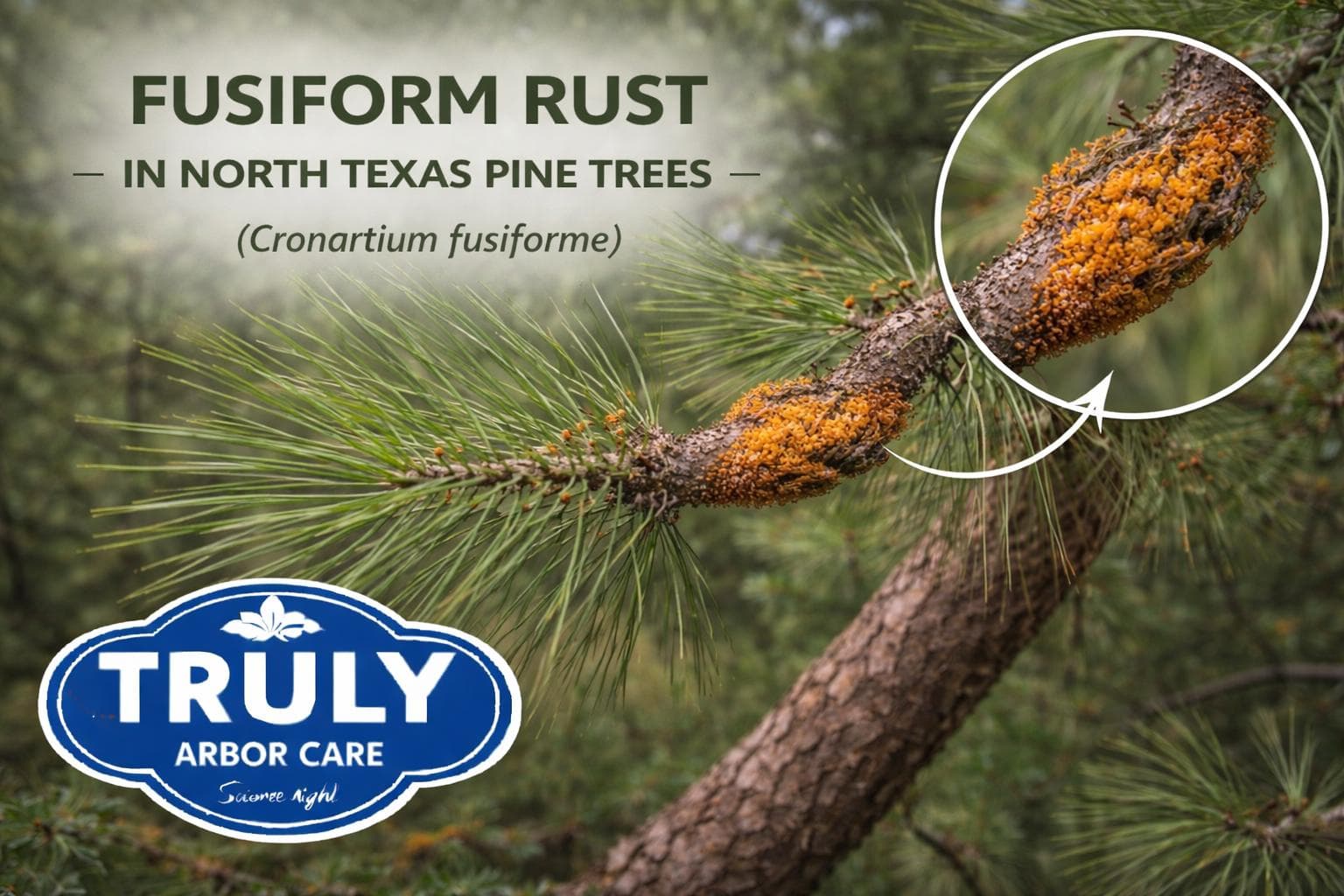
Fusiform rust is a fungal disease that affects several pine species throughout North Texas and the greater DFW Metroplex. The disease is caused by the fungal pathogen Cronartium fusiforme, which infects pine trees and produces spindle-shaped swellings or galls on stems and branches.
According to Texas A&M AgriLife Extension and university forest pathology research, fusiform rust is one of the most important diseases affecting southern pine species in the United States. The fungus requires two different host plants to complete its life cycle: pine trees and oak trees. Because both host species are common across North Texas landscapes, the disease can occur wherever these plants grow near one another.
The pathogen infects young pine tissues and disrupts normal growth patterns. As the infection develops, the fungus causes abnormal swelling in the bark and wood tissues. These galls weaken the structural integrity of branches and stems, which may lead to breakage during storms or high winds.
Routine monitoring by an ISA Certified Arborist following ANSI A300 tree care standards and TCIA plant healthcare protocols is essential for identifying rust diseases early and protecting pine trees throughout the DFW Metroplex.
Pine and Oak Species Involved in Fusiform Rust
Fusiform rust requires two different host plants to complete its life cycle. Pine trees serve as the primary host, while oak trees act as the alternate host.
Pine species commonly affected include:
- Loblolly Pine (Pinus taeda)
- Slash Pine (Pinus elliottii)
- Shortleaf Pine (Pinus echinata)
Oak species that serve as alternate hosts include:
- Water Oak (Quercus nigra)
- Willow Oak (Quercus phellos)
- Shumard Oak (Quercus shumardii)
- Southern Red Oak (Quercus falcata)
Because both pine and oak trees are widely planted across North Texas landscapes, the presence of both hosts in close proximity increases the likelihood of infection.
Environmental Conditions That Promote Fusiform Rust
Fusiform rust infections are strongly influenced by environmental conditions that favor fungal spore germination.
Environmental factors common across North Texas that encourage infection include:
- Warm spring temperatures
- High humidity levels
- Extended rainfall periods
- Dense forest or landscape plantings
- Young pine growth during wet weather
Texas A&M research indicates that the fungus most commonly infects pine seedlings and young trees. Mature trees are less susceptible but may still develop galls if exposed to favorable infection conditions.
Rain and wind spread fungal spores between oak and pine hosts during the growing season.
Disease Infection and Life Cycle
The life cycle of Cronartium fusiforme is complex and requires both pine and oak hosts.
The fungus produces spores on oak leaves that are carried by wind to nearby pine trees. When spores land on young pine shoots during moist conditions, they germinate and infect the bark tissue.
The infection stimulates abnormal growth within the tree’s cambium and produces elongated galls on branches and stems.
Later in the season, the fungus produces spores on the pine galls that infect oak leaves, completing the life cycle.
This two-host cycle allows the disease to persist wherever both pine and oak trees are present.
Symptoms and Identification of Fusiform Rust
Fusiform rust produces distinctive symptoms that arborists can identify during tree inspections.
Common symptoms include:
- Spindle-shaped swellings on branches and stems
- Orange fungal spore masses on galls
- Branch deformities
- Dieback of infected branches
- Weak structural areas where galls develop
The spindle-shaped gall is the most recognizable feature of the disease and gives fusiform rust its name.
ISA Certified Arborists evaluating pine health across North Texas frequently identify fusiform rust during routine tree health inspections.
Consequences if Fusiform Rust Is Left Unmanaged
If fusiform rust infections are left unmanaged, the disease can cause structural weakness and decline in affected trees.
Potential consequences include:
- Branch breakage during storms
- Reduced tree growth
- Loss of structural integrity in stems
- Increased susceptibility to insect pests
- Tree mortality in severe cases
Young pine trees may suffer the most severe damage because the infection disrupts normal growth patterns early in development.
In North Texas landscapes where pine trees are used for windbreaks or ornamental plantings, severe infections may significantly reduce tree value.
Managing Fusiform Rust Through Plant Healthcare
Management of fusiform rust focuses primarily on prevention and early detection.
ISA Certified Arborists following ANSI A300 standards and TCIA plant healthcare protocols may recommend several management strategies.
These may include:
- Pruning infected branches
- Removing severely infected trees
- Planting rust-resistant pine varieties
- Reducing proximity between pine and oak hosts when possible
- Monitoring young pine plantings regularly
Because the disease requires both pine and oak hosts to complete its life cycle, reducing host proximity can sometimes reduce infection pressure.
Routine monitoring allows arborists to detect infections early before structural damage becomes severe.
Protecting Pine Trees Across North Texas and the DFW Metroplex
Pine trees play an important role in landscapes throughout North Texas, providing shade, wind protection, and visual diversity. Protecting these trees requires proactive plant healthcare management and early disease detection.
Routine inspections by an ISA Certified Arborist ensure trees are maintained according to ANSI A300 standards and modern arboricultural science. Early identification of fusiform rust allows property owners to implement management strategies that preserve the long-term health of pine trees across the DFW Metroplex.
For more information, check out the Texas A&M article on Fusiform rust here.