
Fire Blight in North Texas
Understanding Erwinia amylovora and Its Impact on Ornamental and Fruit Trees in the DFW Metroplex
Fire blight is one of the most destructive bacterial diseases affecting ornamental and fruit-bearing trees throughout North Texas and the greater DFW Metroplex. The disease is caused by the bacterium Erwinia amylovora, which infects blossoms, shoots, and branches, leading to rapid dieback and the characteristic “burned” appearance of foliage.
According to research published by Texas A&M AgriLife Extension and university plant pathology programs, fire blight primarily affects members of the rose family (Rosaceae), including pears, apples, crabapples, hawthorns, and other ornamental landscape trees.
The bacterium spreads quickly during warm, humid spring weather when blossoms are present. Once infection begins, bacteria multiply inside plant tissues and travel through the vascular system, causing tissue death and rapid canopy decline.
Fire blight outbreaks can spread rapidly in urban landscapes if conditions are favorable. Early detection and professional evaluation by an ISA Certified Arborist following ANSI A300 tree care standards and TCIA plant healthcare protocols are essential for managing this disease and protecting valuable trees across North Texas.
Tree Species Susceptible to Fire Blight
The bacterium Erwinia amylovora primarily infects plant species within the rose family.
Common host trees planted across North Texas landscapes include:
- Bradford Pear (Pyrus calleryana)
- Fruit Pear Trees (Pyrus communis)
- Apple Trees (Malus domestica)
- Crabapple Trees (Malus spp.)
- Hawthorn (Crataegus spp.)
- Serviceberry (Amelanchier spp.)
- Firethorn / Pyracantha (Pyracantha spp.)
Ornamental pear trees and crabapples are among the most commonly affected hosts throughout the DFW Metroplex, particularly in residential neighborhoods and commercial landscape plantings.
Young trees and newly planted landscapes may be especially vulnerable to infection because they lack the energy reserves needed to resist bacterial invasion.
⸻
Environmental Conditions That Promote Fire Blight
Fire blight outbreaks are closely linked to environmental conditions during the spring growing season.
Texas A&M plant pathology research indicates that the following factors increase the likelihood of infection:
- Warm temperatures between 65°F and 85°F
- High humidity levels
- Extended rainfall during bloom
- Dense plantings that reduce airflow
- Insect activity that spreads bacteria
The bacterium spreads most effectively during periods when flowers are present on host trees. Moist conditions allow bacteria to multiply rapidly and infect blossoms and young shoots.
Urban environments within the DFW Metroplex may sometimes increase disease pressure because ornamental host trees are planted closely together in residential landscapes.
⸻
Life Cycle of the Fire Blight Bacterium
Understanding the life cycle of Erwinia amylovora helps arborists determine the most effective timing for management treatments.
Overwintering Stage
The bacterium survives the winter inside cankers on infected branches.
Spring Activation
As temperatures rise, bacteria multiply and produce a sticky bacterial ooze on infected bark surfaces.
Insect and Weather Spread
Insects such as bees, flies, and ants can transfer bacteria from infected tissues to blossoms on healthy trees. Rain splash and wind can also spread the pathogen.
Blossom Infection
Bacteria enter the plant through flower tissues and begin multiplying rapidly.
Systemic Spread
Once inside the plant, bacteria move through vascular tissues and infect shoots, branches, and sometimes the main trunk.
This rapid internal spread is what causes the sudden and dramatic symptoms associated with fire blight outbreaks.
⸻
Symptoms and Identification of Fire Blight
Fire blight produces several distinctive symptoms that arborists can identify during plant health inspections.
Common symptoms include:
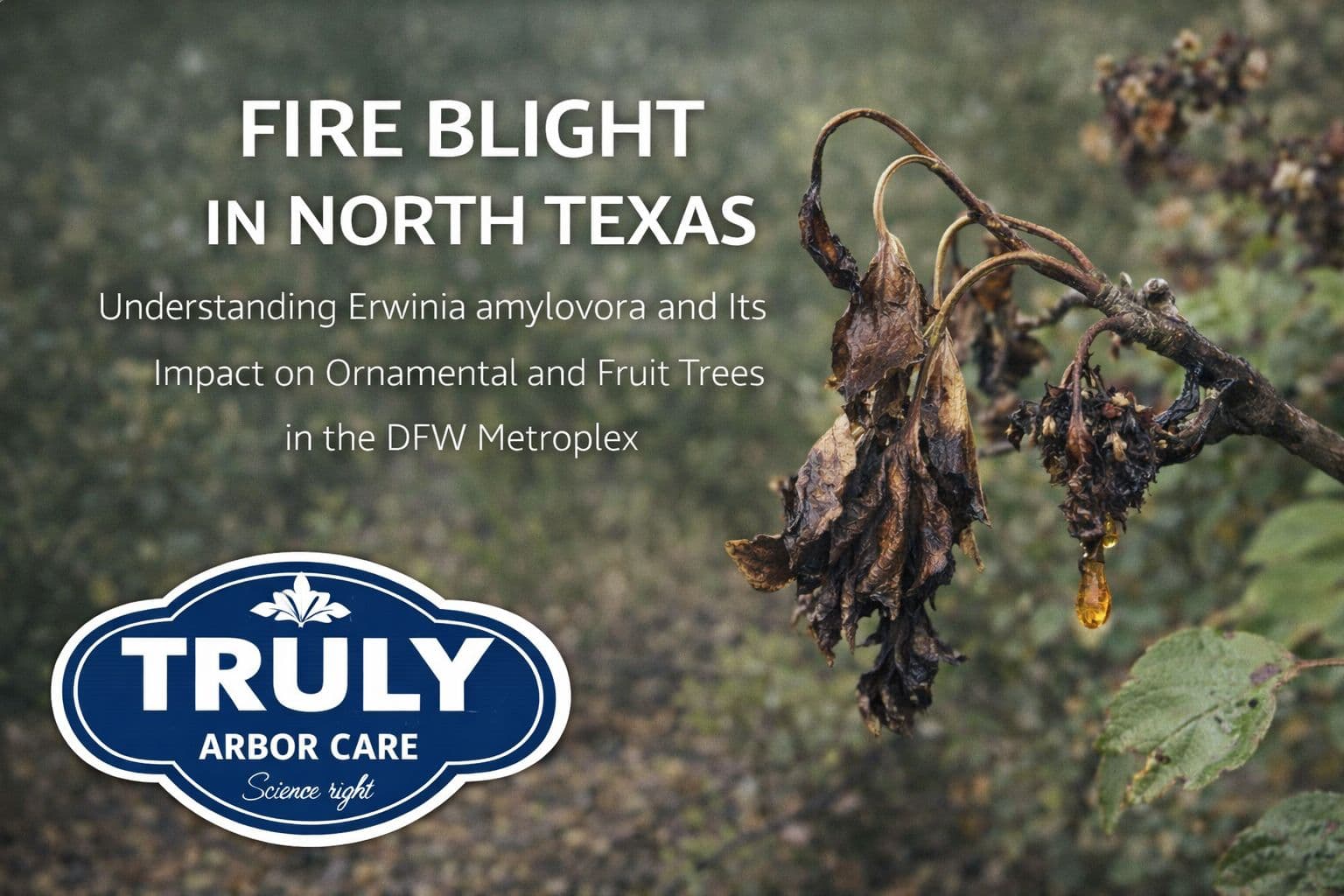
- Leaves turning brown or black while remaining attached to branches
- Shoots bending into a distinctive “shepherd’s crook” shape
- Blossom clusters turning dark and shriveled
- Branch dieback progressing toward the trunk
- Sticky bacterial ooze emerging from infected bark
The scorched appearance of infected foliage is what gives the disease its name.
ISA Certified Arborists evaluating tree health across North Texas frequently diagnose fire blight during spring and early summer when new growth begins to decline rapidly.
⸻
Consequences of Severe Fire Blight Infections
If fire blight infections are not managed properly, the disease can cause serious damage to ornamental and fruit trees.
Potential impacts include:
- Rapid shoot dieback
- Loss of fruit production
- Structural branch decline
- Reduced canopy density
- Death of young trees
Because the bacterium spreads internally through vascular tissues, untreated infections can quickly progress through the canopy.
In North Texas landscapes where ornamental trees contribute to curb appeal and property value, severe fire blight outbreaks can significantly reduce landscape quality.
⸻
Integrated Disease Management Strategies
Effective fire blight management requires a combination of monitoring, pruning, and preventive plant healthcare practices.
ISA Certified Arborists may implement several strategies including:
- Monitoring trees during bloom periods
- Pruning infected branches well below the infection site
- Sanitizing pruning tools between cuts
- Improving airflow through proper canopy management
- Applying preventive bactericide treatments when necessary
Pruning is typically performed during dry weather to minimize bacterial spread.
Integrated management programs are designed to reduce disease pressure while preserving the health of affected trees.
⸻
Plant Healthcare Programs That Protect Trees
Proactive plant healthcare programs help trees resist disease and recover from environmental stress.
Professional plant healthcare services may include:
- Soil testing and nutrient balancing
- Root aeration and oxygenation
- Organic soil amendments
- Proper irrigation management
- Seasonal disease monitoring
Healthy soil conditions and strong root systems allow trees to develop greater resistance to bacterial pathogens.
These science-based management strategies are widely recommended by Texas A&M AgriLife Extension and professional arboriculture organizations.
⸻
Protecting Landscape Trees Across North Texas
Ornamental and fruit trees play an important role in landscapes throughout North Texas and the DFW Metroplex. Protecting these trees requires proactive monitoring and science-based plant healthcare practices.
Routine inspections by an ISA Certified Arborist ensure trees are evaluated according to ANSI A300 standards and modern arboricultural science.
Early diagnosis and proper management strategies allow property owners to protect valuable trees from fire blight outbreaks and preserve long-term canopy health.
For more information, check out the Texas A&M article on Fire blight here.