
Dutch Elm Disease in North Texas
Understanding Ophiostoma novo-ulmi and Its Impact on Elm Trees in the DFW Metroplex
Dutch elm disease (DED) is one of the most destructive vascular tree diseases affecting elm populations across North America. The disease is caused primarily by the fungal pathogen Ophiostoma novo-ulmi, which invades the water-conducting xylem tissue of elm trees and disrupts the transport of water and nutrients throughout the canopy.
According to Texas A&M AgriLife Extension and university forest pathology research, Dutch elm disease is responsible for the loss of millions of elm trees across the United States since the early 20th century. In North Texas and the greater DFW Metroplex, the disease remains a serious concern for landscapes containing American elm, cedar elm, and other susceptible elm species.
The pathogen spreads through two primary mechanisms: elm bark beetles and root graft transmission between neighboring elm trees. Once the fungus enters the vascular system, the tree attempts to block the pathogen by producing tyloses and gums inside the xylem vessels. While this response slows the spread of the fungus, it also restricts water movement within the tree, ultimately leading to canopy wilt and decline.
Routine monitoring by an ISA Certified Arborist following ANSI A300 tree care standards and TCIA plant healthcare protocols is essential for detecting Dutch elm disease early and protecting elm trees throughout North Texas landscapes.
Elm Species Susceptible to Dutch Elm Disease
Dutch elm disease primarily affects trees in the genus Ulmus. Some species are highly susceptible, while others show moderate tolerance.
Common host species found throughout North Texas include:
- American Elm (Ulmus americana)
- Slippery Elm (Ulmus rubra)
- Winged Elm (Ulmus alata)
- Cedar Elm (Ulmus crassifolia)
- English Elm (Ulmus procera)
American elm is considered one of the most susceptible species and historically suffered the greatest losses due to Dutch elm disease.
Cedar elm, which is native to Texas and commonly planted across the DFW Metroplex, tends to show somewhat greater tolerance but can still become infected under favorable conditions.
Environmental Conditions That Encourage Disease Spread
Several environmental factors common in North Texas urban landscapes can influence the spread and severity of Dutch elm disease.
Key contributing factors include:
- Large populations of elm bark beetles
- Close proximity of elm trees allowing root graft formation
- Drought stress weakening tree defenses
- Construction damage to root systems
- Improper pruning during beetle activity seasons
- Storm damage that creates entry wounds
Texas A&M research indicates that drought stress and urban environmental pressures can increase susceptibility by weakening the natural defense mechanisms of elm trees.
In the DFW Metroplex, landscapes containing clusters of elm trees are particularly vulnerable to root graft transmission.
Disease Transmission and Life Cycle
Dutch elm disease spreads primarily through elm bark beetles and root graft transmission.
Elm bark beetles carry spores of the fungus on their bodies. When the beetles feed on healthy elm trees, they introduce fungal spores into the vascular system through feeding wounds.
Once inside the tree, the fungus rapidly colonizes the xylem tissue and spreads through the vascular system.
The fungus may also spread underground through root grafts between adjacent elm trees. When the roots of two elm trees grow together, vascular connections form that allow the pathogen to move from an infected tree to healthy neighbors.
This root graft transmission can allow the disease to spread quickly through entire rows or clusters of elm trees.
Symptoms and Identification of Dutch Elm Disease
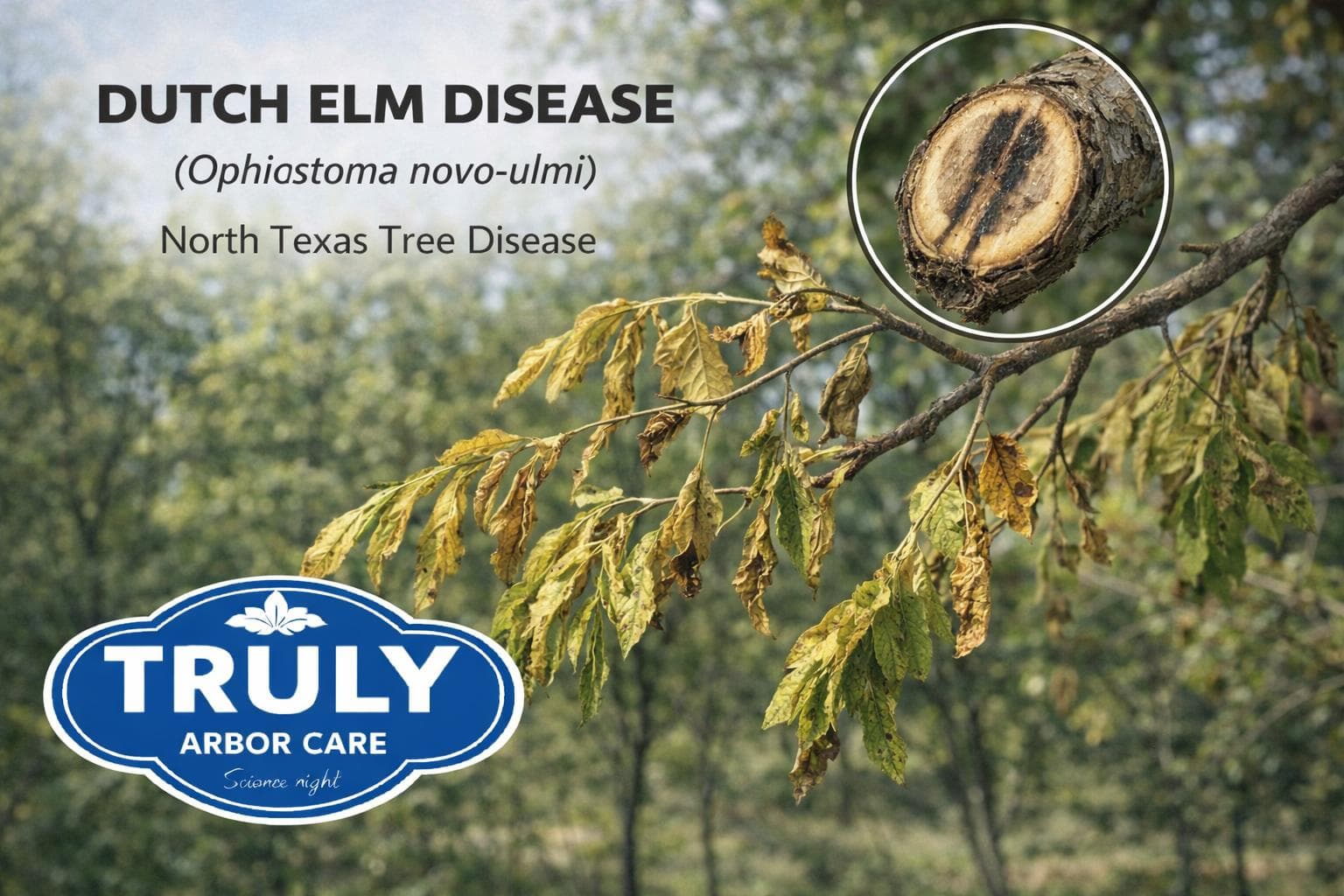
Dutch elm disease produces characteristic symptoms that can be observed in the canopy.
Common symptoms include:
- Wilting and yellowing leaves
- Leaves turning brown and curling
- Rapid branch dieback
- Flagging branches where one limb wilts before the rest of the tree
- Premature leaf drop
- Dark streaking in the sapwood beneath the bark
One of the most diagnostic signs of Dutch elm disease is vascular discoloration. When the bark is removed from infected branches, dark brown streaks may be visible within the sapwood.
ISA Certified Arborists performing tree risk and health assessments in North Texas often confirm Dutch elm disease through visual symptoms and laboratory testing when necessary.
Consequences if Dutch Elm Disease Is Left Untreated
Dutch elm disease can progress rapidly once infection occurs.
Potential consequences include:
- Rapid canopy decline
- Loss of large structural branches
- Complete tree mortality within one to several years
- Spread of the pathogen to nearby elm trees through root grafts
- Increased populations of elm bark beetles breeding in dead wood
Once a tree becomes heavily infected, the likelihood of survival decreases significantly.
In North Texas landscapes where mature elms provide valuable shade and aesthetic value, the loss of these trees can significantly alter the character of a property.
Managing Dutch Elm Disease Through Plant Healthcare
Management of Dutch elm disease requires a proactive and integrated plant healthcare approach.
ISA Certified Arborists operating under ANSI A300 standards and TCIA plant healthcare protocols may implement several strategies.
These may include:
- Early detection and monitoring of elm trees
- Sanitation removal of infected wood
- Root graft disruption between infected and healthy trees
- Systemic fungicide injections for high-value trees
- Proper pruning practices to avoid attracting beetles
- Maintaining overall tree vigor through soil and root health programs
Systemic fungicide injections may provide protection for valuable elm trees when applied preventatively or during early infection stages.
Regular monitoring allows arborists to identify symptoms early and implement treatments before the disease spreads extensively.
Protecting Elm Trees Across North Texas and the DFW Metroplex
Elm trees remain an important component of the urban canopy across North Texas. Preserving these trees requires early disease detection and proactive plant healthcare management.
Routine inspections by an ISA Certified Arborist help ensure elm trees are maintained according to ANSI A300 standards and modern arboricultural science. With proper monitoring and management, the impact of Dutch elm disease can be reduced while protecting the long-term health of elm populations throughout the DFW Metroplex.
For more information, check out the Texas A&M article on Dutch elm disease here.