
Crown Gall Disease in North Texas
Trees and Shrubs- Understanding Agrobacterium tumefaciens and Its Impact on Landscape Plants in the DFW Metroplex
Crown gall is a destructive bacterial disease affecting hundreds of woody and herbaceous plant species throughout North Texas and the greater DFW Metroplex. The disease is caused by the soil-borne bacterium Agrobacterium tumefaciens, which infects plants through wounds and causes abnormal growths called galls on roots, stems, and the crown of the plant.
According to research published by Texas A&M AgriLife Extension and other university plant pathology programs, crown gall is unique among plant diseases because the bacterium transfers a segment of its DNA into the plant’s cells. This genetic transfer forces the plant tissue to produce uncontrolled cell division, resulting in tumor-like growths that interfere with water and nutrient transport.
In ornamental landscapes across North Texas, crown gall is commonly observed on shade trees, fruit trees, shrubs, and vines. Because the bacterium survives in soil for many years, the disease can persist in landscapes long after the original infected plant has been removed.
Professional evaluation by an ISA Certified Arborist following ANSI A300 tree care standards and TCIA plant healthcare protocols is essential for identifying the disease early and reducing its spread within the landscape.
Host Trees and Shrubs Susceptible to Crown Gall
Agrobacterium tumefaciens has one of the widest host ranges of any plant pathogen. Texas A&M plant pathology research indicates that more than 600 plant species can become infected.
Common host trees and shrubs in North Texas landscapes include:
- Rose species
- Peach and plum trees
- Apple trees
- Pear trees
- Willow trees
- Cottonwood trees
- Poplar species
- Elm trees
- Oak species
- Grapevines
- Privet shrubs
- Euonymus
- Wisteria vines
- Fruit trees and ornamental nursery stock
Because the pathogen infects through wounds, young plants and nursery-grown trees are especially vulnerable. Landscapes throughout the DFW Metroplex that utilize ornamental shrubs and fruit trees may unknowingly introduce infected plant material during installation.
Once the bacterium becomes established in soil, susceptible hosts planted later may also become infected.
Environmental Conditions That Promote Crown Gall Development
Several environmental factors common throughout North Texas landscapes can increase the likelihood of crown gall infection.
Agrobacterium tumefaciens thrives in soil environments where wounds to plant tissue occur. These wounds provide entry points for the bacterium.
Common environmental triggers include:
- Mechanical injury from landscaping equipment
- Improper pruning cuts
- Root damage during planting
- Insect feeding wounds
- Freeze injury to bark tissue
- Soil cultivation around the crown
- Transplant stress
- Compacted soils common in North
- Texas clay horizons
Texas A&M AgriLife Extension notes that the bacterium survives in soil organic matter and can persist for many years even without an active host plant. This persistence makes crown gall a long-term management concern in landscapes across the DFW Metroplex.
How Crown Gall Infects Plants
The infection process begins when Agrobacterium tumefaciens enters plant tissue through a wound near the crown, root system, or lower stem.
Once inside the plant, the bacterium transfers a portion of its genetic material into the host plant’s DNA. This transferred DNA alters normal plant cell behavior and causes uncontrolled growth of plant tissue.
The plant cells begin producing excessive amounts of plant hormones such as auxins and cytokinins. These hormones stimulate abnormal cell division and enlargement, eventually forming visible galls.
These galls disrupt the plant’s vascular system, interfering with the movement of water and nutrients through the xylem and phloem tissues.
Young plants are especially vulnerable because the developing vascular system can become severely restricted by gall formation.
Symptoms and Visual Identification of Crown Gall
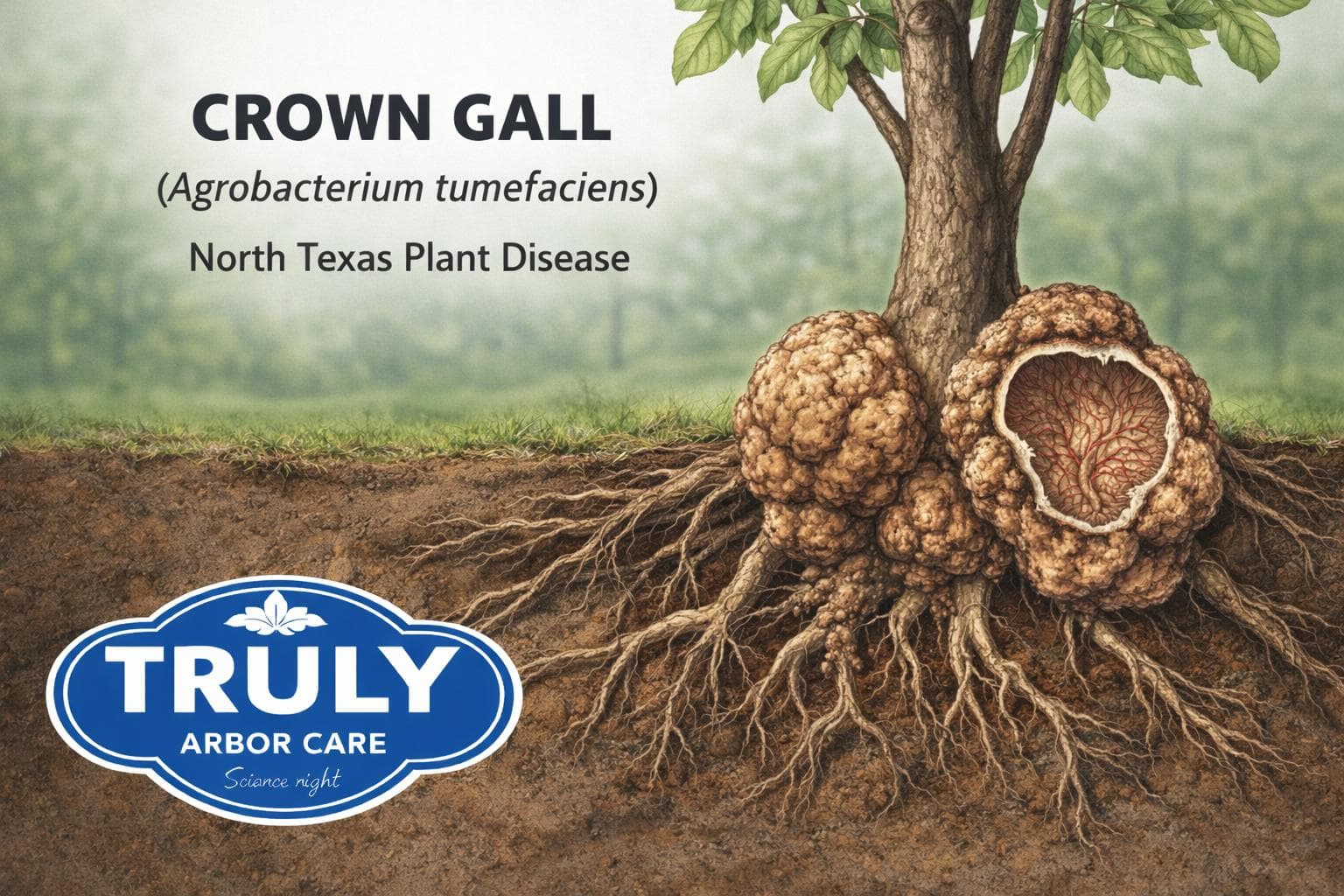
The most recognizable symptom of crown gall disease is the formation of woody tumor-like growths on the crown or roots of the plant.
These galls may appear:
- At the soil line near the crown
On exposed roots - Along lower stems
Occasionally on branches
Early galls are typically soft and light colored. As the disease progresses, they become woody, dark, and irregular in shape.
Symptoms may also include:
- Reduced plant vigor
- Stunted growth
- Yellowing leaves
- Premature leaf drop
- Reduced flowering or fruit production
- Gradual canopy decline
In severe infections, the vascular system becomes restricted enough to cause progressive decline and eventual plant death.
ISA Certified Arborists evaluating trees and shrubs in North Texas landscapes frequently inspect the root collar area for gall formation when diagnosing plant health issues.
Consequences if Crown Gall is Left Untreated
When crown gall infections remain unmanaged, the disease can weaken plants over time and significantly reduce their lifespan.
Young trees and shrubs may die within a few years due to severe disruption of the vascular system. Mature trees may survive longer but often show chronic decline.
Additionally, infected plants serve as reservoirs for the bacterium in soil. When these plants are removed, the bacteria may remain in the soil for many years and infect newly planted susceptible species.
Nursery stock planted into contaminated soil may quickly develop new infections.
Because the disease spreads primarily through infected plant material and contaminated soil, landscapes in the DFW Metroplex can experience repeated infections if proper plant healthcare protocols are not followed.
Preventing Crown Gall Through Professional Plant Healthcare
The most effective management strategy for crown gall disease is prevention and early detection.
ISA Certified Arborists trained in plant pathology and operating under ANSI A300 standards can evaluate plants for early symptoms and recommend plant healthcare strategies consistent with TCIA plant healthcare guidelines.
Preventive measures may include:
- Careful inspection of nursery stock before planting
- Avoiding planting susceptible hosts in contaminated soil
- Sanitizing pruning tools
- Preventing mechanical injury to the crown and roots
- Removing and destroying heavily infected plants
- Improving soil health and root environment
In North Texas landscapes where high-value trees and ornamental plants are present, annual inspections by a qualified ISA Certified Arborist can significantly reduce the risk of disease spread.
Early identification allows property owners to manage infections before they become widespread within the landscape.
Protecting Landscape Plants in the DFW Metroplex
Plant diseases such as crown gall demonstrate the importance of proactive plant healthcare programs.
Routine monitoring by ISA Certified Arborists ensures trees and shrubs are managed according to ANSI A300 standards and modern plant healthcare practices. In the DFW Metroplex and across North Texas, early diagnosis and preventative care remain the most effective strategies for protecting landscape investments.
For more information, check out the Texas A&M article on Crown gal here.