
Anthracnose of Ash Trees in North Texas
Understanding Discula fraxini and Its Impact on Ash Trees in the DFW Metroplex
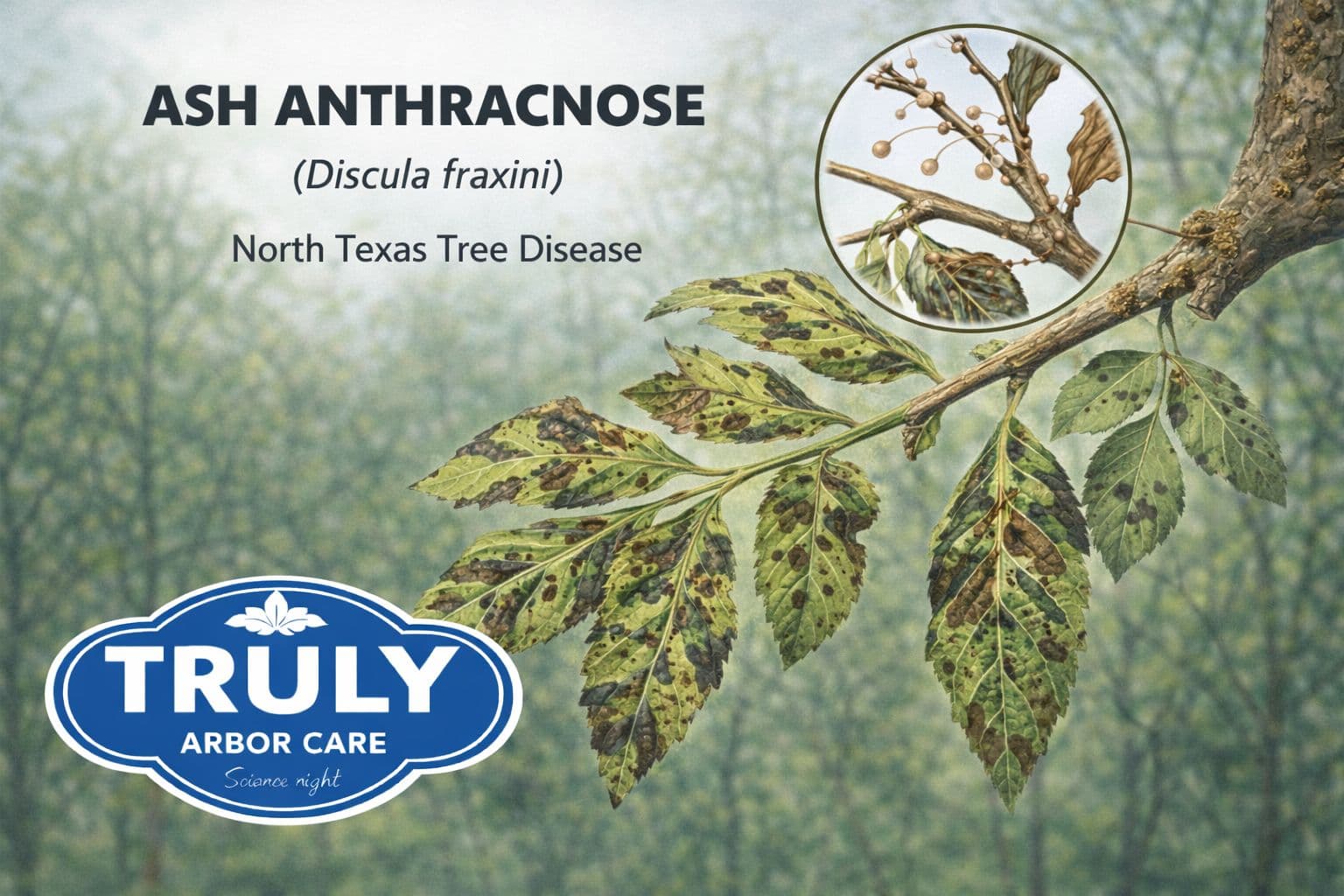
Anthracnose is a common fungal disease affecting many hardwood trees, including ash species throughout North Texas and the DFW Metroplex. Anthracnose of ash is primarily caused by the fungal pathogen Discula fraxini, which infects young leaf tissue, petioles, and tender shoots during cool, wet spring conditions.
According to Texas A&M AgriLife Extension and university plant pathology programs, anthracnose fungi are opportunistic pathogens that thrive during periods of extended moisture. The fungus infects developing leaf tissues and causes leaf spotting, distortion, premature defoliation, and dieback of young shoots.
Although anthracnose is rarely fatal to mature ash trees by itself, repeated yearly infections can weaken trees, reduce vigor, and increase susceptibility to other pests and diseases. In urban environments across North Texas, ash trees already stressed by drought, soil compaction, and insect pressures may experience accelerated decline when anthracnose becomes persistent.
Professional evaluation by an ISA Certified Arborist following ANSI A300 tree care standards and TCIA plant healthcare protocols helps detect anthracnose early and maintain long-term tree health in landscapes throughout the DFW Metroplex.
Host Trees Susceptible to Ash Anthracnose
The fungal pathogen Discula fraxini primarily affects ash species (Fraxinus spp.), which are commonly planted in residential and municipal landscapes throughout North Texas.
Common host species include:
- Green Ash (Fraxinus pennsylvanica)
- White Ash (Fraxinus americana)
- Arizona Ash (Fraxinus velutina)
- Texas Ash (Fraxinus texensis)
Green ash and Arizona ash are among the most frequently planted ash species across the DFW Metroplex, making them particularly vulnerable to recurring anthracnose outbreaks during wet spring seasons.
The disease primarily affects young leaves and newly developing shoots, although severe infections may spread to small twigs and branches.
Environmental Conditions That Promote Anthracnose Development
Anthracnose fungi require moisture to infect plant tissues. Several environmental conditions common in North Texas landscapes can encourage disease development.
Key environmental triggers include:
- Cool spring temperatures between 50°F and 70°F
- Prolonged rainfall during leaf emergence
- High humidity levels
- Dense tree canopies with limited air circulation
- Poor pruning practices
- Irrigation systems that wet foliage
- Heavy shade conditions
Texas A&M research indicates that anthracnose infections are most severe when extended periods of rainfall coincide with early leaf development in spring.
Spores produced by the fungus are dispersed by rain splash and wind, allowing the pathogen to spread between branches and neighboring trees.
Disease Infection and Life Cycle
The life cycle of Discula fraxini begins when fungal spores overwinter in infected leaf litter, twig tissue, and dormant buds.
During the following spring, spores are released and spread by rainfall onto newly emerging ash leaves. Once moisture is present on the leaf surface, spores germinate and penetrate leaf tissue.
The fungus colonizes the leaf and begins damaging plant cells, creating necrotic lesions and distorted growth patterns.
As the infection progresses, the fungus may move into the leaf petiole and young shoots, causing dieback of small twigs. Secondary spores are then produced, which can spread the infection further during the growing season.
Symptoms and Identification of Ash Anthracnose
Anthracnose symptoms on ash trees typically appear shortly after leaves emerge in the spring.
Common symptoms include:
- Irregular brown or black leaf spots
- Distorted or curled leaves
- Premature leaf drop
- Blotchy lesions along leaf veins
- Young twig dieback
- Thinning canopy during early summer
In severe cases, entire sections of the canopy may defoliate prematurely. However, many ash trees will produce a second flush of leaves later in the season.
ISA Certified Arborists performing tree health evaluations in North Texas often identify anthracnose during early spring canopy inspections.
Because symptoms may resemble other leaf diseases, accurate diagnosis is important before implementing treatment strategies.
Consequences if Anthracnose Is Left Unmanaged
While anthracnose alone rarely kills mature ash trees, repeated yearly infections can create chronic stress.
Long-term impacts may include:
- Reduced photosynthesis due to leaf loss
- Decreased energy reserves
- Slower tree growth
- Increased vulnerability to drought stress
- Greater susceptibility to secondary pests and pathogens
Trees that experience severe defoliation year after year may gradually decline, particularly in urban environments where additional stresses are already present.
In North Texas landscapes where ash trees are used as shade trees, unmanaged anthracnose infections can significantly reduce canopy density and aesthetic value.
Preventing Anthracnose Through Plant Healthcare Programs
Management of anthracnose focuses primarily on improving tree vigor and reducing environmental conditions that favor fungal development.
ISA Certified Arborists operating under ANSI A300 standards and TCIA plant healthcare protocols often recommend integrated management strategies.
These strategies may include:
- Pruning to improve canopy airflow
- Removal of infected leaf litter
- Balanced fertilization programs
- Improving soil health
- Managing irrigation to avoid leaf wetness
- Preventative fungicide applications during high-risk seasons
Annual tree health evaluations allow arborists to monitor disease progression and intervene early before repeated infections weaken the tree.
Protecting Ash Trees Across the DFW Metroplex
Ash trees remain an important component of the urban canopy throughout North Texas. Protecting these trees requires proactive plant healthcare management and early disease detection.
Routine inspections by an ISA Certified Arborist help ensure ash trees are maintained according to ANSI A300 standards and modern arboricultural science. With proper care and monitoring, anthracnose can be managed effectively while preserving the health and longevity of ash trees across the DFW Metroplex.