
Armillaria Root Rot in North Texas Trees
Understanding Armillaria spp. and Its Impact on Trees in the DFW Metroplex
Armillaria root rot is a destructive fungal disease that affects a wide range of trees and shrubs throughout North Texas and the greater DFW Metroplex. The disease is caused by fungi within the genus Armillaria, often referred to as “honey fungus.” These pathogens attack the root systems of trees, causing decay of structural roots and disruption of the vascular system responsible for water and nutrient transport.
According to Texas A&M AgriLife Extension and university forest pathology research, Armillaria root rot is one of the most widespread root diseases affecting landscape and forest trees across North America. The fungus lives naturally in soil and woody debris, where it can survive for many years before infecting nearby trees.
Once the pathogen colonizes the root system, it gradually destroys root tissues and weakens the structural integrity of the tree. Infected trees may show symptoms of decline for several years before sudden canopy dieback or structural failure occurs.
Routine monitoring by an ISA Certified Arborist following ANSI A300 tree care standards and TCIA plant healthcare protocols is essential for detecting root diseases early and managing tree health across North Texas landscapes.
Tree Species Susceptible to Armillaria Root Rot
Armillaria fungi infect a very broad range of tree and shrub species. Many trees commonly planted across the DFW Metroplex can serve as hosts.
Susceptible host species include:
- Oak species (Quercus spp.)
- Maple species (Acer spp.)
- Elm trees (Ulmus spp.)
- Ash trees (Fraxinus spp.)
- Pine species (Pinus spp.)
- Sycamore (Platanus occidentalis)
- Pecan (Carya illinoinensis)
- Fruit trees such as peach and apple
Oak trees are among the most commonly affected hosts in North Texas landscapes. When Armillaria becomes established in the soil, nearby trees may become infected through root contact.
Young trees, stressed trees, and trees growing in poorly drained soils are especially vulnerable.
Environmental Conditions That Promote Armillaria Infection
Several environmental conditions common in North Texas landscapes can increase the likelihood of Armillaria root rot infections.
Key environmental triggers include:
- Poor soil drainage
- Overly wet soil conditions
- Drought stress weakening tree defenses
- Construction damage to root systems
- Compacted clay soils
- Old tree stumps left in the soil
- Root injuries from excavation or landscaping equipment
Texas A&M research indicates that Armillaria fungi often colonize dead roots and stumps before spreading to living trees.
In landscapes across the DFW Metroplex where older trees have been removed, the fungus may remain active in the soil and infect newly planted trees.
Disease Infection and Life Cycle
The infection cycle of Armillaria root rot begins when fungal mycelium spreads through the soil from infected wood or roots.
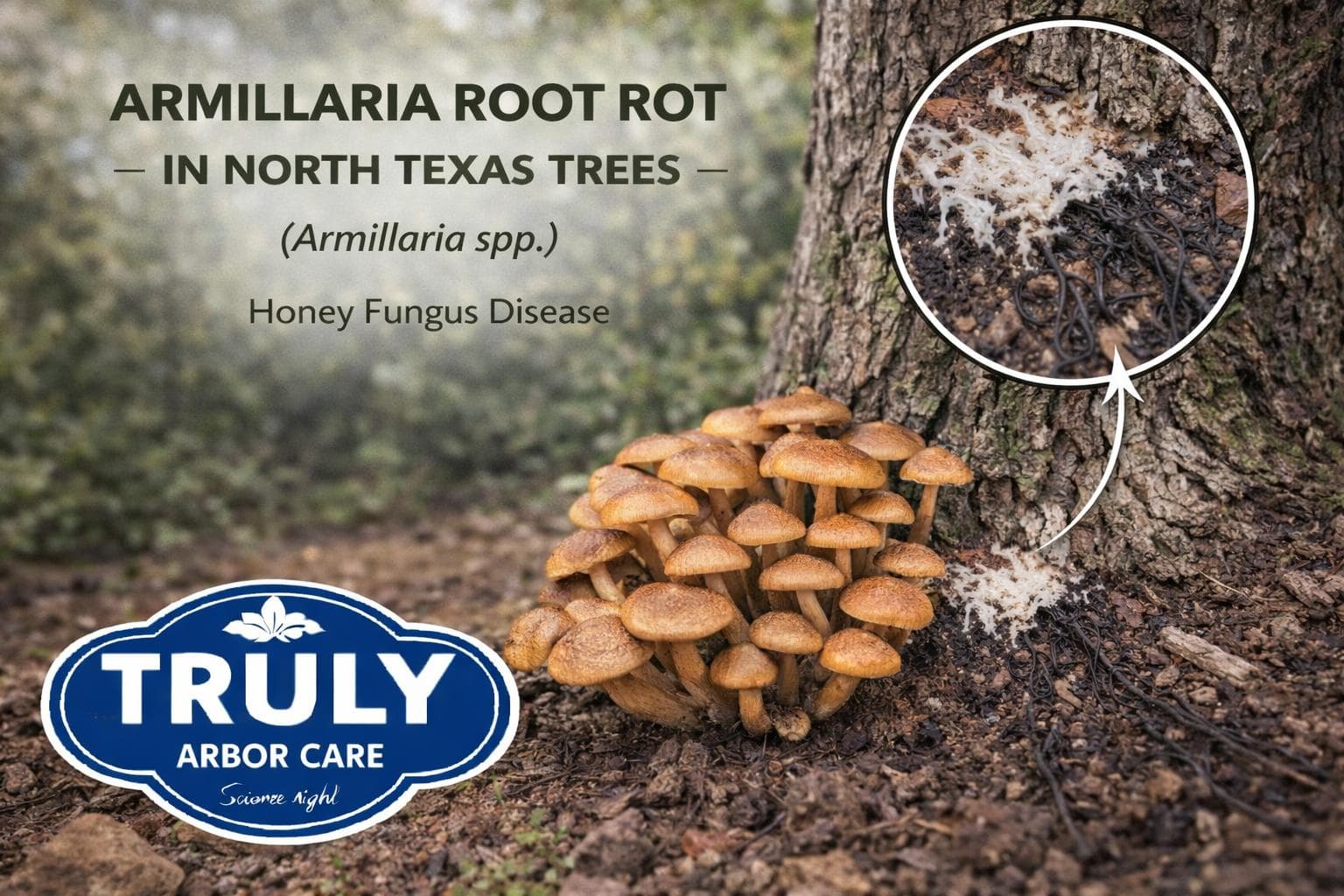
The fungus forms specialized structures called rhizomorphs, which resemble black shoestring-like strands. These rhizomorphs grow through soil and attach to nearby tree roots.
Once the fungus penetrates the root bark, it colonizes the cambium and root tissues. The pathogen gradually destroys the root system and disrupts the tree’s ability to absorb water and nutrients.
As the infection spreads, the tree experiences increasing stress and decline.
Armillaria fungi may also produce clusters of honey-colored mushrooms near the base of infected trees during wet conditions, which helps confirm the presence of the pathogen.
Symptoms and Identification of Armillaria Root Rot
Armillaria root rot produces several symptoms that arborists can identify during tree health inspections.
Common symptoms include:
- Gradual canopy thinning
- Yellowing or chlorosis of leaves
- Reduced annual growth
- Branch dieback
- Sudden tree decline
- White fungal mycelium beneath bark near the root collar
- Black rhizomorph strands in soil or beneath bark
Clusters of honey-colored mushrooms may appear at the base of infected trees during the fall or after periods of heavy rainfall.
ISA Certified Arborists evaluating tree health across North Texas often inspect the root collar area when diagnosing decline symptoms.
Consequences if Armillaria Root Rot Is Left Unmanaged
Armillaria root rot can cause severe long-term damage to trees.
Potential consequences include:
- Extensive root decay
- Reduced structural stability
- Progressive canopy decline
- Increased risk of tree failure
- Complete tree mortality
Because the disease destroys structural roots, infected trees may become hazardous and prone to falling during storms or high winds.
In North Texas landscapes where mature shade trees provide valuable canopy cover, Armillaria infections may lead to significant tree loss.
Managing Armillaria Root Rot Through Plant Healthcare
Management of Armillaria root rot focuses on improving environmental conditions and maintaining tree vigor.
ISA Certified Arborists following ANSI A300 standards and TCIA plant healthcare protocols may recommend integrated management strategies.
These may include:
- Removing infected stumps and root material
- Improving soil drainage conditions
- Reducing soil compaction
- Promoting healthy root development
- Avoiding excessive irrigation
- Selecting resistant plant species for replanting
In some cases, removal of severely infected trees may be necessary to prevent further spread of the pathogen.
Routine monitoring allows arborists to detect symptoms early and determine appropriate management strategies.
Protecting Trees Across North Texas and the DFW Metroplex
Root diseases such as Armillaria root rot highlight the importance of proactive plant healthcare management.
Routine inspections by an ISA Certified Arborist ensure trees are maintained according to ANSI A300 standards and modern arboricultural science. Early detection and proper management strategies help protect valuable landscape trees throughout North Texas and the DFW Metroplex.
For more information, check out the Texas A&M article on Armillaria root rot here.