
Texas Cotton Root Rot in North Texas Trees and Shrubs
Understanding Phymatotrichopsis omnivora and Its Impact on Landscape Plants in the DFW Metroplex
Texas cotton root rot is one of the most destructive soilborne plant diseases found in North Texas and the greater DFW Metroplex. The disease is caused by the fungal pathogen Phymatotrichopsis omnivora, formerly known as Phymatotrichum omnivorum. This pathogen attacks the root systems of plants and causes rapid decline and death in susceptible hosts.
According to Texas A&M AgriLife Extension and university plant pathology research, Texas cotton root rot is particularly problematic in regions with alkaline clay soils, which are common across North Texas. The fungus lives in the soil and infects plant roots during warm weather conditions, often causing sudden plant collapse during summer months.
Once infection occurs, the fungus spreads through the root system and destroys the plant’s ability to absorb water and nutrients. The disease progresses quickly, and affected plants may wilt and die within days after symptoms first appear.
Routine monitoring by an ISA Certified Arborist following ANSI A300 tree care standards and TCIA plant healthcare protocols is essential for identifying soilborne diseases and protecting landscapes throughout North Texas.
Trees and Shrubs Susceptible to Texas Cotton Root Rot
Phymatotrichopsis omnivora infects an extremely wide range of plant species. Texas A&M research indicates that more than 2,000 plant species are susceptible.
Common landscape plants affected in North Texas include:
- Oak species (Quercus spp.)
- Elm species (Ulmus spp.)
- Pecan trees (Carya illinoinensis)
- Ash trees (Fraxinus spp.)
- Cotton plants (Gossypium species)
- Rose shrubs (Rosa species)
- Fruit trees such as apple and peach
Certain plants show resistance, including monocots such as grasses, palms, and some native plant species.
Because the pathogen is widely distributed in alkaline soils across North Texas, many ornamental trees and shrubs may be vulnerable.
Environmental Conditions That Promote Cotton Root Rot
Texas cotton root rot is strongly associated with specific soil and environmental conditions.
Environmental factors common across North Texas that encourage disease development include:
- High soil pH levels (alkaline soils)
- Clay-rich soils common in the region
- Warm soil temperatures above 82°F
- Poor soil drainage
- Extended drought followed by irrigation
Texas A&M research indicates that the fungus becomes active during warm summer conditions when soil temperatures rise. The pathogen spreads through the soil and infects plant roots.
Because the fungus survives deep within the soil, infected areas may remain contaminated for many years.
Disease Infection and Life Cycle
The life cycle of Phymatotrichopsis omnivora begins when fungal structures known as sclerotia persist in the soil.
These structures remain dormant until favorable environmental conditions occur. When soil temperatures rise during summer, the fungus becomes active and spreads through root systems.
The pathogen penetrates the outer root tissue and rapidly colonizes the root cortex.
As the infection progresses, the fungus destroys the plant’s ability to absorb water. Above-ground symptoms often appear suddenly as the plant experiences severe water stress.
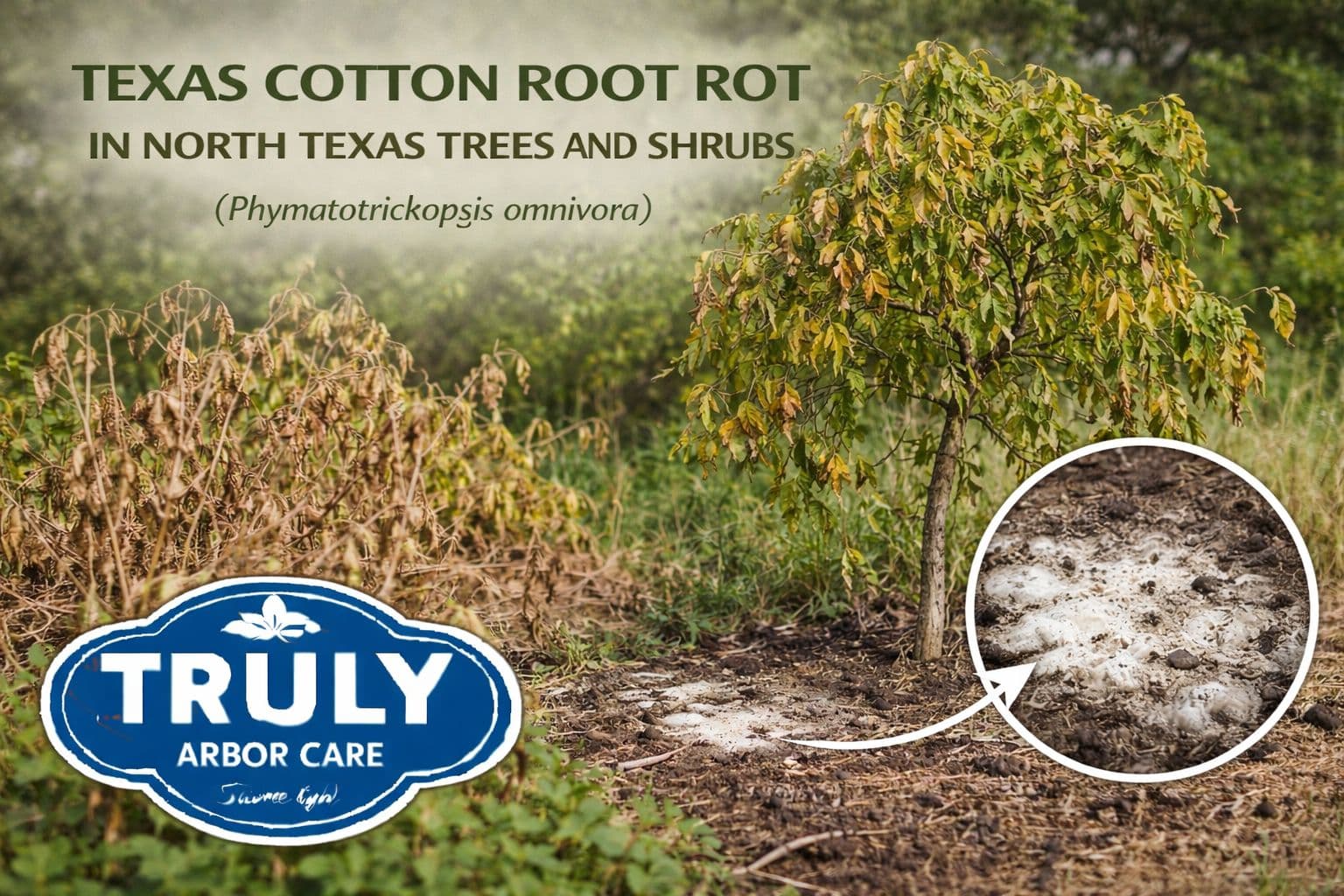
The fungus may also produce cotton-like fungal mats on the soil surface during humid conditions.
Symptoms and Identification of Texas Cotton Root Rot
Texas cotton root rot produces several distinctive symptoms that arborists can identify during plant health inspections.
Common symptoms include:
- Sudden wilting of foliage
- Leaves turning yellow or bronze
- Rapid canopy collapse
- Dead roots covered with fungal strands
- Cottony fungal growth on soil surface
One characteristic feature of the disease is the sudden decline of previously healthy plants during warm weather conditions.
ISA Certified Arborists diagnosing plant health issues across North Texas frequently evaluate soil conditions and root systems when cotton root rot is suspected.
Consequences if Cotton Root Rot Is Left Unmanaged
Texas cotton root rot is often fatal once plants become infected.
Potential consequences include:
- Rapid plant mortality
- Loss of landscape trees and shrubs
- Large dead zones within landscapes
- Long-term soil contamination
Because the fungus persists in soil for many years, replanting susceptible species in infected areas may result in repeated plant loss.
In North Texas landscapes where valuable ornamental trees are planted, cotton root rot can cause significant damage.
Managing Texas Cotton Root Rot Through Plant Healthcare
Management of cotton root rot is challenging because the pathogen persists in the soil.
ISA Certified Arborists following ANSI A300 standards and TCIA plant healthcare protocols may recommend several management strategies.
These may include:
- Improving soil drainage conditions
- Selecting resistant plant species
- Avoiding susceptible plants in infected areas
- Improving soil health through organic amendments
- Monitoring plant health annually
Because the disease is strongly influenced by soil conditions, long-term landscape planning is often required to prevent recurring infections.
Protecting Landscapes Across North Texas and the DFW Metroplex
Texas cotton root rot is one of the most destructive soilborne diseases affecting landscapes across North Texas. Preventing plant loss requires careful site evaluation, plant selection, and proactive plant healthcare management.
Routine inspections by an ISA Certified Arborist ensure landscapes are managed according to ANSI A300 standards and modern arboricultural science. Proper soil management and plant selection strategies can significantly reduce the risk of cotton root rot across the DFW Metroplex.
For more information, check out the Texas A&M article on Texas cotton root rot here.