
Botryosphaeria Canker of Junipers in North Texas
Understanding Botryosphaeria stevensii and Its Impact on Junipers in the DFW Metroplex
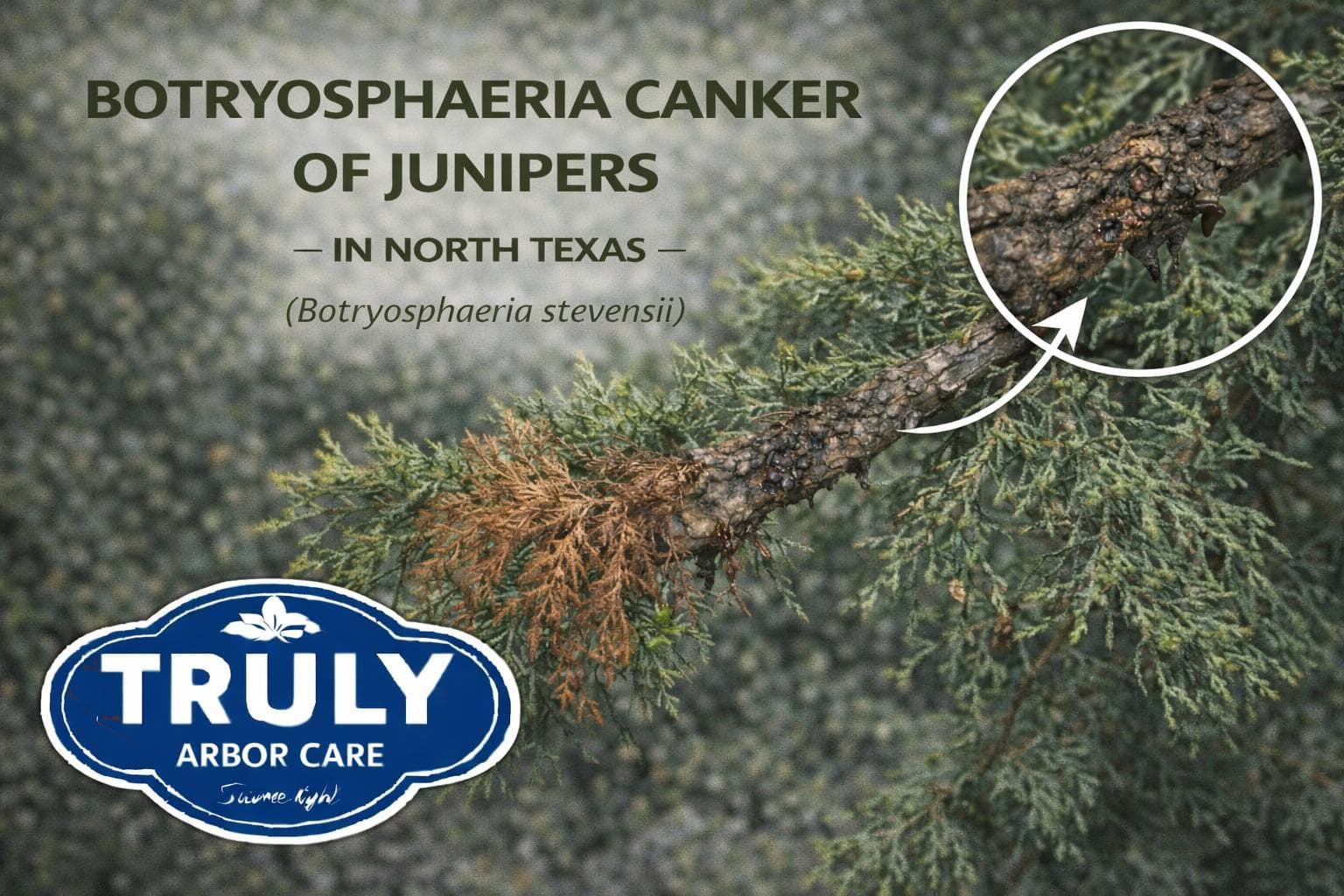
Botryosphaeria canker of juniper is a fungal disease affecting juniper species throughout North Texas and the greater DFW Metroplex. The disease is caused primarily by the fungal pathogen Botryosphaeria stevensii, which infects bark tissue and causes branch dieback, canker formation, and gradual canopy decline in juniper trees and shrubs.
According to Texas A&M AgriLife Extension and university plant pathology research, Botryosphaeria canker is considered an opportunistic pathogen. The fungus typically infects plants that are already under environmental stress, including drought stress, root damage, soil compaction, or mechanical injury.
Junipers are widely planted throughout North Texas landscapes as privacy screens, windbreaks, and ornamental plantings. When these plants become stressed, the fungus may invade bark tissues and form cankers that disrupt water and nutrient transport.
Routine inspections by an ISA Certified Arborist following ANSI A300 tree care standards and TCIA plant healthcare protocols are essential for detecting canker diseases early and protecting juniper health across the DFW Metroplex.
Juniper Species Susceptible to Botryosphaeria Canker
Botryosphaeria stevensii primarily infects species within the genus Juniperus.
Common susceptible hosts in North Texas landscapes include:
- Eastern Red Cedar (Juniperus virginiana)
- Chinese Juniper (Juniperus chinensis)
- Blue Point Juniper (Juniperus chinensis ‘Blue Point’)
- Hollywood Juniper (Juniperus chinensis cultivars)
- Shore Juniper (Juniperus conferta)
Junipers are commonly used in North Texas landscapes due to their drought tolerance and evergreen foliage. However, dense plantings and environmental stress may increase vulnerability to fungal infection.
Young plants and newly transplanted junipers may experience the most severe symptoms due to transplant stress.
Environmental Conditions That Promote Botryosphaeria Infection
Environmental stress is the primary factor that allows Botryosphaeria fungi to infect juniper plants.
Environmental conditions common across North Texas that contribute to infection include:
- Drought stress
- High summer temperatures
- Poor soil conditions
- Soil compaction
- Mechanical bark injury
- Improper pruning practices
Texas A&M research indicates that Botryosphaeria infections frequently occur in junipers that have experienced prolonged drought conditions.
In the DFW Metroplex where summer heat and water stress are common, stressed junipers may become vulnerable to fungal colonization.
Disease Infection and Life Cycle
The infection cycle begins when fungal spores land on bark surfaces of susceptible plants.
Spores germinate and penetrate bark tissues through wounds or weakened areas. Once inside, the fungus spreads through the cambium layer, killing plant cells and forming cankers.
As the infection progresses, the canker may expand along the branch or stem.
Fungal fruiting bodies may develop on infected bark surfaces and release additional spores that spread through wind or rain splash.
Multiple infection cycles may occur during warm weather conditions.
Symptoms and Identification of Botryosphaeria Canker in Junipers
Botryosphaeria canker produces distinctive symptoms that arborists can identify during plant health inspections.
Common symptoms include:
- Branch dieback in localized areas of the canopy
- Browning foliage on affected branches
- Sunken lesions on bark
- Dead bark patches along branches
- Progressive thinning of the canopy
Affected branches may die suddenly, leaving scattered brown areas throughout the otherwise green canopy.
ISA Certified Arborists evaluating juniper health across North Texas frequently identify Botryosphaeria infections during canopy inspections.
Consequences if Botryosphaeria Canker Is Left Unmanaged
If Botryosphaeria canker progresses without management, the disease may gradually weaken the plant.
Potential consequences include:
- Loss of branch structure
- Reduced canopy density
- Decline in ornamental value
- Increased vulnerability to secondary pests
- Plant mortality in severe cases
Junipers used as privacy screens may lose their dense foliage when repeated infections occur.
In North Texas landscapes where these plants provide visual screening, severe infections may compromise their function.
Managing Botryosphaeria Canker in Junipers
Management strategies focus primarily on improving plant health and reducing environmental stress.
ISA Certified Arborists following ANSI A300 standards and TCIA plant healthcare protocols may recommend several management practices.
These may include:
- Pruning infected branches
- Improving irrigation practices during drought periods
- Reducing soil compaction
- Improving soil conditions and root health
- Monitoring plant health annually
Early removal of infected limbs can slow the spread of the disease.
Maintaining strong plant vigor helps junipers resist fungal colonization.
Protecting Juniper Landscapes Across North Texas and the DFW Metroplex
Juniper trees and shrubs are widely used throughout North Texas landscapes due to their drought tolerance and evergreen structure. Maintaining their health requires proactive plant healthcare management and early disease detection.
Routine inspections by an ISA Certified Arborist ensure junipers are maintained according to ANSI A300 standards and modern arboricultural science. Early detection of Botryosphaeria canker allows property owners to implement management strategies that preserve healthy juniper plantings across the DFW Metroplex.
For more information, check out the Texas A&M article on Botryosphaeria canker of juniper here.