
Post Oak Decline in North Texas
Trees- Understanding the Multi-Factor Stress Syndrome Affecting Post Oaks in the DFW Metroplex
Post oak decline is a complex tree health condition affecting post oak trees throughout North Texas and the greater DFW Metroplex. Unlike diseases caused by a single pathogen, post oak decline is considered a stress-related syndrome involving multiple biological and environmental factors that gradually weaken the tree over time.
According to Texas A&M AgriLife Extension and university forest health research, post oak decline often results from the combined effects of environmental stress, root damage, insect pressure, and secondary fungal pathogens. These stressors disrupt the tree’s ability to maintain healthy vascular function and defend itself against opportunistic organisms.
Post oak trees (Quercus stellata) are native to North Texas and are well adapted to the region’s natural conditions. However, they are particularly sensitive to changes in soil conditions, construction disturbance, and prolonged drought.
Routine monitoring by an ISA Certified Arborist following ANSI A300 tree care standards and TCIA plant healthcare protocols is essential for identifying early symptoms of decline and preserving mature post oak trees across the DFW Metroplex.
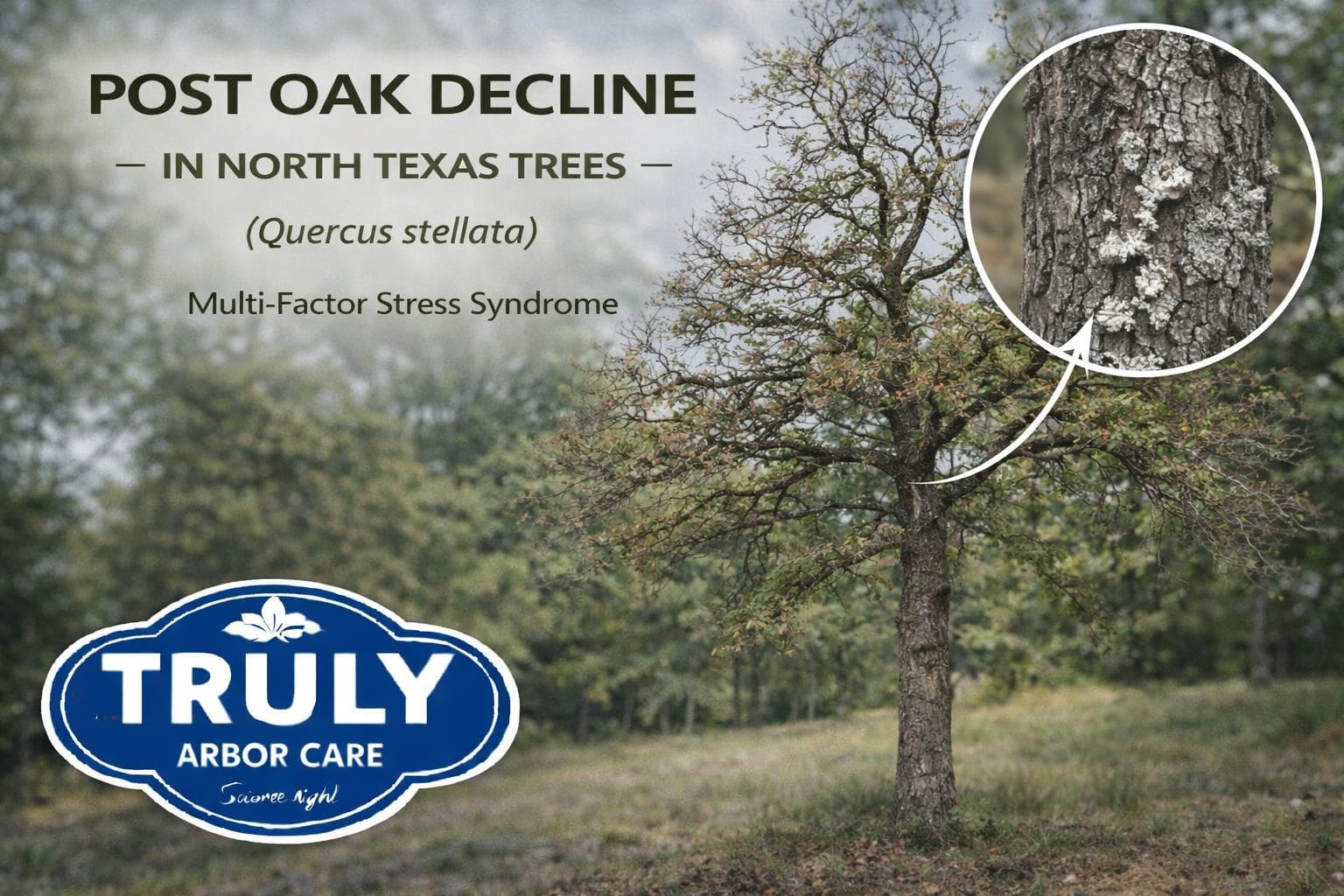
Primary Tree Species Affected by Post Oak Decline
Post oak decline primarily affects the post oak tree, scientifically known as Quercus stellata. This species is native to the Cross Timbers region of North Texas and is commonly found throughout the DFW Metroplex in both natural woodlands and residential landscapes.
While other oak species may experience stress-related decline, post oaks are particularly vulnerable due to their specialized root systems and adaptation to undisturbed soils.
These trees develop deep root systems in well-drained native soils and often struggle when soil conditions are altered by construction or landscape modification.
Post oaks are commonly found in:
- Native woodland areas
- Residential properties developed within the Cross Timbers ecosystem
- Parks and natural preserves throughout North Texas
Because post oaks grow slowly and may live for centuries, protecting these trees is a priority for many property owners and municipalities across the DFW region.
Environmental Conditions That Contribute to Post Oak Decline
Post oak decline is often associated with environmental stress factors that disrupt the tree’s root system and natural soil environment.
Conditions commonly associated with decline in North Texas landscapes include:
- Construction activity near root zones
- Soil compaction from heavy equipment
- Altered drainage patterns
- Over-irrigation or prolonged soil saturation
- Extended drought periods
- Trenching and root disturbance
- Changes to natural soil grade
Texas A&M research indicates that post oaks are particularly sensitive to root disturbance. Even moderate construction activity within the root zone can trigger long-term decline.
Once stress occurs, trees become more vulnerable to secondary organisms such as wood decay fungi and opportunistic insect pests.
Biological Factors Involved in Post Oak Decline
Post oak decline is rarely caused by a single pathogen. Instead, multiple biological factors often interact to weaken the tree.
These may include:
- Secondary fungal pathogens such as
- Hypoxylon species
- Wood decay fungi invading weakened tissues
- Insect borers attacking stressed trees
- Root pathogens exploiting weakened root systems
When a post oak becomes stressed, its ability to compartmentalize damage through the CODIT (Compartmentalization of Decay in Trees) process becomes compromised. Opportunistic fungi may then colonize the wood and accelerate the decline process.
Symptoms and Identification of Post Oak Decline
Post oak decline typically develops gradually over several years. Arborists may observe several symptoms indicating that a tree is under stress.
Common symptoms include:
- Progressive canopy thinning
- Reduced leaf size and density
- Branch dieback beginning in the upper canopy
- Premature leaf drop
- Dead limbs appearing throughout the canopy
- Bark cracking or fungal growth on the trunk
In later stages of decline, trees may develop structural weaknesses or significant canopy loss.
ISA Certified Arborists evaluating post oak health across North Texas frequently assess soil conditions, root damage, and canopy health when diagnosing decline symptoms.
Consequences if Post Oak Decline Is Left Unmanaged
If the underlying causes of decline are not addressed, the condition may worsen over time.
Potential consequences include:
- Progressive canopy dieback
- Loss of structural limbs
- Increased risk of storm damage
- Colonization by decay fungi
- Eventual tree mortality
Because post oaks grow slowly and take decades to mature, the loss of these trees can significantly impact the landscape character of North Texas properties.
In many cases, post oak decline may progress slowly but eventually lead to tree failure if the root system continues to deteriorate.
Managing Post Oak Decline Through Plant Healthcare
Managing post oak decline requires a holistic plant healthcare approach focused on reducing environmental stress and improving soil conditions.
ISA Certified Arborists following ANSI A300 standards and TCIA plant healthcare protocols may recommend several strategies.
These may include:
- Improving soil aeration in compacted soils
- Reducing irrigation frequency to mimic natural conditions
- Avoiding root disturbance during construction
- Implementing soil health improvement programs
- Monitoring canopy health annually
- Pruning dead or hazardous limbs
Preserving the natural root environment of post oaks is often the most important factor in maintaining tree health.
Early detection of stress allows arborists to implement corrective measures before decline becomes severe.
Protecting Post Oaks Across North Texas and the DFW Metroplex
Post oak trees are a defining feature of the Cross Timbers ecosystem that surrounds the DFW Metroplex. Protecting these trees requires proactive plant healthcare management and careful preservation of their natural soil environment.
Routine inspections by an ISA Certified Arborist ensure post oaks are maintained according to ANSI A300 standards and modern arboricultural science. With proper care and monitoring, many post oak trees can remain healthy for generations throughout North Texas landscapes.
For more information, check out the Texas A&M article on Post oak decline here.