
Bacterial Leaf Scorch in North Texas
Trees- Understanding Xylella fastidiosa and Its Impact on Trees in the DFW Metroplex
Bacterial leaf scorch is a chronic vascular disease affecting several hardwood tree species throughout North Texas and the greater DFW Metroplex. The disease is caused by the bacterial pathogen Xylella fastidiosa, which colonizes the water-conducting xylem tissue of trees and interferes with the transport of water throughout the canopy.
According to Texas A&M AgriLife Extension and university plant pathology research, bacterial leaf scorch has become increasingly common in urban landscapes across the southern United States. The disease spreads through xylem-feeding insects such as leafhoppers and spittlebugs, which transmit the bacteria as they feed on infected plants and then move to healthy trees.
Once the bacterium enters the vascular system, it multiplies inside the xylem vessels and gradually blocks water movement. As a result, leaves begin to develop scorched margins, and the tree experiences progressive canopy decline.
Although infected trees may survive for many years, bacterial leaf scorch is considered a chronic disease that slowly weakens trees over time. Routine monitoring by an ISA Certified Arborist following ANSI A300 tree care standards and TCIA plant healthcare protocols is essential for diagnosing vascular diseases early and maintaining tree health across North Texas landscapes.
Tree Species Susceptible to Bacterial Leaf Scorch
Xylella fastidiosa affects a wide range of hardwood tree species commonly planted throughout the DFW Metroplex.
Common susceptible hosts include:
- Red Oak (Quercus rubra)
- Shumard Oak (Quercus shumardii)
- Pin Oak (Quercus palustris)
- Elm species (Ulmus spp.)
- Maple species (Acer spp.)
- Sycamore (Platanus occidentalis)
- Mulberry (Morus species)
- Sweetgum (Liquidambar styraciflua)
Oak trees are among the most frequently affected species in North Texas. Red oak group species appear to be particularly susceptible.
Because many of these trees are widely used as shade trees in urban environments, bacterial leaf scorch has become an important concern for arborists and property owners throughout the DFW Metroplex.
Environmental Conditions That Encourage Disease Development
Although bacterial leaf scorch is transmitted by insects, environmental stress can increase a tree’s susceptibility to infection.
Environmental conditions common in North Texas landscapes that contribute to disease severity include:
- Drought stress
- High summer temperatures
- Soil compaction
- Urban heat island effects
- Poor soil drainage
- Construction damage to root systems
Texas A&M research indicates that trees experiencing chronic environmental stress are more likely to show severe symptoms after infection.
In urban landscapes across the DFW Metroplex, many trees experience multiple stress factors simultaneously, which can accelerate disease progression.
Disease Infection and Life Cycle
The bacterium Xylella fastidiosa spreads primarily through insect vectors that feed on plant xylem sap.
Leafhoppers and spittlebugs acquire the bacteria when feeding on infected plants. When these insects move to healthy trees and continue feeding, they introduce the bacteria into the xylem vessels.
Once inside the plant, the bacteria multiply and form colonies that block water transport. The obstruction of xylem vessels results in water stress within the canopy.
Over time, the bacteria spread throughout the vascular system, causing progressive leaf scorch and decline.
Because the bacteria remain within the tree’s vascular system, complete elimination of the pathogen is difficult once infection occurs.
Symptoms and Identification of Bacterial Leaf Scorch
Bacterial leaf scorch produces distinctive symptoms that arborists can identify during tree health evaluations.
Common symptoms include:
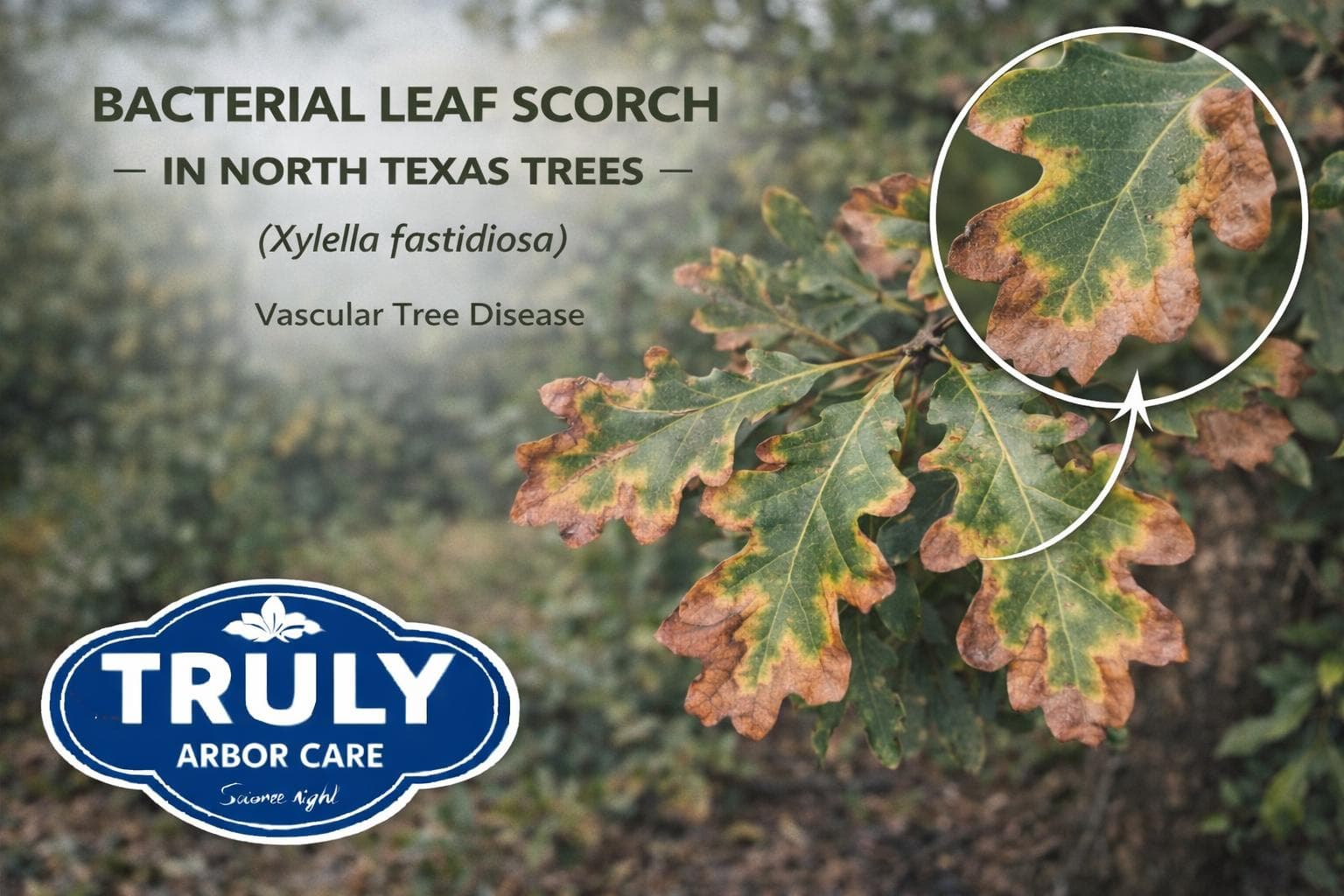
- Leaf margins turning brown or scorched
- Yellow or chlorotic halos between healthy and dead tissue
- Premature leaf drop
- Progressive canopy thinning
- Reduced growth rates
- Branch dieback over time
Symptoms often appear first on the outer canopy where water demand is highest.
One characteristic sign of bacterial leaf scorch is that symptoms typically worsen each year as the infection spreads through the tree.
ISA Certified Arborists diagnosing tree decline across North Texas frequently evaluate vascular diseases such as bacterial leaf scorch when scorch patterns appear on oak leaves during summer.
Consequences if Bacterial Leaf Scorch Is Left Unmanaged
Bacterial leaf scorch is considered a chronic disease that gradually weakens infected trees.
Potential long-term consequences include:
- Reduced photosynthesis
- Progressive canopy thinning
- Increased vulnerability to drought stress
- Structural branch dieback
- Gradual tree decline
While trees may survive for several years after infection, their overall vigor and aesthetic value often decline.
In North Texas landscapes where mature shade trees provide important environmental benefits, unmanaged bacterial leaf scorch can lead to significant canopy loss.
Managing Bacterial Leaf Scorch Through Plant Healthcare
Although bacterial leaf scorch cannot be completely cured once a tree becomes infected, proper plant healthcare practices can help manage symptoms and prolong tree life.
ISA Certified Arborists following ANSI A300 standards and TCIA plant healthcare protocols may recommend several management strategies.
These may include:
- Improving soil conditions and root health
- Managing irrigation to reduce drought stress
- Applying balanced fertilization programs
- Pruning dead or declining branches
- Monitoring tree health annually
- Using systemic treatments designed to suppress bacterial populations
Improving overall tree vigor can help infected trees tolerate the disease and maintain canopy function longer.
Routine monitoring allows arborists to detect symptom progression and implement management strategies before structural decline becomes severe.
Protecting Trees Across North Texas and the DFW Metroplex
Bacterial leaf scorch highlights the importance of proactive plant healthcare management for urban trees.
Routine inspections by an ISA Certified Arborist ensure trees are maintained according to ANSI A300 standards and modern arboricultural science. Early diagnosis and proper care can help extend the lifespan of infected trees and preserve valuable shade canopy throughout North Texas landscapes.
For more information, check out the Texas A&M article on Bacterial leaf scorch here.