
Phomopsis Canker in North Texas Trees
Understanding Phomopsis spp. and Its Impact on Landscape Trees in the DFW Metroplex
Phomopsis canker is a fungal disease affecting many woody trees and shrubs throughout North Texas and the greater DFW Metroplex. The disease is caused by fungal pathogens in the genus Phomopsis, which invade bark and cambial tissues through wounds and cause localized dieback and canker formation.
According to Texas A&M AgriLife Extension and university plant pathology research, canker diseases such as Phomopsis are commonly associated with environmental stress. Trees weakened by drought, construction damage, soil compaction, or insect injury are more vulnerable to infection.
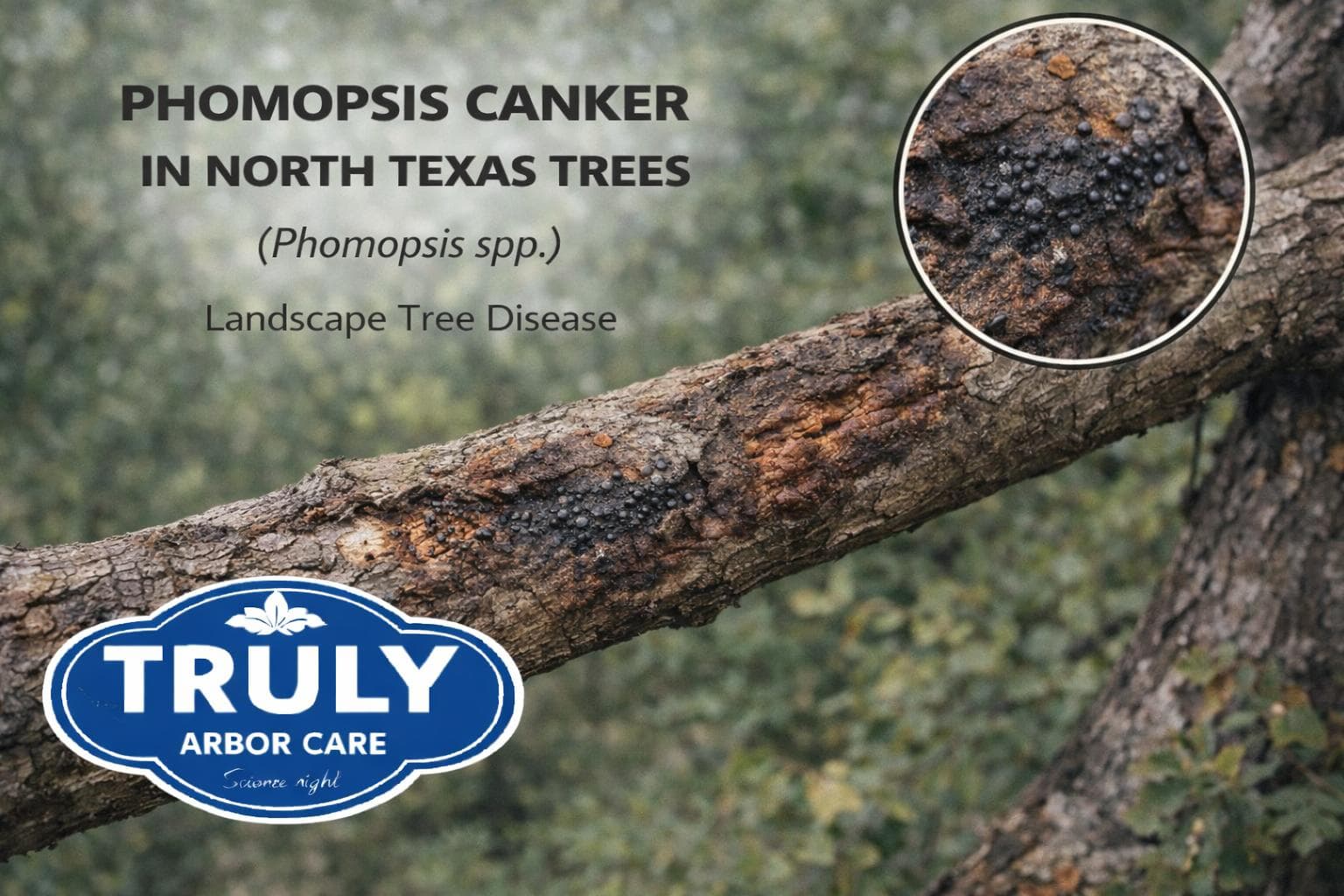
Once the fungus enters the bark through a wound, it colonizes the cambial layer, which is responsible for producing new vascular tissues. As the infection spreads, the fungus kills surrounding plant cells and forms a sunken lesion known as a canker. These cankers interrupt the transport of water and nutrients, leading to branch dieback and canopy thinning.
Routine tree inspections by an ISA Certified Arborist following ANSI A300 tree care standards and TCIA plant healthcare protocols are critical for detecting canker diseases early and preventing long-term damage to trees across the DFW Metroplex.
Tree Species Susceptible to Phomopsis Canker
Phomopsis species infect a wide range of woody plants, including both trees and ornamental shrubs. In North Texas landscapes, several species may be affected.
Common host plants include:
- Maple species (Acer spp.)
- Oak species (Quercus spp.)
- Juniper species (Juniperus spp.)
- Pine species (Pinus spp.)
- Redbud (Cercis canadensis)
- Sycamore (Platanus occidentalis)
- Dogwood (Cornus florida)
Junipers and conifers may show symptoms such as twig dieback, while hardwood trees typically develop bark cankers on branches and stems.
Young trees and newly transplanted plants are often more susceptible due to transplant stress and reduced root establishment.
Environmental Conditions That Encourage Phomopsis Infection
Environmental stress plays a major role in the development of Phomopsis canker.
Common environmental triggers across North Texas landscapes include:
- Drought stress
- Mechanical bark injury from equipment
- Improper pruning practices
- Storm damage to branches
- Insect feeding wounds
- Poor soil drainage
- Compacted soils restricting root development
Texas A&M research indicates that trees experiencing chronic stress are significantly more susceptible to canker pathogens.
Urban trees in the DFW Metroplex often experience multiple stress factors simultaneously, increasing vulnerability to fungal infections.
Disease Infection and Life Cycle
The infection cycle begins when fungal spores land on wounded bark surfaces.
Spores germinate under favorable environmental conditions and penetrate the bark tissue. Once inside, the fungus colonizes the cambium and phloem layers.
As the pathogen spreads through the bark tissue, plant cells begin to die, forming sunken lesions or cankers.
Over time, the tree attempts to compartmentalize the infection through the natural defense process described in the CODIT model (Compartmentalization of Decay in Trees).
However, if the pathogen expands faster than the tree can compartmentalize it, the canker may enlarge and eventually girdle branches.
Fruiting bodies produced within the canker release additional spores that can spread to nearby wounds.
Symptoms and Identification of Phomopsis Canker
Phomopsis canker produces several visible symptoms that arborists can detect during tree inspections.
Common symptoms include:
- Sunken bark lesions
- Discolored or cracked bark
- Dead patches of bark tissue
- Branch dieback beyond the canker
- Callus tissue forming around the edges of the canker
- Progressive canopy thinning
Small black fruiting structures may sometimes be visible on infected bark surfaces.
ISA Certified Arborists performing health assessments across North Texas frequently identify canker diseases during routine canopy and trunk inspections.
Consequences if Phomopsis Canker Is Left Unmanaged
When canker diseases are allowed to progress without management, they can weaken trees and create structural hazards.
Potential consequences include:
- Branch girdling and dieback
- Loss of structural limbs
- Reduced canopy density
- Increased risk of branch failure
- Gradual tree decline
In severe cases where the infection reaches the main trunk, the structural stability of the tree may become compromised.
In urban environments across the DFW Metroplex where mature shade trees provide significant landscape value, unmanaged canker infections may lead to costly removals.
Managing Phomopsis Canker Through Plant Healthcare
Management of Phomopsis canker focuses on reducing stress and preventing infection through proper tree care practices.
ISA Certified Arborists following ANSI A300 standards and TCIA plant healthcare protocols may recommend several management strategies.
These may include:
- Pruning infected branches using proper ANSI pruning techniques
- Sanitizing pruning tools between cuts
- Avoiding unnecessary bark injuries
- Improving soil health and root vigor
- Managing irrigation to reduce drought stress
- Annual tree health monitoring
Maintaining overall tree vigor improves the tree’s ability to compartmentalize infections and limit pathogen spread.
Early detection and corrective pruning are often the most effective ways to prevent serious damage.
Protecting Trees Across North Texas and the DFW Metroplex
Canker diseases such as Phomopsis canker demonstrate the importance of proactive plant healthcare management.
Routine inspections by an ISA Certified Arborist ensure trees are maintained according to ANSI A300 standards and modern arboricultural science. Early identification of canker infections allows property owners to implement corrective measures that protect the long-term health and stability of trees across North Texas landscapes.
For more information, check out the Texas A&M article on Phomopsis canker here.