
Anthracnose of Oak Trees in North Texas
Understanding Discula quercina and Its Impact on Oaks in the DFW Metroplex
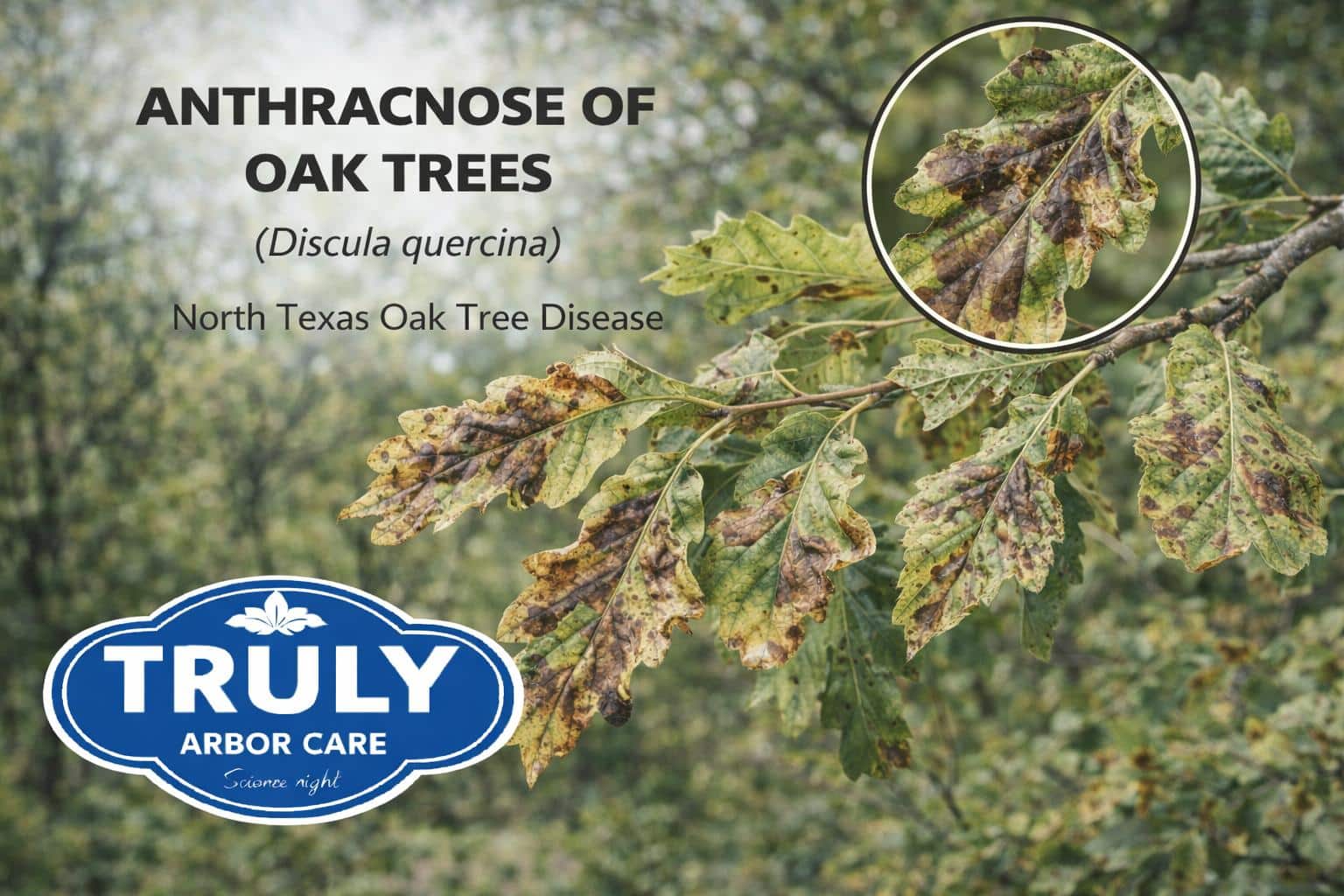
Anthracnose of oak is a fungal leaf disease that affects several species of oak trees throughout North Texas and the greater DFW Metroplex. The disease is most commonly associated with the fungal pathogen Discula quercina, which infects newly emerging leaves during cool, wet spring conditions.
According to Texas A&M AgriLife Extension and university plant pathology research, anthracnose diseases are commonly triggered by extended moisture periods during early leaf development. The fungus infects young leaf tissue and causes irregular lesions, leaf distortion, and premature defoliation.
While oak anthracnose rarely causes mortality in mature trees, repeated infections can weaken trees by reducing photosynthesis and stressing the tree’s energy reserves. In North Texas urban landscapes where oak trees already face environmental pressures such as drought stress, soil compaction, and construction damage, anthracnose can contribute to long-term canopy decline.
Routine tree inspections by an ISA Certified Arborist following ANSI A300 tree care standards and TCIA plant healthcare protocols help identify fungal leaf diseases early and maintain the long-term health of oak trees across the DFW Metroplex.
Oak Species Susceptible to Oak Anthracnose
The fungal pathogen Discula quercina affects several oak species commonly planted in North Texas landscapes.
Susceptible host trees include:
- Shumard Oak (Quercus shumardii)
- Northern Red Oak (Quercus rubra)
- Pin Oak (Quercus palustris)
- Water Oak (Quercus nigra)
- Black Oak (Quercus velutina)
Red oak group species tend to exhibit the most noticeable symptoms. These trees are widely planted across the DFW Metroplex due to their strong shade canopy and landscape value.
Young oak trees and recently transplanted specimens may show more severe symptoms because their root systems are still developing and energy reserves are limited.
Environmental Conditions That Promote Oak Anthracnose
Anthracnose fungi require moisture to infect plant tissues. Environmental conditions that favor the development of oak anthracnose are commonly observed in North Texas during the spring season.
Key contributing conditions include:
- Cool spring temperatures between 50°F and 70°F
- Extended rainfall during leaf emergence
- High humidity levels
- Dense tree canopies with poor air circulation
- Overhead irrigation systems
- Persistent morning dew on foliage
Texas A&M AgriLife Extension research indicates that anthracnose infections occur primarily during the early stages of leaf development. Once leaves mature and harden, they become more resistant to infection.
Rain splash and wind can disperse fungal spores between leaves and branches during wet conditions.
Disease Infection and Life Cycle
The life cycle of Discula quercina begins when fungal spores overwinter in infected leaf litter and small twig tissue.
During spring, spores are released and carried by rain splash onto newly emerging oak leaves. When moisture remains on the leaf surface long enough, spores germinate and penetrate the leaf tissue.
Once inside the leaf, the fungus colonizes plant cells and disrupts normal leaf development. Necrotic lesions begin to form along leaf veins and across leaf surfaces.
As the disease progresses, infected leaves may become distorted and eventually drop prematurely.
Secondary spores may form on infected tissue and spread during continued wet weather conditions.
Symptoms and Identification of Oak Anthracnose
Anthracnose symptoms on oak trees often appear during early spring shortly after leaves emerge.
Common symptoms include:
- Irregular brown or black leaf spots
- Blotches along leaf veins
- Leaf curling or distortion
- Premature leaf drop
- Twig dieback in severe infections
- Thinning canopy during early summer
Infected leaves often appear scorched or blotchy. In some cases, entire sections of the canopy may defoliate prematurely.
ISA Certified Arborists evaluating tree health across North Texas often identify oak anthracnose during early spring canopy inspections.
Because symptoms may resemble other leaf diseases, proper diagnosis ensures appropriate management strategies are implemented.
Consequences if Oak Anthracnose Is Left Unmanaged
In most cases, healthy mature oak trees can tolerate occasional anthracnose infections.
However, repeated yearly infections combined with environmental stress may lead to:
- Reduced photosynthetic capacity
- Loss of energy reserves
- Slower tree growth
- Increased susceptibility to drought stress
- Higher vulnerability to insect pests and pathogens
Young trees and stressed urban trees are particularly vulnerable to repeated infections.
In North Texas landscapes where oak trees serve as major shade trees, unmanaged anthracnose outbreaks may gradually reduce canopy density and aesthetic value.
Managing Oak Anthracnose Through Plant Healthcare Programs
Management of oak anthracnose focuses on improving overall tree health and reducing environmental conditions that favor fungal development.
ISA Certified Arborists operating under ANSI A300 standards and TCIA plant healthcare protocols may recommend several integrated management strategies.
These may include:
- Pruning to improve airflow within the canopy
- Removal of infected leaf litter
- Balanced fertilization programs
- Improving soil structure and root health
- Adjusting irrigation practices to reduce leaf wetness
- Preventative fungicide treatments during high-risk seasons
Preventative treatments are most effective when applied early in the growing season before severe infections occur.
Routine monitoring allows arborists to identify infection patterns and intervene early.
Protecting Oak Trees Across North Texas and the DFW Metroplex
Oak trees are among the most valuable components of the urban canopy across North Texas. Maintaining their health requires proactive plant healthcare management and early disease detection.
Routine inspections by an ISA Certified Arborist ensure oak trees are maintained according to ANSI A300 standards and modern arboricultural science. With proper care and monitoring, anthracnose infections can be managed while preserving the long-term health of oak trees across the DFW Metroplex.
For more information, check out the Texas A&M article on Anthracnose of oak here.