
Dothistroma Needle Blight in North Texas
Understanding Dothistroma spp. and Its Impact on Pine Trees in the DFW Metroplex
Dothistroma needle blight is a destructive fungal disease that affects pine trees throughout North Texas and the greater DFW Metroplex. The disease is caused primarily by fungal pathogens within the genus Dothistroma, most commonly Dothistroma septosporum and Dothistroma pini. These pathogens infect pine needles and can cause severe needle loss, canopy thinning, and long-term decline in susceptible pine species.
According to Texas A&M AgriLife Extension and university forest pathology research, Dothistroma needle blight has historically been one of the most damaging diseases of pine plantations worldwide. In landscape settings across North Texas, ornamental and windbreak pines may also become infected, particularly during periods of extended moisture.
The fungus attacks the needles of pine trees, disrupting photosynthesis and causing premature needle drop. Repeated infections over several years can weaken trees, reduce growth, and increase susceptibility to secondary pests and environmental stress.
Routine inspections by an ISA Certified Arborist following ANSI A300 tree care standards and TCIA plant healthcare protocols are essential for detecting needle blight early and protecting pine health across the DFW Metroplex.
Pine Species Susceptible to Dothistroma Needle Blight
Dothistroma needle blight primarily affects pine species. Certain pines planted in North Texas landscapes are particularly susceptible.
Common host species include:
- Austrian Pine (Pinus nigra)
- Ponderosa Pine (Pinus ponderosa)
- Scots Pine (Pinus sylvestris)
- Mugo Pine (Pinus mugo)
- Loblolly Pine (Pinus taeda)
- Slash Pine (Pinus elliottii)
In the North Texas region, Austrian pine and Scots pine have historically shown high susceptibility to this disease, especially when planted outside their optimal environmental range.
Native pine species may also develop infections under favorable environmental conditions.
Environmental Conditions That Promote Dothistroma Infection
Dothistroma needle blight thrives under environmental conditions that promote prolonged moisture on pine needles.
Environmental factors common in North Texas that increase disease risk include:
- Extended periods of rainfall
- High humidity levels
- Cool spring temperatures
- Overhead irrigation that wets foliage
- Dense plantings that reduce airflow
- Poor pruning maintenance
- Shaded environments that retain moisture
Texas A&M AgriLife Extension research indicates that the fungus spreads most aggressively when moisture remains on needles for extended periods. Rain splash and wind disperse fungal spores from infected needles to healthy ones.
In the DFW Metroplex, irrigation systems that spray directly onto pine foliage can also contribute to disease development.
Disease Infection and Life Cycle
The fungal pathogens responsible for Dothistroma needle blight overwinter in infected needles that remain attached to the tree or fall to the ground.
During wet conditions in spring and early summer, fungal fruiting structures produce spores that spread to nearby needles through rain splash and wind.
Once spores land on a needle surface and moisture is present, they germinate and penetrate the needle tissue through natural openings called stomata.
The fungus grows within the needle tissue, damaging cells responsible for photosynthesis.
Over time, characteristic lesions develop, and infected needles eventually die and drop from the tree.
The disease cycle repeats when new spores form on infected needles.
Symptoms and Identification of Dothistroma Needle Blight
Dothistroma needle blight produces distinctive symptoms that can help arborists identify the disease.
Common symptoms include:
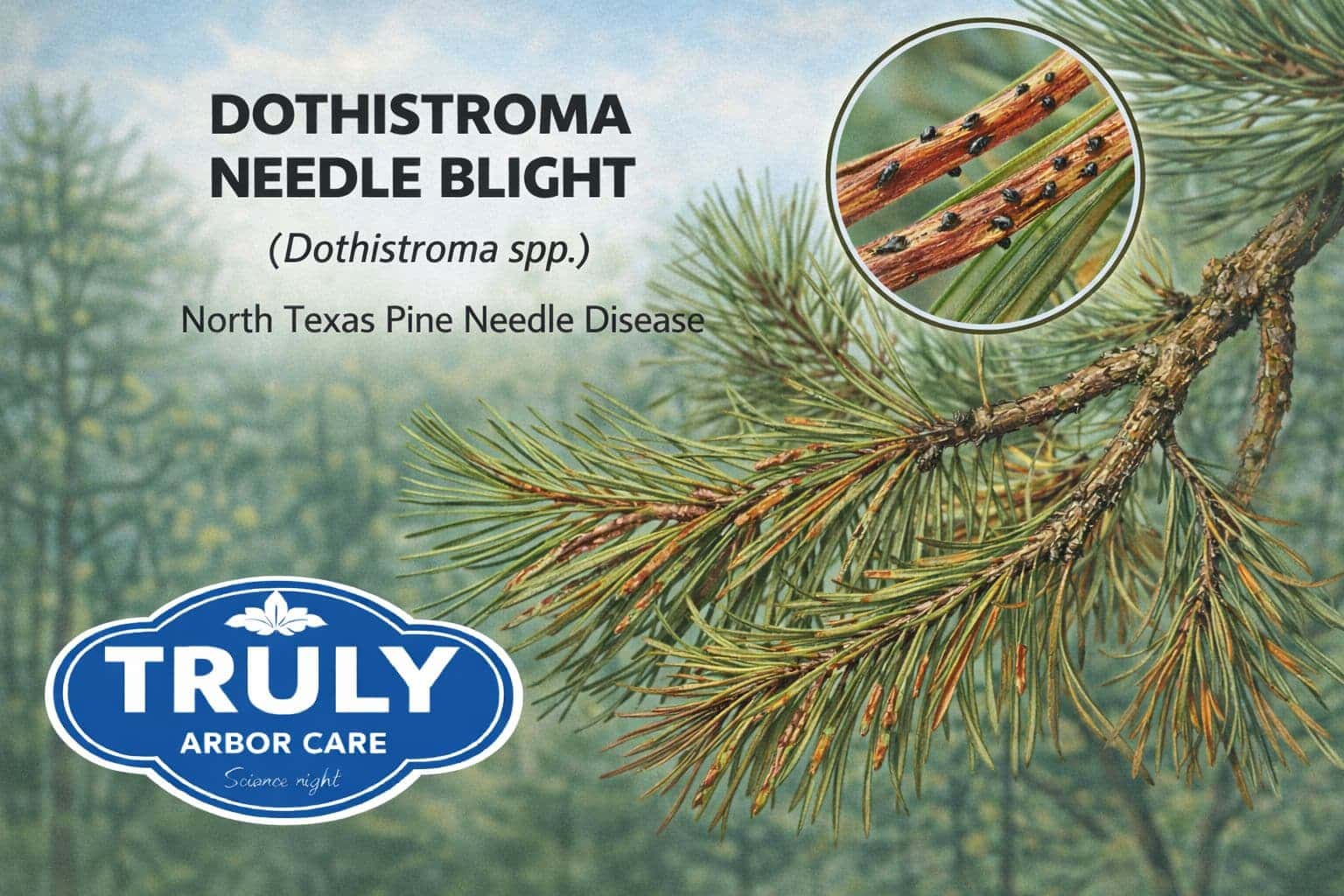
- Brown or reddish bands across pine needles
- Yellowing of needle tips
- Needles turning brown from the tip toward the base
- Premature needle drop
- Thinning canopy
- Needle loss beginning on lower branches
One of the most diagnostic signs of Dothistroma infection is the presence of red bands across infected needles. These bands are often referred to as “red band needle blight.”
As the disease progresses, trees may lose multiple years of needles, resulting in a sparse and weakened canopy.
ISA Certified Arborists conducting plant health inspections in North Texas frequently identify this disease during spring and early summer evaluations.
Consequences if Needle Blight Is Left Unmanaged
When Dothistroma needle blight is allowed to persist year after year, the disease can significantly weaken pine trees.
Long-term impacts may include:
- Severe needle loss
- Reduced photosynthesis
- Slower growth rates
- Chronic stress on the tree
- Increased vulnerability to bark beetles and other insects
- Eventual tree mortality in severe cases
In landscape settings across the DFW Metroplex, pine trees experiencing repeated defoliation may lose aesthetic value and structural strength.
Trees weakened by needle blight are also more vulnerable to environmental stresses such as drought and extreme heat common in North Texas.
Managing Dothistroma Needle Blight Through Plant Healthcare
Management of needle blight focuses on improving environmental conditions and reducing fungal spread.
ISA Certified Arborists following ANSI A300 standards and TCIA plant healthcare protocols may recommend several management strategies.
These include:
- Pruning to improve air circulation
- Avoiding overhead irrigation on pine foliage
- Removing heavily infected branches
- Improving soil health and root vigor
- Preventative fungicide treatments during high-risk seasons
- Routine tree health monitoring
Preventative treatments are often most effective when applied early in the disease cycle before severe needle loss occurs.
Regular monitoring allows arborists to intervene before repeated infections weaken the tree.
Protecting Pine Trees Across North Texas and the DFW Metroplex
Pine trees provide valuable shade, wind protection, and landscape beauty throughout North Texas. Protecting these trees requires proactive plant healthcare management and early disease detection.
Annual inspections by an ISA Certified Arborist ensure pine trees are maintained according to ANSI A300 standards and modern arboricultural science. Early identification of Dothistroma needle blight allows property owners to implement treatments that preserve tree health and maintain the long-term stability of pine populations across the DFW Metroplex.
For more information, check out the Texas A&M article on Dothistroma needle blight here.