
Spider Mites in North Texas
Tetranychus urticae | Heat-Driven Foliage Damage in the DFW Metroplex
Spider mites, including the two-spotted spider mite Tetranychus urticae, are tiny plant-feeding arthropods commonly found throughout Texas. According to Texas A&M AgriLife Extension and Texas A&M Forest Service publications, spider mites are especially active during hot, dry conditions and can cause significant foliar damage when populations increase.
In North Texas and across the DFW Metroplex, spider mite infestations are most common during extended summer heat and drought.
ISA Certified Arborist Evaluation and Texas A&M Research Context
As ISA Certified Arborists serving North Texas, Truly Arbor Care evaluates spider mite infestations using science-based plant health care standards aligned with Texas A&M research. Because spider mite damage often resembles nutrient deficiency or drought stress, accurate diagnosis is critical before treatment decisions are made.
Texas A&M guidance emphasizes monitoring environmental conditions and population thresholds before implementing control strategies.
⸻
Identification and Morphology
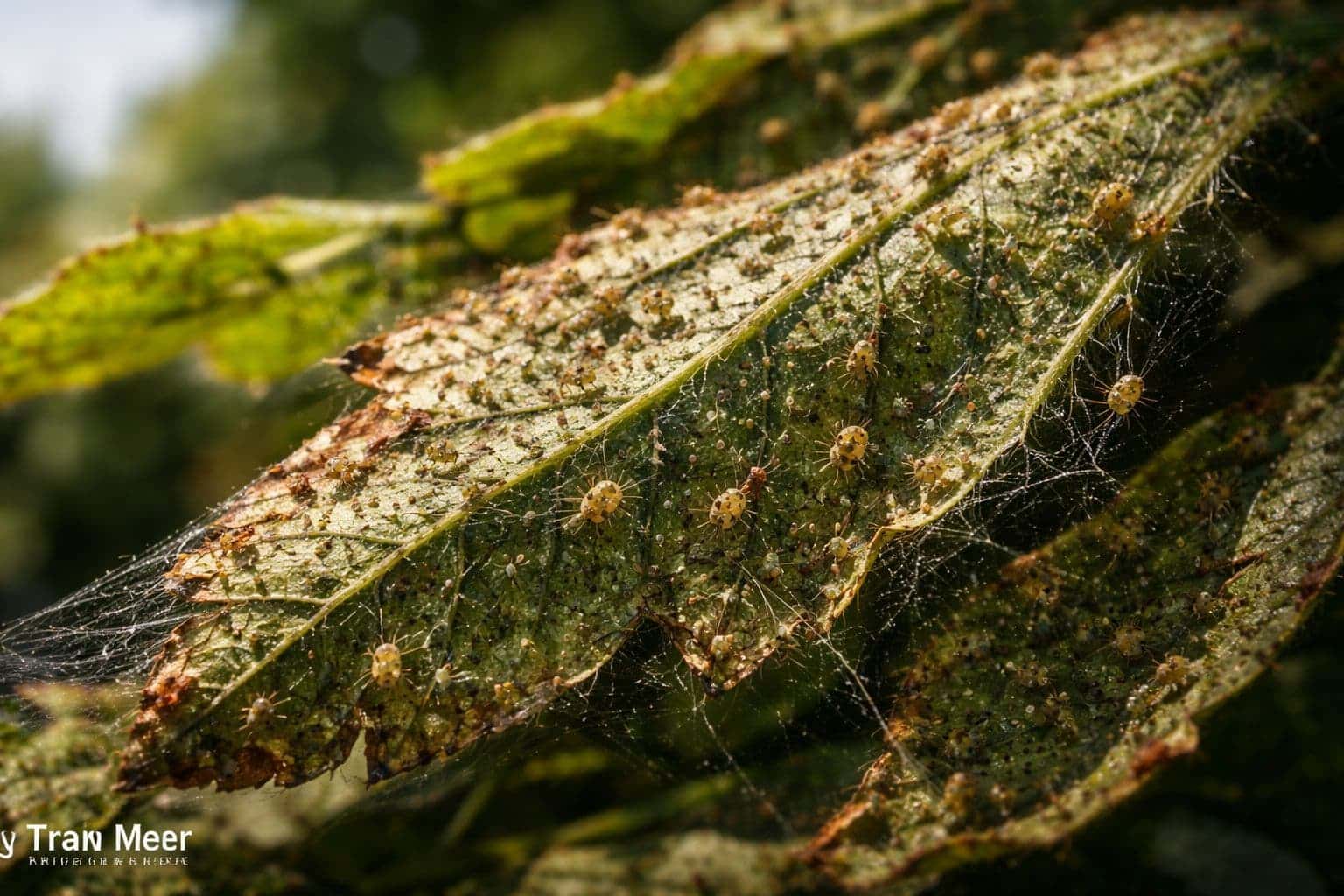
Spider mites are extremely small, often requiring magnification for clear identification. Two-spotted spider mites are typically pale green to yellow with two dark spots on their backs.
Unlike insects, spider mites are arachnids and have eight legs as adults.
Fine webbing may be visible on heavily infested foliage.
⸻
Distinguishing Characteristics
Key identifying features include:
- Speckled or stippled leaf appearance
- Yellowing foliage
- Fine silk webbing
- Bronzed or scorched leaf surfaces
Damage results from mites piercing leaf tissue and extracting plant fluids.
⸻
Host Plants in North Texas
Spider mites have a broad host range including:
- Crape myrtle
- Oak
- Maple
- Shrubs
- Perennials
- Turf
Texas A&M documentation notes that stressed plants are particularly susceptible.
In the DFW Metroplex, landscape plants exposed to reflected heat and drought stress are commonly affected.
⸻
Life Cycle in Texas
Spider mites reproduce rapidly during warm conditions.
- Eggs hatch in a few days
- Larvae develop quickly
- Multiple generations occur within weeks
Hot, dry North Texas summers may accelerate population growth.
⸻
Impact on Plant Health
Heavy infestations may result in:
- Leaf discoloration
- Reduced photosynthesis
- Premature leaf drop
- Aesthetic decline
Texas A&M AgriLife indicates that prolonged spider mite feeding may weaken plants, especially when combined with drought stress.
In the DFW Metroplex, spider mites are among the most common summer landscape pests.
⸻
Environmental Stress and Susceptibility
Plants experiencing:
- Drought
- High heat
- Compacted soils
- Poor irrigation practices
are more prone to severe infestations.
Maintaining proper irrigation and reducing plant stress significantly lowers risk.
⸻
Management and Professional Guidance in North Texas
Texas A&M recommends integrated pest management strategies including:
- Monitoring mite populations
- Increasing irrigation where appropriate
- Horticultural oils or miticides when warranted
- Encouraging natural predators
ANSI A300 Plant Health Care standards emphasize threshold-based treatment and stress reduction.
⸻
Professional Assessment in the DFW Metroplex
As ISA Certified Arborists serving North Texas and the DFW Metroplex, Truly Arbor Care evaluates spider mite infestations within a comprehensive plant health framework to determine appropriate management.
For more information, check out the Texas A&M article on the Spider mites here.