
Oak Skeletonizer in North Texas
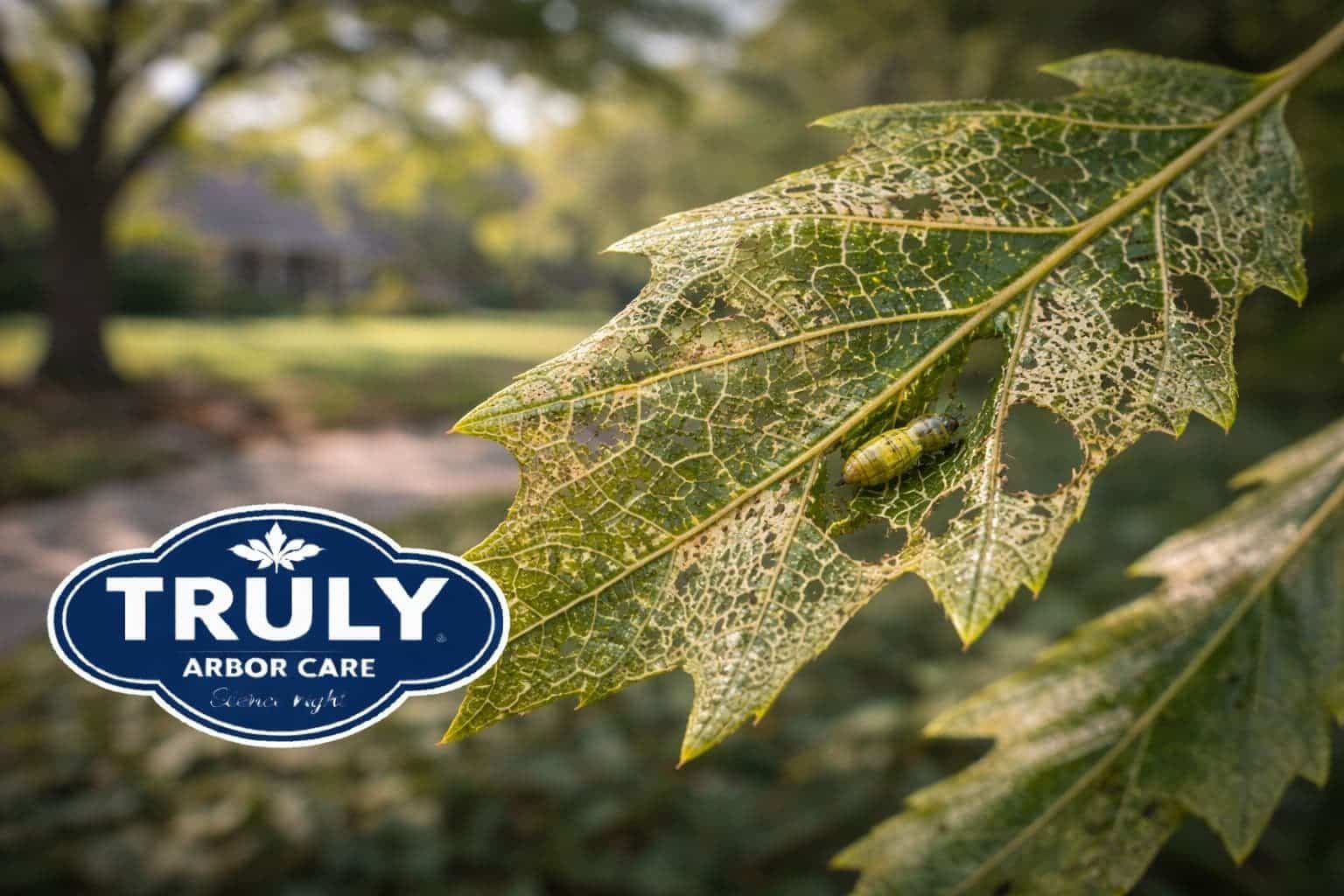
Leaf Skeletonization in the DFW Metroplex
The oak skeletonizer, Bucculatrix ainsliella, is a small moth species whose larvae feed on oak foliage throughout Texas. According to Texas A&M AgriLife Extension and Texas A&M Forest Service publications, this insect causes distinctive skeletonized leaf damage, particularly during warm summer months.
In North Texas and across the DFW Metroplex, infestations are typically observed on red oaks and other ornamental oak species planted in residential and commercial landscapes.
ISA Certified Arborist Evaluation and Texas A&M Research Context
As ISA Certified Arborists serving North Texas, Truly Arbor Care evaluates oak skeletonizer infestations using science-based plant health care standards aligned with Texas A&M research. Proper identification is essential because skeletonized leaves may resemble Japanese beetle damage or other chewing insects.
Texas A&M guidance indicates that most healthy trees tolerate moderate skeletonization without long-term structural harm.
⸻
Identification and Morphology
Adult oak skeletonizer moths are small and inconspicuous. They are rarely noticed by homeowners.
Larvae are slender and small, feeding on the lower leaf surface. As they feed, they remove the soft tissue between leaf veins, leaving a lace-like network of veins intact.
⸻
Distinguishing Characteristics
Key identifying features include:
- Transparent or lace-like leaf appearance
- Veins remaining intact
- Browned patches after feeding
- Multiple small larvae on leaf undersides
Unlike leafrollers, oak skeletonizers do not roll or bind leaves with silk.
⸻
Host Trees in North Texas
Primary hosts include:
- Red oak species
- Live oak
- Other ornamental oaks
Texas A&M Forest Service documentation notes that infestations are often most noticeable in ornamental plantings where aesthetic concerns are significant.
In the DFW Metroplex, urban heat and drought may intensify visible damage.
⸻
Life Cycle in Texas
Oak skeletonizers may produce multiple generations per year in Texas.
- Adults lay eggs on leaf surfaces
- Larvae feed on leaf tissue
- Pupation occurs on foliage or bark
- New adults emerge and repeat cycle
Warm North Texas summers support repeated activity.
⸻
Impact on Tree Health
Damage may result in:
- Skeletonized foliage
- Reduced photosynthetic capacity
- Temporary canopy thinning
- Aesthetic decline
Texas A&M AgriLife indicates that most infestations are primarily cosmetic, though repeated heavy feeding may reduce vigor when combined with drought stress.
⸻
Environmental Stress and Susceptibility
Trees experiencing:
- Drought
- Soil compaction
- Root disturbance
- Urban heat stress
may exhibit more severe damage and slower recovery.
Maintaining irrigation consistency and soil health improves resilience.
⸻
Management and Professional Guidance in North Texas
Texas A&M recommends monitoring infestation severity before implementing treatment.
Management strategies may include:
- Mechanical removal when practical
- Targeted insecticide applications during early larval stages
- Maintaining overall tree vigor
ANSI A300 Plant Health Care standards emphasize integrated pest management and accurate diagnosis.
⸻
Professional Assessment in the DFW Metroplex
As ISA Certified Arborists serving North Texas and the DFW Metroplex, Truly Arbor Care evaluates oak skeletonizer infestations within a comprehensive plant health framework to determine appropriate intervention.
For more information, check out the Texas A&M article on oak skeletonizer here.