
Locust Leafminer in North Texas
Odontota dorsalis | Leaf Mining Damage in the DFW Metroplex
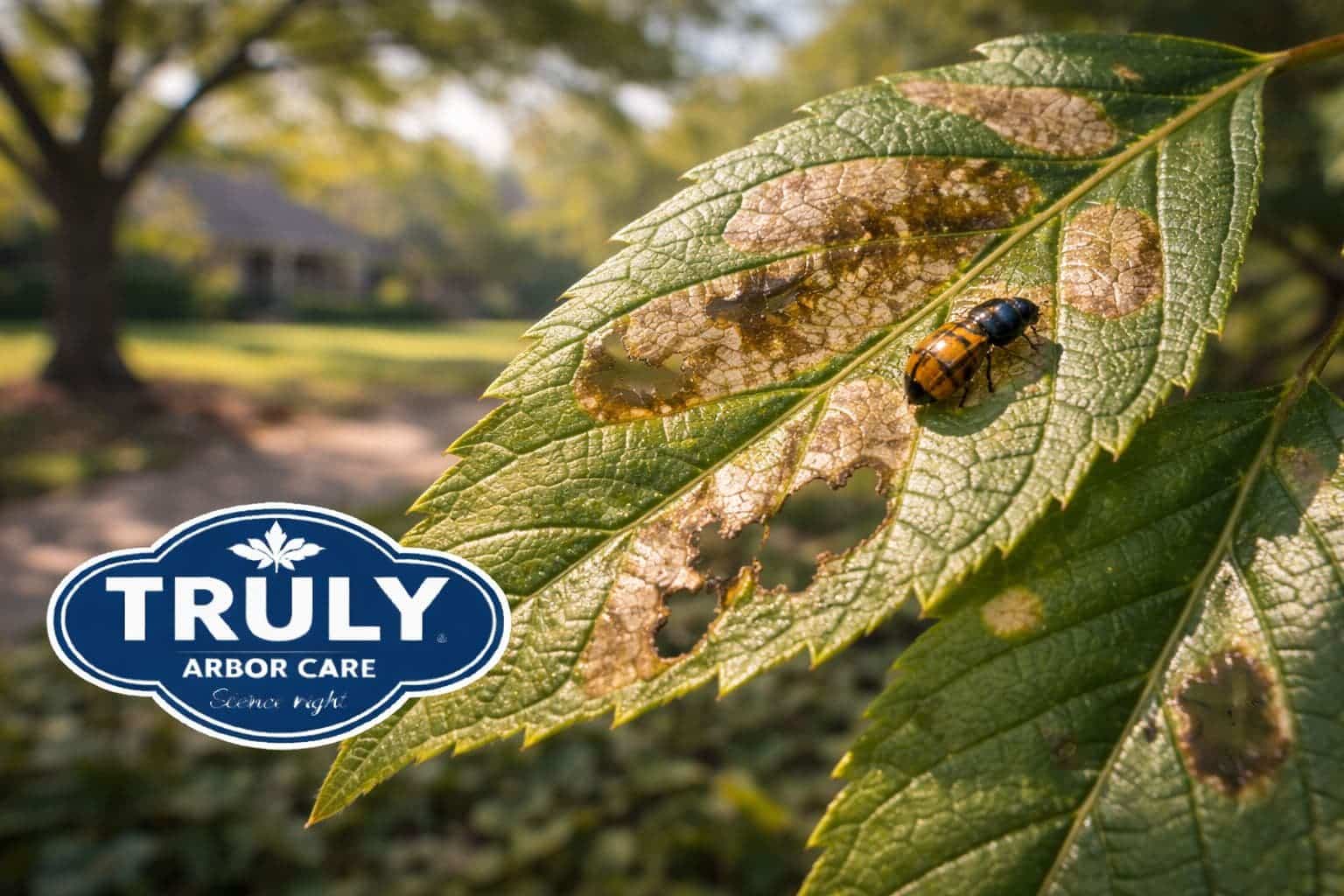
The locust leafminer, Odontota dorsalis, is a native leaf-mining beetle found throughout Texas and much of the eastern United States. According to Texas A&M AgriLife Extension and Texas A&M Forest Service publications, this insect primarily feeds on black locust and related species, causing characteristic leaf mining damage.
In North Texas and across the DFW Metroplex, infestations are most commonly observed during late spring and summer when adult beetles and larvae feed on leaf tissue.
ISA Certified Arborist Evaluation and Texas A&M Research Context
As ISA Certified Arborists serving North Texas, Truly Arbor Care evaluates locust leafminer activity using science-based plant health care standards aligned with Texas A&M research. Proper identification is essential because leaf mining symptoms may resemble foliar disease or environmental stress injury.
Texas A&M guidance indicates that while damage may appear severe, established trees typically tolerate moderate infestations without long-term structural impact.
⸻
Identification and Morphology
Adult locust leafminers are small, flattened beetles with dark bodies and yellow margins along the wing covers.
Larvae feed between the upper and lower leaf surfaces, creating “mines” or blotches within the leaf tissue. These mined areas often appear brown or translucent.
⸻
Distinguishing Characteristics
Key identifying features include:
- Brown blotches or “mined” areas within leaves
- Leaf tissue consumed between surfaces
- Windowpane appearance in severe cases
- Adult beetles visible on foliage
Unlike caterpillars, locust leafminers feed within the leaf tissue rather than externally chewing margins.
⸻
Host Trees in North Texas
Primary hosts include:
- Black locust (Robinia pseudoacacia)
- Occasionally related locust species
Texas A&M Forest Service documentation notes that black locust trees are particularly susceptible during outbreak cycles.
In the DFW Metroplex, ornamental and roadside locust plantings may show visible damage.
⸻
Life Cycle in Texas
Locust leafminers may produce multiple generations per year in Texas.
- Adults emerge in late spring
- Eggs are laid on leaf surfaces
- Larvae mine leaf tissue
- Pupation occurs within leaves or in soil
- New adults emerge and continue feeding
Warm North Texas temperatures may increase feeding intensity.
⸻
Impact on Tree Health
Damage may result in:
- Browned or scorched leaf appearance
- Reduced photosynthetic capacity
- Premature leaf drop in heavy infestations
- Aesthetic decline
Texas A&M AgriLife indicates that while defoliation may be noticeable, healthy trees typically recover unless compounded by drought stress.
In the DFW Metroplex, urban heat and drought may intensify visible injury.
⸻
Environmental Stress and Susceptibility
Trees experiencing:
- Drought stress
- Compacted soils
- Nutrient imbalance
- Urban heat exposure
may show more pronounced leaf damage and slower recovery.
Maintaining tree vigor supports resilience in North Texas landscapes.
⸻
Management and Professional Guidance in North Texas
Texas A&M recommends monitoring population levels before implementing treatment.
Management strategies may include:
- Encouraging natural predators
- Targeted insecticide applications during early larval stages when warranted
- Maintaining overall tree health
ANSI A300 Plant Health Care standards emphasize integrated pest management and environmental stress reduction.
⸻
Professional Assessment in the DFW Metroplex
As ISA Certified Arborists serving North Texas and the DFW Metroplex, Truly Arbor Care evaluates locust leafminer infestations within a comprehensive plant health framework to determine appropriate intervention.
For more information, check out the Texas A&M article on locust leafminer here.