
Lecanium Scale in North Texas
Coccus hesperidum | Soft Scale Infestation in the DFW Metroplex
Lecanium scale, Coccus hesperidum, is a soft scale insect found throughout Texas and commonly observed in ornamental landscapes. According to Texas A&M AgriLife Extension and Texas A&M Forest Service publications, soft scales feed on plant sap and may cause decline when populations build to high levels.
In North Texas and across the DFW Metroplex, lecanium scale infestations are most commonly observed on shade trees and ornamental shrubs during spring and early summer.
ISA Certified Arborist Evaluation and Texas A&M Research Context
As ISA Certified Arborists serving North Texas, Truly Arbor Care evaluates lecanium scale infestations using science-based plant health care standards aligned with Texas A&M research. Proper identification is critical because soft scale insects are often confused with armored scale species or aphid infestations.
Texas A&M guidance emphasizes early detection and integrated pest management when populations begin to build.
⸻
Identification and Morphology
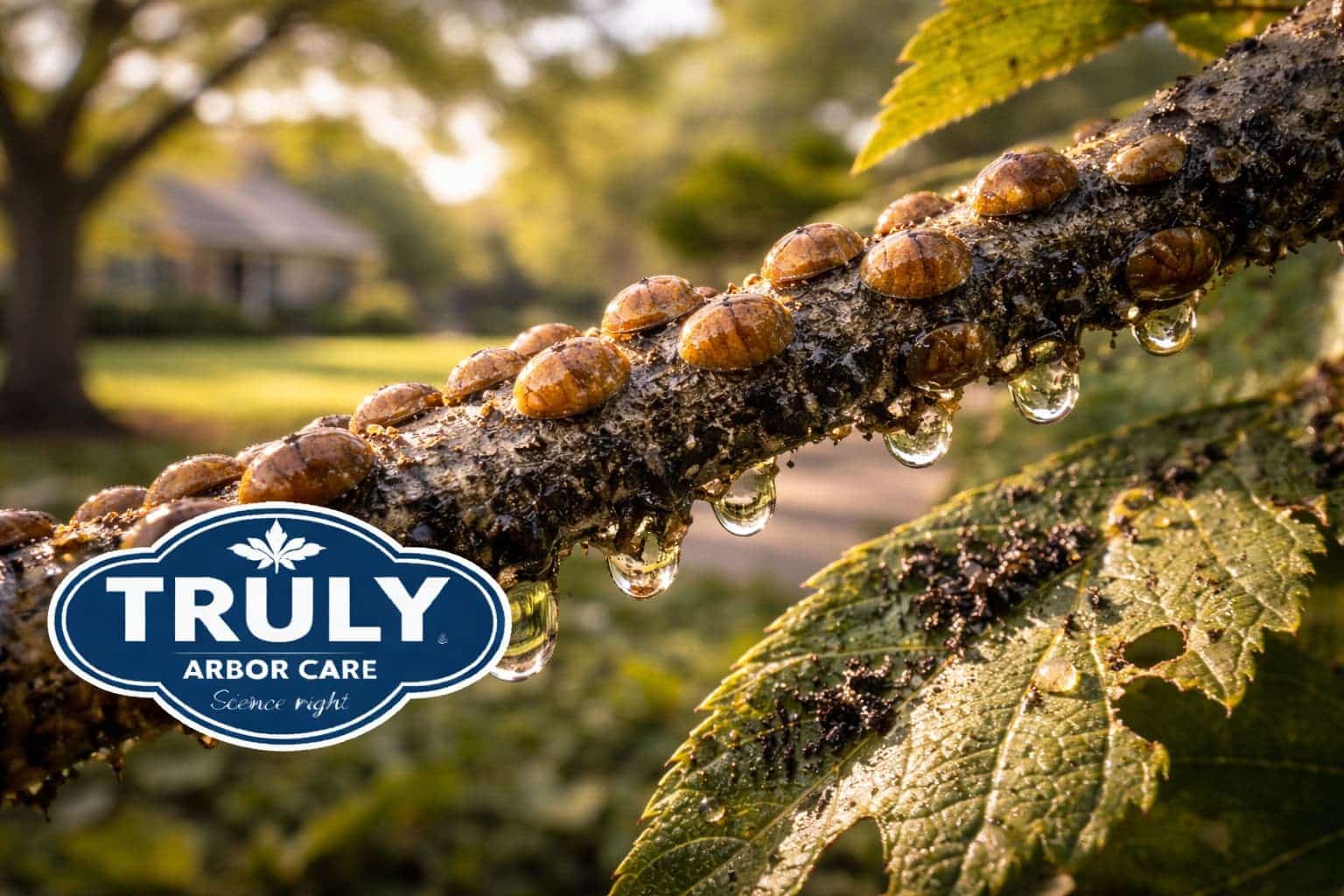
Adult lecanium scale insects are soft-bodied and dome-shaped. They are typically brown to tan in color and attach firmly to stems and branches.
Unlike armored scale insects, soft scales secrete honeydew, which contributes to sooty mold growth.
Crawler stages are tiny, mobile, and represent the most vulnerable stage for treatment.
⸻
Distinguishing Characteristics
Key identifying features include:
- Brown dome-shaped scale coverings
- Sticky honeydew on leaves and bark
- Black sooty mold growth
- Increased ant activity
Honeydew accumulation is a primary differentiator between soft scales and armored scales.
⸻
Host Trees in North Texas
Lecanium scale has a broad host range including:
- Oak
- Maple
- Elm
- Holly
- Various ornamental shrubs
Texas A&M Forest Service documentation indicates that stressed trees are more susceptible to population buildup.
In the DFW Metroplex, dense ornamental plantings are common infestation sites.
⸻
Life Cycle in Texas
Lecanium scale typically produces one generation per year in Texas.
- Females lay eggs beneath their bodies
- Crawlers emerge in late spring
- Crawlers settle and begin feeding
- Immatures mature into dome-shaped adults
Warm North Texas conditions may influence development timing.
⸻
Impact on Tree Health
Heavy infestations may result in:
- Reduced vigor
- Premature leaf drop
- Branch dieback
- Sooty mold interfering with photosynthesis
Texas A&M AgriLife notes that while mild infestations are often cosmetic, prolonged feeding can weaken stressed trees.
In the DFW Metroplex, aesthetic decline and honeydew accumulation are primary concerns.
⸻
Environmental Stress and Susceptibility
Trees experiencing:
- Drought
- Nutrient imbalance
- Compacted soils
- Urban heat stress
may exhibit higher scale densities.
Maintaining overall tree vigor improves resilience.
⸻
Management and Professional Guidance in North Texas
Texas A&M recommends:
- Monitoring crawler stage
- Horticultural oil applications
- Targeted systemic treatments when warranted
- Encouraging natural predators
ANSI A300 Plant Health Care standards emphasize integrated pest management and environmental stress reduction.
⸻
Professional Assessment in the DFW Metroplex
As ISA Certified Arborists serving North Texas and the DFW Metroplex, Truly Arbor Care evaluates lecanium scale infestations within a comprehensive plant health framework to determine appropriate management strategies.