
Six-Spined Engraver Beetle in North Texas
Ips calligraphus | Pine Bark Beetle Activity in the DFW Metroplex
The six-spined engraver beetle, Ips calligraphus, is a native bark beetle species found throughout Texas, including North Texas and the DFW Metroplex. According to Texas A&M Forest Service and Texas A&M AgriLife Extension publications, Ips calligraphus primarily colonizes stressed, damaged, or recently cut pine trees.
While generally considered a secondary pest, high beetle pressure combined with drought stress can lead to rapid decline in ornamental pine plantings across the DFW Metroplex.
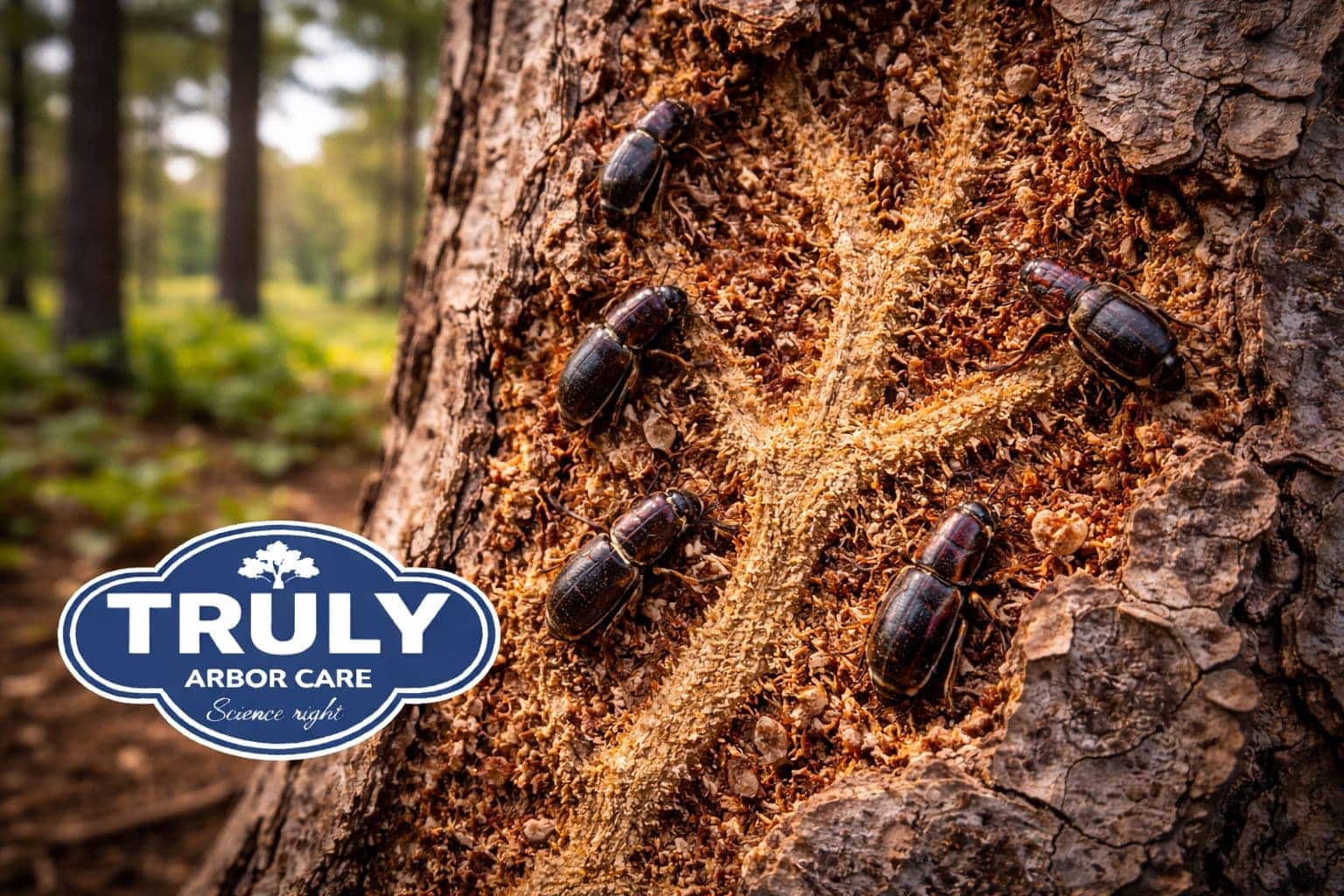
Identification and Morphology
Adult Ips calligraphus are medium-sized bark beetles measuring approximately 4 to 6 mm in length. They are reddish-brown to dark brown in color.
The distinguishing characteristic is the declivity, or rear end, which features six spines along each side. These spines differentiate Ips calligraphus from other engraver beetle species such as Ips grandicollis and Ips avulsus.
Larvae are white, legless grubs that develop beneath the bark within phloem tissue.
⸻
Gallery Pattern and Feeding Behavior
Ips calligraphus constructs large Y-shaped or star-shaped galleries beneath the bark. Adult beetles create a central chamber where mating occurs, and larvae tunnel outward in distinct patterns.
Fine boring dust is often present in bark crevices, and small pitch tubes may develop if the tree is capable of resin production.
In drought-stressed North Texas pines, pitch production may be minimal.
⸻
Host Trees in North Texas
Primary hosts include:
- Loblolly pine
- Slash pine
- Shortleaf pine
- Other ornamental pine species
Texas A&M Forest Service notes that Ips calligraphus frequently colonizes recently cut timber, storm-damaged trees, and drought-weakened hosts.
In urban DFW landscapes, stressed ornamental pines are the most common targets.
⸻
Environmental Stress and Beetle Attraction
Ips beetles are attracted to volatile compounds released by stressed pine trees, including ethanol and altered resin chemistry.
Extended summer heat in North Texas reduces resin flow and defensive pressure, increasing vulnerability to successful colonization.
While typically secondary in nature, Ips calligraphus may contribute to mortality when multiple stressors are present.
⸻
Signs and Symptoms
Common indicators include:
- Needle discoloration starting in upper canopy
- Fine reddish-brown boring dust
- Small pitch tubes along trunk or large limbs
- Bark flaking or loosening
- Visible Y-shaped gallery systems beneath bark
Infestations may escalate rapidly during prolonged drought in the DFW Metroplex.
⸻
Management and Prevention in the DFW Metroplex
Texas A&M AgriLife Extension emphasizes prevention through stress management.
Recommended practices include:
- Prompt removal of storm-damaged material
- Avoiding trunk injury
- Managing irrigation during drought
- Removing heavily infested trees
- Avoiding accumulation of pine slash
Preventative insecticide applications may be considered for high-value trees when properly timed and applied according to label directions and state regulations.
ANSI A300 Plant Health Care standards emphasize maintaining host vigor and minimizing environmental stress.
⸻
Professional Evaluation in North Texas
As ISA Certified Arborists serving North Texas and the DFW Metroplex, Truly Arbor Care evaluates Ips calligraphus infestations within a comprehensive plant health and structural risk framework.
Early identification and stress mitigation significantly improve preservation outcomes in ornamental pine landscapes.
For more information, check out the Texas A&M article on Ips calligraphus here.