
Fall Webworm in Texas
Hyphantria cunea | Webbing and Defoliation in North Texas Landscapes
The fall webworm, Hyphantria cunea, is a native defoliating caterpillar found throughout Texas and much of the United States. According to Texas A&M AgriLife Extension and Texas A&M Forest Service resources, fall webworms are commonly observed in late summer and early fall when large silk webs appear at the ends of branches.
In North Texas, fall webworm infestations are primarily aesthetic but can cause noticeable defoliation in ornamental and shade trees during outbreak years.
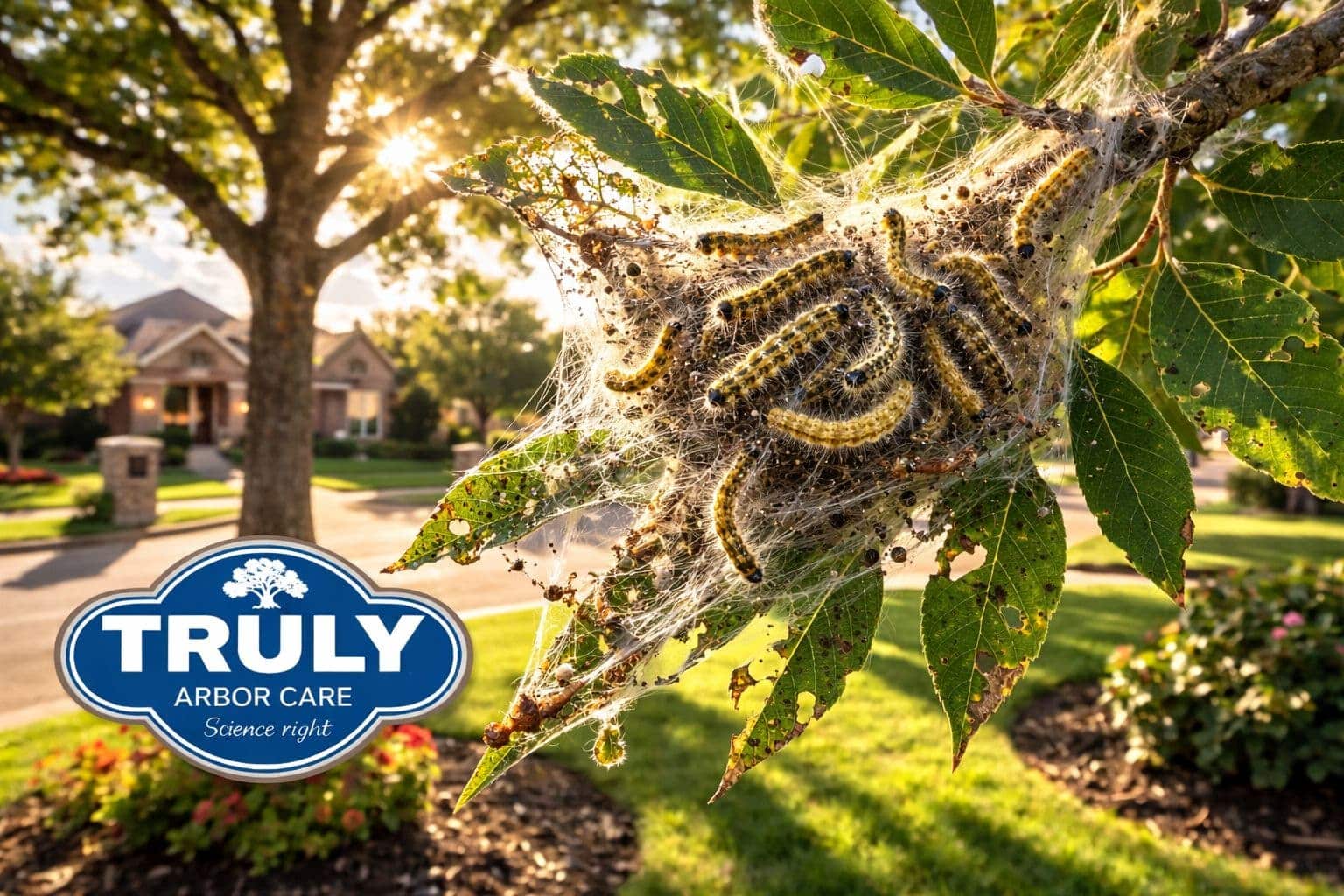
Identification and Morphology
Adult fall webworm moths are white and may have small dark spots on the wings. They are active at night and are rarely the primary concern in landscapes.
The damaging stage is the larval stage. Caterpillars vary in color from pale yellow to light green, often with rows of dark spots and long white hairs along the body.
Multiple larvae feed together within silk webbing constructed at branch tips.
⸻
Distinguishing Characteristics
Key identifying features include:
- Large silk webs at the ends of branches
- Multiple caterpillars feeding within the web
- Gradual enlargement of web as larvae grow
- Defoliation confined to webbed sections
Unlike spring tent caterpillars, fall webworm webs are typically located at the ends of branches rather than in branch crotches.
⸻
Host Range in Texas
Fall webworms have a broad host range and may feed on:
- Pecan
- Persimmon
- Sweetgum
- Mulberry
- Walnut
- Elm
- Sycamore
Texas A&M publications note that over 100 species of trees may be affected, although damage severity varies.
In DFW landscapes, pecan and ornamental shade trees are commonly impacted.
⸻
Life Cycle in Texas
In Texas, fall webworms may produce multiple generations per year depending on climate.
- Adult moths lay eggs on the undersides of leaves
- Eggs hatch and larvae begin feeding collectively
- Silk webs expand as larvae consume foliage
- Mature larvae drop to the soil to pupate
Feeding activity typically peaks in late summer and early fall.
⸻
Impact on Tree Health
Fall webworm feeding primarily affects leaves near the ends of branches. While heavy infestations may appear severe, established trees generally tolerate a single defoliation event without long-term injury.
Texas A&M AgriLife indicates that fall webworm damage is usually cosmetic. However, repeated annual infestations combined with drought stress may reduce tree vigor.
In North Texas, late-season defoliation can compound heat stress during extended dry periods.
⸻
Environmental and Stress Factors
Trees under environmental stress may be slower to recover from defoliation. Factors include:
- Drought
- Soil compaction
- Root disturbance
- Nutrient imbalance
Maintaining proper irrigation and soil health improves recovery following feeding events.
⸻
Management and Professional Evaluation
Texas A&M guidance recommends management only when infestations are severe or aesthetic concerns warrant action.
Control options may include:
- Pruning and removing small webbed branches
- Mechanical web disruption
- Targeted insecticide application when larvae are young
ANSI A300 Plant Health Care standards emphasize evaluating overall tree health before chemical intervention.
⸻
Professional Assessment in DFW
As ISA Certified Arborists serving the Dallas–Fort Worth region, Truly Arbor Care evaluates fall webworm infestations within a comprehensive plant health framework. Most mature trees recover naturally, but monitoring is recommended when multiple stressors are present.
For more information, check out the Texas A&M article on Fall Webworm here.