
Bagworms in North Texas
Identification, Lifecycle, Impact, and Management | Truly Arbor Care
Bagworms (Family Psychidae) are a group of caterpillar-stage insects known for the protective “bags” they construct from silk and plant debris. While often associated with cedar and arborvitae, bagworms can infest a range of ornamental and forest hardwood species. In North Texas landscapes, prolonged infestations can lead to partial or complete defoliation of susceptible hosts.
According to Texas A&M Forest Service extension materials, bagworm populations typically build in response to localized conditions and tree stress, rather than spreading across large forest stands. However, in urban settings, repeated infestations can weaken evergreen structure and vitality.
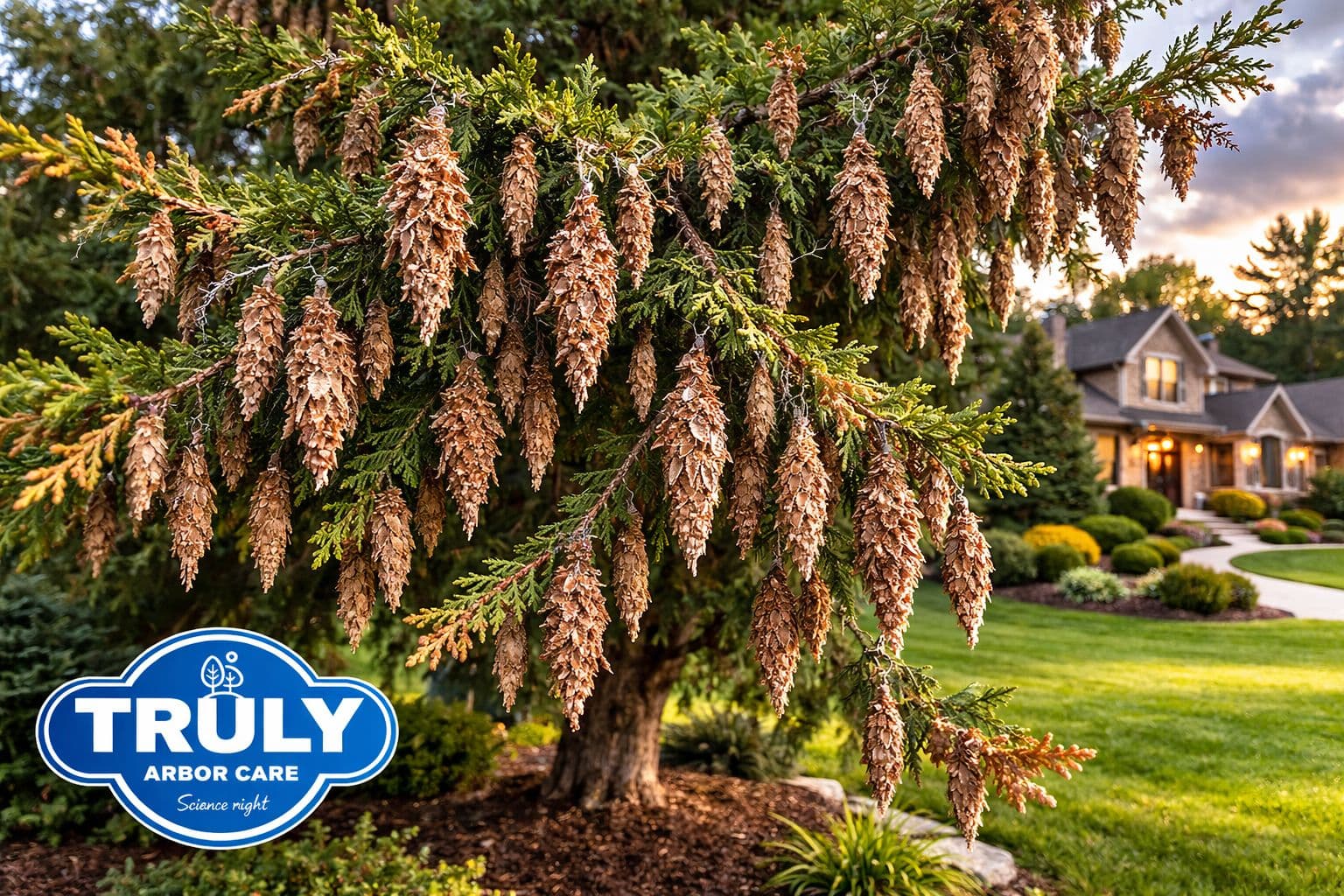
Biology and Spread in the DFW Region
Biology and Identification
Adult bagworm morphology varies by sex:
- Males emerge as winged moths with roughly one-inch wingspans, slender black bodies, and feathered antennae.
- Females remain wingless, legless, and pale yellowish, completing their lifecycle within the bag.
Larvae (caterpillars) are approximately one inch long at maturity and exhibit a dark brown body with a lighter head and thorax marked by small spots. Pupae remain concealed within the bag, and eggs laid inside may number from 800 to 1,000 per female.
The most conspicuous sign of bagworm presence is the bag itself — a portable silken case incorporating twigs, leaves, and debris. Mature larval bags can approach two inches or more in length.
⸻
Life Cycle and Seasonal Timing
In North Texas, bagworms typically have one generation per year:
- Late summer to early fall — Adult males emerge to mate.
- Soon after — Females deposit eggs within their bags and expire.
- Eggs overwinter within the bag.
- Late spring — Larvae hatch and immediately construct their own portable cases.
As larvae grow, they expand the size of their bags to accommodate increasing body length. To feed and move, larvae protrude their head and thoracic legs from the bag opening.
Multiple academic entomology programs (e.g., University of Kentucky, Iowa State, Texas A&M) note that warm temperatures and adequate moisture can influence pheromone activity and larval development timing, though one generation per year remains typical in southern U.S. climates.
⸻
Signs of Attack and Damage
Early-stage infestation indicators include:
- Numerous small bags hanging from branches
- Defoliation of foliage on limbs
- Reduction in carbohydrate stores from leaf loss
- Trees exhibiting reduced vigor over time
When bagworms are abundant and defoliation is severe, host trees may struggle to produce sufficient sugars and starches necessary for spring growth. Extended defoliation stress can reduce overall tree health and, in extreme cases, contribute to mortality.
North Texas evergreen species such as cedar, arborvitae, and juniper are especially susceptible due to their dense foliage and year-round structure, making them easy targets for mass larval feeding.
⸻
Environmental and Host Stress Factors
Bagworms preferentially attack trees that are:
- Weakened by drought or heat stress
- Compromised by soil compaction
- Pruned improperly
- Sustained physical injury
According to research referenced by both Texas A&M Forest Service and ISA publications, insect pressures such as bagworms intensify when natural plant defenses are lowered by environmental stressors.
⸻
Management and Control Strategies
Natural Controls
Predators, parasites, and microbial agents often suppress bagworm populations before heavy infestation occurs.
- Cultural Practices
- Early detection and hand removal of bags during late fall to early spring can significantly reduce populations.
- Burning or disposing of collected bags offsite prevents re-infestation.
Chemical Intervention
When infestations are heavy and tree health is at risk, targeted insecticide applications may be warranted. University extension recommendations (e.g., Texas A&M, Virginia Tech) generally advocate:
- Treat early in larval development
- Use products labeled for bagworm control
- Follow label directions and state regulations
Extended Texas A&M guidance warns that treatments after extensive foliar loss are unlikely to restore host vigor and may offer limited benefit.
⸻
Prevention and Long-Term Health
Proactive health care — including proper irrigation, soil aeration, root vigor improvement, and nutrient balance — strengthens natural host defenses and reduces insect susceptibility. These preventative measures are consistent with ANSI A300 Part 10 Plant Health Care protocols promoting long-term resilience rather than reactive treatments.
⸻
Professional Evaluation in North Texas
As ISA Certified Arborists serving the Dallas–Fort Worth region, Truly Arbor Care evaluates bagworm pressure within a broader plant health framework, including:
- Species susceptibility
- Environmental stressors
- Canopy and root-zone assessment
- Risk of structural decline
Early professional evaluation increases the likelihood of effective management and helps prevent unnecessary long-term decline.
For more information, check out the Texas A&M article on Bagworms here.